How to Hang a Hammock Between Two Posts
Posts are the best permanent answer in a yard with no trees. They are also the only option on this site where getting it wrong is a structural problem rather than an uncomfortable night.
By Mike M. · Last updated
Knot & Nap is reader-supported. We earn from qualifying purchases as an Amazon Associate, at no extra cost to you. Commissions never decide what gets recommended — here is how we pick.
Set the posts about a foot wider apart than the hammock is long, mount the hanging point at roughly 4 to 5 ft so the loaded bed sits 18 in off the ground, and hang at about a 30-degree angle. The critical difference from trees: a post resists a sideways pull only through its footing, so the footing — not the hardware — is what carries the load.
Part of our guides hub, and the permanent version of how to hang a hammock without trees. Posts come up when a yard has the space but not the trees, and they are the right answer: a pair of set posts is cheaper than a long heavy-duty stand, invisible once planted around, and sized to whatever hammock you own rather than whatever the stand maker decided.
Why a post is a harder problem than a tree
A tree resists a horizontal pull with its entire root plate and tens of years of growth. A post resists it with whatever is holding the bottom few feet in the ground, and the hammock applies that pull as a lever: the higher the hanging point, the more leverage the hammock has against the footing. Both posts lean inward slightly under load. That is normal and expected. What is not acceptable is a post that keeps leaning, because that means the footing is moving rather than the timber flexing.
Two consequences follow. First, the hanging point wants to be as low as the hammock allows, not as high as the post. Second, the footing is the part worth getting right, and footing depth is set by your frost line, your soil and your local building rules — not by a number on a hammock site. We do not publish a depth figure here because the honest answer varies by location and we have no sourced national figure to give you; check it against local practice or ask a builder before you dig.
What to look for before you dig
- The hammock length, measured hook to hook. Everything else follows from this. A 13 ft rope hammock with its extension chains on is not a 13 ft span problem — see hammock hanging distance and angle for the table.
- Pressure-treated or naturally durable timber, rated for ground contact. A post rated for above-ground use will rot at the soil line, which is exactly where the bending load is highest.
- Post size against span and load. A bigger section flexes less and gives the footing more to hold. Two adults on a 13 ft hammock is a meaningfully larger load than one person on a 9 ft one.
- Through-bolted hardware, not lag screws into end grain. A bolt through the post with a plate or washer on the far side puts the load into the timber rather than into a few threads.
- Where the posts will be in ten years. Posts are permanent in a way a stand is not. Mark the span out with string and live with it for a day before committing.
Quick picks
Tap any row to jump to the full write-up. Prices come straight from Amazon and are refreshed daily; where a figure is missing the link takes you to the live one.
| # | Product | Best for | Headline spec | Price |
|---|---|---|---|---|
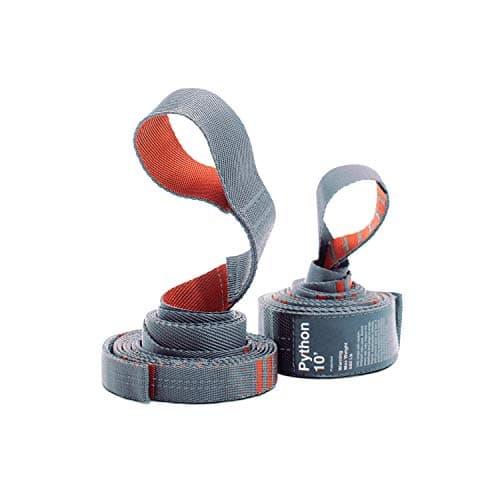
| 1 | Kammok Python 10 Hammock StrapsLonger, lighter and higher-rated than the category default — the straps most people should buy. | Best straps overall | 500 lb combined capacity | |
| 2 |  ENO Atlas Hammock Suspension SystemThe straps everyone else gets compared against — proven, stocked everywhere, a step behind the Python on specs. | The industry standard | 400 lb combined capacity | |
| 3 | 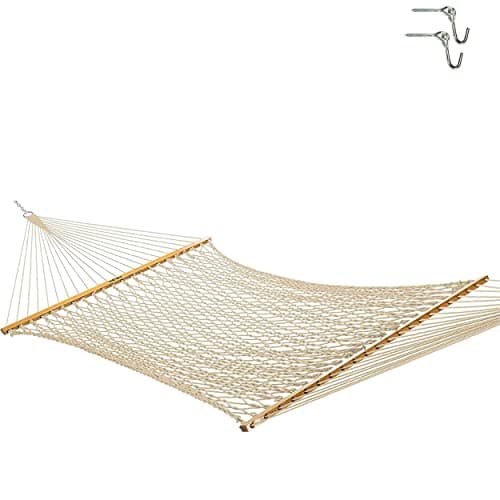 Pawleys Island DURACORD Rope HammockThe rope hammock built for weather — DURACORD is marketed specifically to withstand sun and rain where cotton cannot. | Rope you can leave outside | 450 lb capacity |
#ad — the buy links above are affiliate links. See our affiliate disclosure.
1. Best straps overall
Kammok Python 10 Hammock Straps
Longer, lighter and higher-rated than the category default — the straps most people should buy.
Specifications
- 500 lb combined capacity
- 10 ft 2.5 in long
- 8.2 oz
- 20 attachment points
Source: 99Boulders 2026 hammock strap test. We publish specs we can attribute and leave the rest blank rather than assuming a typical value.
What it does well
- 500 lb combined is the highest rating in 99Boulders' 2026 strap test
- 10 ft reaches around trees the 9 ft straps cannot
- 20 attachment points give finer hang-angle control
Where it falls short
- Slightly bulkier packed than a minimalist strap
- Daisy-chain webbing is still coarser adjustment than a cord system
Product photograph supplied by Amazon.
#ad we may earn a commission · price as of October 17, 2026
2. The industry standard
ENO Atlas Hammock Suspension System
The straps everyone else gets compared against — proven, stocked everywhere, a step behind the Python on specs.
Specifications
- 400 lb combined capacity
- 9 ft long
- 9 oz
- 15 attachment points
Source: 99Boulders 2026 hammock strap test and ENO product listing. We publish specs we can attribute and leave the rest blank rather than assuming a typical value.
What it does well
- Stocked in nearly every outdoor store, so replacement is easy
- Proven design with a long track record
Where it falls short
- 400 lb and 9 ft both trail the Kammok Python 10
- Heavier than the Python despite being shorter
Product photograph supplied by Amazon.
#ad we may earn a commission · price as of October 17, 2026
3. Rope you can leave outside
Pawleys Island DURACORD Rope Hammock
The rope hammock built for weather — DURACORD is marketed specifically to withstand sun and rain where cotton cannot.
Specifications
- 450 lb capacity
- 13 ft long, 55 in wide bed
- Seats two
- DURACORD rope, described by Pawleys Island as built to withstand sun and rain
- Oak spreader bars with zinc-plated hardware
- Handcrafted in the USA
Source: Pawleys Island DuraCord retail listing, 2026. We publish specs we can attribute and leave the rest blank rather than assuming a typical value.
What it does well
- The synthetic rope is the reason this line survives a season outdoors
- Keeps the open rope weave and airflow of a cotton hammock
- Matches the cotton Deluxe on capacity and bed size, without the mildew risk
Where it falls short
- Synthetic rope has a firmer hand than cotton
- Oak spreader bars still want sealing if they stay in the weather
Product photograph supplied by Amazon.
#ad we may earn a commission · price as of October 17, 2026
Setting the span and the height
- 1Measure the hammock, chains and allEnd fitting to end fitting, laid out flat on the ground. This is the number the whole install is built around.
- 2Add about a foot for the spanSlightly wider than the hammock is long gives you the sag you want without pulling the bed tight. Too wide and you are forced into a shallow angle; too narrow and the hammock drags.
- 3Set the hanging height around 4 to 5 ftFor a 9 to 11 ft hammock on a span of that order, a hanging point at roughly 4 to 5 ft leaves the lowest point of the loaded bed about 18 in off the ground. Check it with the hammock in place before you make the hole permanent.
- 4Plan the footing to local practiceDepth and diameter depend on your frost line and soil. This is the step to confirm locally rather than copy from the internet, including from us.
- 5Through-bolt the hanging hardwareA bolt right through the post, with a washer or plate on the back face, spreads the load across the timber section instead of relying on screw threads in one spot.
- 6Load it gently and watch the postsA slight inward lean under load is the timber flexing and is fine. Movement that increases, or that does not spring back when you get out, means the footing is moving. Stop and fix the footing.
The angle matters more here than anywhere else
On a stand, a tight hang is uncomfortable. On posts it is also a load problem. The Omni Calculator hang model shows how sharply the force at each anchor rises as the hang angle flattens: a shallow, tight hammock multiplies the force well beyond body weight, and on posts that multiplied force arrives as a horizontal lever against the footing. Hanging at roughly 30 degrees is therefore not only the comfortable choice, it is the one that keeps the install within the load you planned for.
Hardware-wise, straps make this easier than fixed hooks because they let you tune the angle without re-drilling. The Kammok Python 10 publishes 500 lb combined with 20 attachment points and the ENO Atlas 400 lb with 15, which is enough adjustment to dial in the sag on a span you have already committed to in concrete. Wrapping the strap round the post also avoids a second hole if you change hammocks.
Posts, pergolas and fence posts are not the same thing
- A purpose-set hammock post is designed for a horizontal pull and footed accordingly. This is the only one of the three we would recommend.
- A pergola or deck post carries vertical load and is often tied into a structure that resists nothing sideways. Hanging a hammock from one is a question for whoever built it.
- A fence post is sized to hold up a fence panel in wind, not to take a multiplied horizontal pull at head height. We would not.
- A single post plus a tree works, and is often the cheapest install of all — one hole instead of two. Read how to hang a hammock between trees for the tree half, including the strap-width rule.
Common questions
How far apart should posts be for a hammock?
Roughly a foot wider than the hammock measured hook to hook, chains included. That gives you enough slack to hang at about 30 degrees without the bed dragging. A wider span forces a flatter, tighter hang, which is both less comfortable and harder on the footings.
How high should a hammock post hanging point be?
For a 9 to 11 ft hammock, around 4 to 5 ft, set so the lowest point of the loaded bed sits about 18 in off the ground. Lower is better than higher on posts, because a high hanging point gives the hammock more leverage against the footing.
How deep should a hammock post be set?
That depends on your frost line, your soil and local building practice, and we will not publish a single figure we cannot source for every location. It is the one part of this install worth confirming locally before you dig, because the footing — not the hardware — is what carries the load.
Can you hang a hammock from a fence post?
We would not. A fence post is sized to hold a panel against wind, not to take a multiplied horizontal pull at head height, and the hammock applies that pull as a lever against whatever is holding the bottom of the post. Set purpose-built posts instead, or use a stand.
What hardware should you use on hammock posts?
Through-bolted hardware with a washer or plate on the back face, rather than lag screws into one spot of timber. Straps over the top of that make the angle adjustable without re-drilling: the Kammok Python 10 publishes 500 lb combined with 20 attachment points, the ENO Atlas 400 lb with 15.
Sources
Every specification on this page traces to one of these — manufacturer data, owner's manuals, published standards and named independent publications, all linked so you can check them yourself.
Read next
Spotted something we got wrong? Tell us — corrections are part of our editorial policy.