Hammock Hanging Kits and Hardware
Your anchor decides your hardware. Trees, a stand, a wall and a pair of posts each need a different kit, and mixing them up is where most setup problems start.
By Mike M. · Last updated
Knot & Nap is reader-supported. We earn from qualifying purchases as an Amazon Associate, at no extra cost to you. Commissions never decide what gets recommended — here is how we pick.
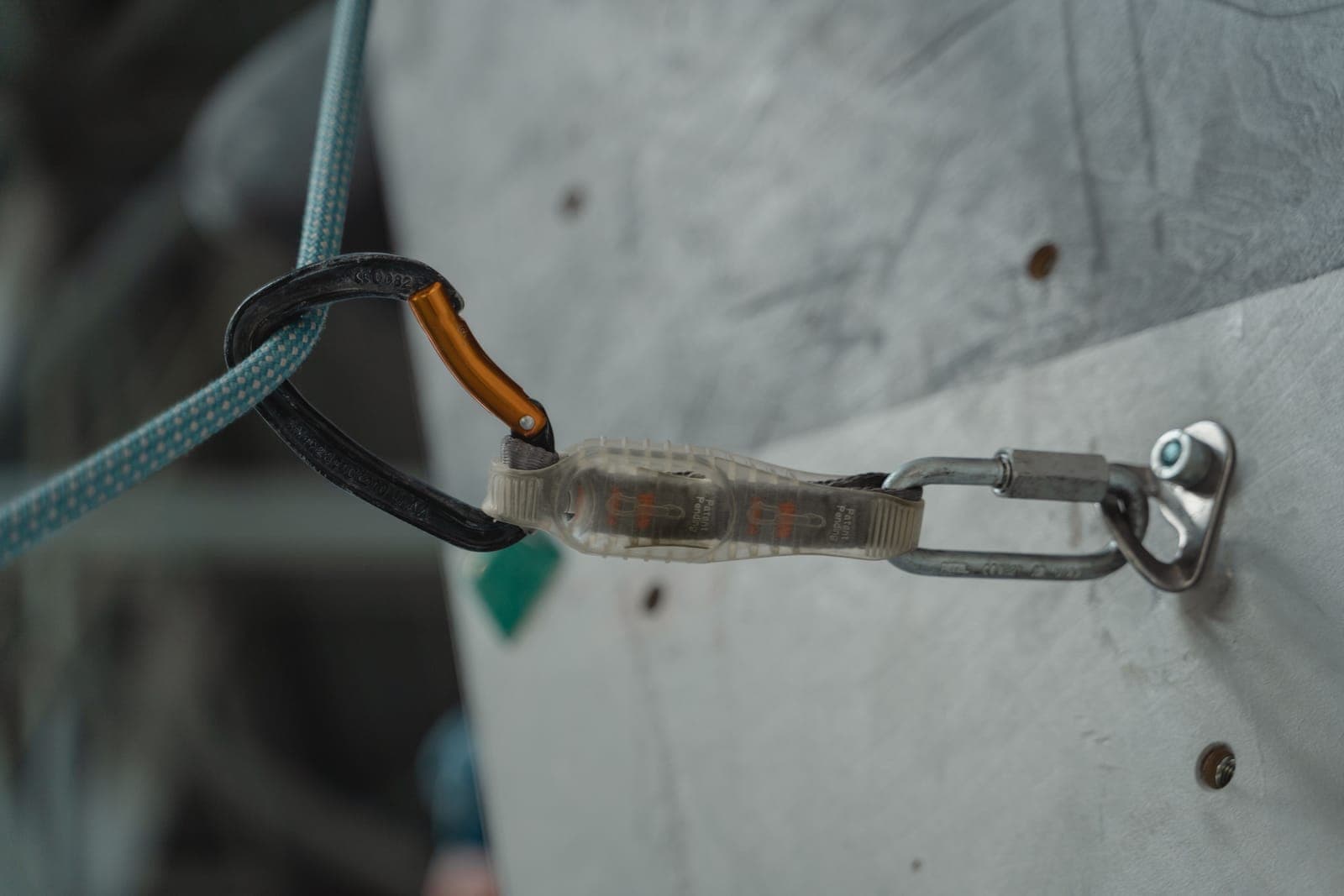
A tree kit is webbing straps at least an inch wide plus carabiners. A structural kit — wall, post or ceiling — is rated hardware anchored into solid timber or masonry. A stand needs no kit beyond what the hammock already has. Match the hardware to the anchor.
Part of our hammock gear hub. This page covers everything between the hammock and whatever holds it up.
Quick picks
Tap any row to jump to the full write-up. Prices are not shown anywhere on this site — we link straight to Amazon so you see the live figure.
| # | Product | Best for | Headline spec | Price |
|---|---|---|---|---|
| 1 |  Kammok Python 10 Hammock StrapsLonger, lighter and higher-rated than the category default — the straps most people should buy. | Best straps overall | 500 lb combined capacity | |
| 2 | Hammock Gear Whoopie SlingAn adjustable Amsteel sling that replaces bulky daisy-chain webbing at the hammock end of the suspension. | Adjustable suspension without webbing | Adjustable Amsteel whoopie sling, sold singly | |
| 3 | ENO Atlas Hammock Suspension SystemThe straps everyone else gets compared against — proven, stocked everywhere, a step behind the Python on specs. | The industry standard | 400 lb combined capacity | |
| 4 |  DutchWare Adjustable Structural RidgelineAn adjustable UCR ridgeline from 26 to 135 in — set your sag once and the hammock hangs the same way forever. | Repeatable sag, every time | Adjustable UCR ridgeline, 26 in minimum to 135 in maximum | |
| 5 | Hummingbird Hammocks Tree Straps1.55 oz for a 400 lb rating — the lightest credible straps in the category by a wide margin. | Best ultralight straps | 400 lb combined capacity |
#ad — the buy links above are affiliate links. See our affiliate disclosure.
Four anchors, four kits
| Anchor | What you need | What to avoid |
|---|---|---|
| Trees | Webbing straps 1 in or wider, plus carabiners | Bare rope, chain, or anything narrow against bark |
| A stand | Usually nothing — the hammock's own ends and hooks | Adding chain that exceeds the stand's length |
| Wall or post | Rated eye bolts or hooks into solid timber, with backing | Drywall anchors, decorative hooks, guesswork |
| Ceiling | A hook into a structural joist, rated for dynamic load | Anything that is not verifiably in a joist |
1. Best straps overall
Kammok Python 10 Hammock Straps
Longer, lighter and higher-rated than the category default — the straps most people should buy.
Specifications
- 500 lb combined capacity
- 10 ft 2.5 in long
- 8.2 oz
- 20 attachment points
Source: 99Boulders 2026 hammock strap test. We publish specs we can attribute and leave the rest blank rather than assuming a typical value.
What it does well
- 500 lb combined is the highest rating in 99Boulders' 2026 strap test
- 10 ft reaches around trees the 9 ft straps cannot
- 20 attachment points give finer hang-angle control
Where it falls short
- Slightly bulkier packed than a minimalist strap
- Daisy-chain webbing is still coarser adjustment than a cord system
Illustrative photograph of the category, not this exact product.
2. Adjustable suspension without webbing
Hammock Gear Whoopie Sling
An adjustable Amsteel sling that replaces bulky daisy-chain webbing at the hammock end of the suspension.
Specifications
- Adjustable Amsteel whoopie sling, sold singly
Source: hammockgear.com product page, 2026. We publish specs we can attribute and leave the rest blank rather than assuming a typical value.
What it does well
- Far less bulk and weight than daisy-chain webbing
- Infinite adjustment within its range
Where it falls short
- Still needs a tree-protection strap — a whoopie sling alone is not tree-friendly
- Published working load is not stated on the listing
Illustrative photograph of the category, not this exact product.
3. The industry standard
ENO Atlas Hammock Suspension System
The straps everyone else gets compared against — proven, stocked everywhere, a step behind the Python on specs.
Specifications
- 400 lb combined capacity
- 9 ft long
- 9 oz
- 15 attachment points
Source: 99Boulders 2026 hammock strap test and ENO product listing. We publish specs we can attribute and leave the rest blank rather than assuming a typical value.
What it does well
- Stocked in nearly every outdoor store, so replacement is easy
- Proven design with a long track record
Where it falls short
- 400 lb and 9 ft both trail the Kammok Python 10
- Heavier than the Python despite being shorter
Illustrative photograph of the category, not this exact product.
4. Repeatable sag, every time
DutchWare Adjustable Structural Ridgeline
An adjustable UCR ridgeline from 26 to 135 in — set your sag once and the hammock hangs the same way forever.
Specifications
- Adjustable UCR ridgeline, 26 in minimum to 135 in maximum
- Fixed alternatives at 100 in and 110 in for 10 ft and 11 ft hammocks
- DutchWare's rule of thumb: a ridgeline runs about 83% of the hammock's length
Source: dutchwaregear.com product pages, 2026. We publish specs we can attribute and leave the rest blank rather than assuming a typical value.
What it does well
- Fixes the hammock's sag independent of how far apart the trees are
- Adjustable range covers nearly any hammock length
Where it falls short
- One more thing in the suspension to learn and set up
- A ridgeline set too short makes the lay worse, not better
Illustrative photograph of the category, not this exact product.
5. Best ultralight straps
Hummingbird Hammocks Tree Straps
1.55 oz for a 400 lb rating — the lightest credible straps in the category by a wide margin.
Specifications
- 400 lb combined capacity
- 8 ft 4 in long
- 1.55 oz
- Single attachment point
Source: 99Boulders 2026 hammock strap test. We publish specs we can attribute and leave the rest blank rather than assuming a typical value.
What it does well
- 1.55 oz against the Atlas's 9 oz is a real pack-weight difference
- 400 lb capacity despite the weight
Where it falls short
- One attachment point means the hang angle is set with a knot, not a loop
- 8 ft 4 in is the shortest here — big trunks will defeat it
Illustrative photograph of the category, not this exact product.
Whoopie slings, and when they are worth it
A whoopie sling is an adjustable Amsteel loop that replaces bulky webbing at the hammock end of the suspension. It is lighter and far less bulky than a daisy chain, and it adjusts continuously rather than in fixed steps.
One thing to be clear about: a whoopie sling is not a tree-protection strap. Amsteel is thin, and thin against bark is exactly what damages a tree. The correct arrangement is a wide webbing strap around the trunk, with the whoopie sling running from the strap to the hammock.
Structural ridgelines
A ridgeline runs between the two ends of the hammock and fixes its sag regardless of how far apart the anchors are. DutchWare's rule of thumb is that a ridgeline runs about 83% of the hammock's length; their fixed lines are 100 and 110 inches for 10- and 11-foot hammocks, and their adjustable UCR runs from 26 to 135 inches.
The practical value is repeatability. Hang your hammock once at a sag you like, set the ridgeline to match, and every subsequent hang is identical whatever the trees are doing. See hammock ridgelines.
Wall and post mounting, done properly
- Find real structure. A stud, a joist, a post set in concrete. Drywall is not an anchor under any circumstances.
- Use hardware rated well above your intended load, because getting into a hammock is a dynamic event.
- Drill a pilot hole and thread the full length of the bolt into solid timber. Partial engagement is a failure waiting to happen.
- Where you are unsure — old buildings, rendered walls, unknown framing — use a stand instead.
- Re-check the hardware each season. Timber moves, and fixings work loose.
Carabiners
Use the ones that came with the hammock if it came with any — they are matched to its load. If you are replacing them, choose climbing-rated hardware rather than hardware-store snap hooks, which are usually not rated at all. Kammok specifies climbing-grade hardware on the Roo Double for exactly this reason.
Common questions
What comes in a hammock hanging kit?
Typically a pair of webbing tree straps and two carabiners. Some kits add rope or whoopie slings, and structural kits for walls and posts contain rated eye bolts or hooks instead of straps.
How do you attach a hammock to a hammock stand?
Most stands have hooks or chains at each end; the hammock's end loops or its supplied S-hooks clip straight on. If your hammock came with long extension chains, remember those add to the length the stand has to accommodate.
Can you hang a hammock from a wall?
Yes, into solid structure with rated hardware — a stud, a beam or a post set in concrete. Never into drywall. If you cannot confirm what is behind the surface, use a stand.
What is a whoopie sling?
An adjustable Amsteel loop that replaces webbing at the hammock end of the suspension. It is much lighter and less bulky than a daisy chain and adjusts continuously. It still needs a wide tree strap between it and the bark.
Sources
Every specification on this page traces to one of these. Where a recommendation rests on another publication's hands-on testing, we name it — we do not run a test lab.
Read next
Spotted something we got wrong? Tell us — corrections are part of our editorial policy.