The Best Hammock Stand for Uneven Ground
A fixed-leg frame on a slope rocks, twists and eventually walks. Adjustable legs are not a luxury here — they are the whole solution.
By Mike M. · Last updated
Knot & Nap is reader-supported. We earn from qualifying purchases as an Amazon Associate, at no extra cost to you. Commissions never decide what gets recommended — here is how we pick.
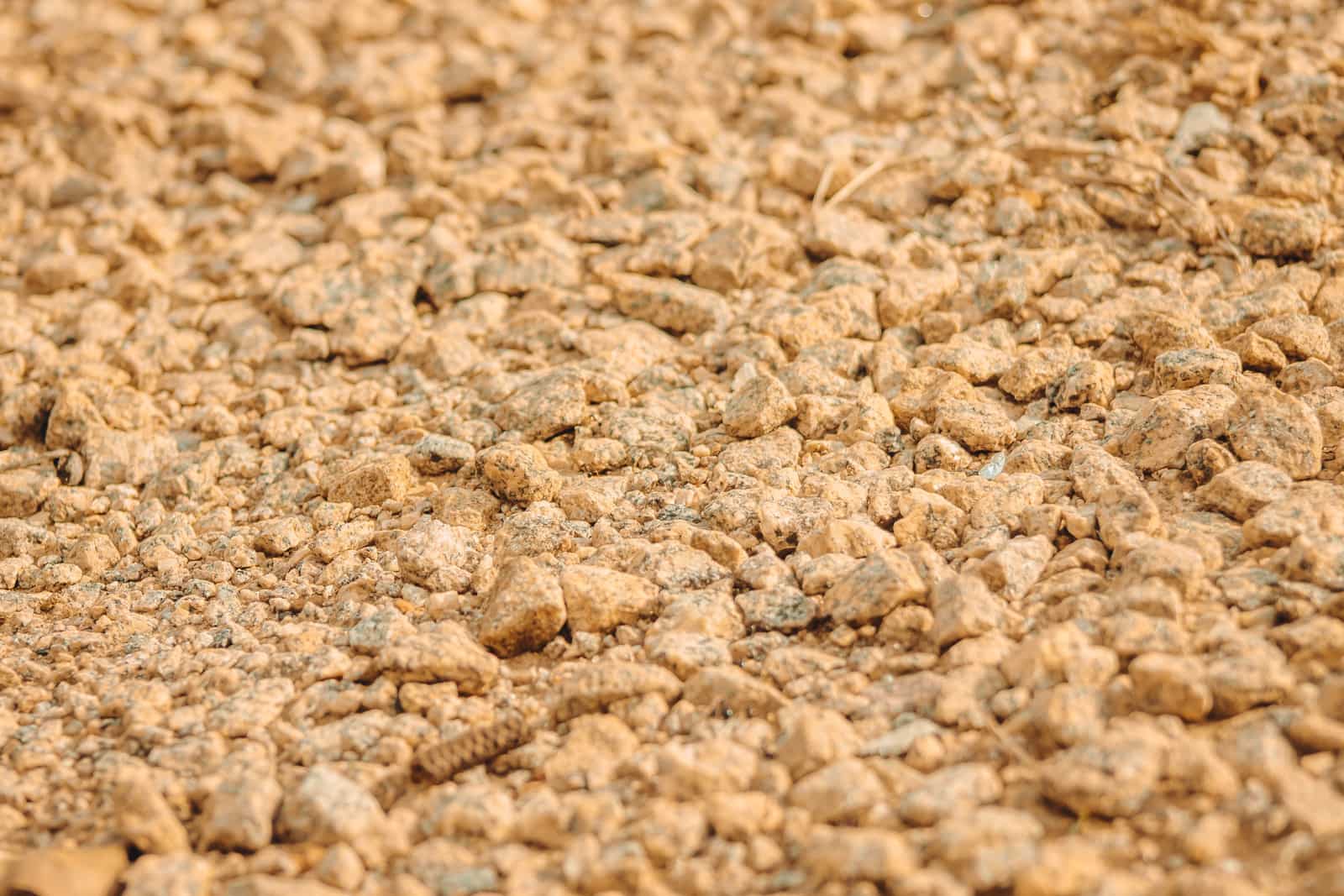
Buy a stand with independently adjustable legs. The ENO Nomad has six adjustment points and is designed for uneven ground and gravel; the ENO SoloPod uses rubber feet to sit on uneven surfaces in tight spaces. Both trade capacity for that flexibility — 300 lb and 400 lb respectively.
Part of our hammock stands hub. This question comes up constantly and the answers online are mostly forum threads, which tells you something about how badly it is covered. The short version: shimming a fixed frame is a temporary fix and adjustable legs are a permanent one.
Quick picks
Tap any row to jump to the full write-up. Prices are not shown anywhere on this site — we link straight to Amazon so you see the live figure.
| # | Product | Best for | Headline spec | Price |
|---|---|---|---|---|
| 1 | ENO Nomad Hammock StandSix adjustment points and 15 lb of frame — it earns its place on adjustability, not strength. | Uneven ground | Six adjustment points | |
| 2 | ENO SoloPod Hammock StandRubber feet, 400 lb, and a footprint that sets up in spaces where a full frame does not fit. | Tight spaces on rough ground | Rubber feet | |
| 3 |  Tranquillo 600 lb 2-Person Adjustable Hammock Stand600 lb, adjustable and collapsible — the rare stand that does not trade capacity for portability. | Heavy-duty and still portable | 600 lb capacity | |
| 4 | 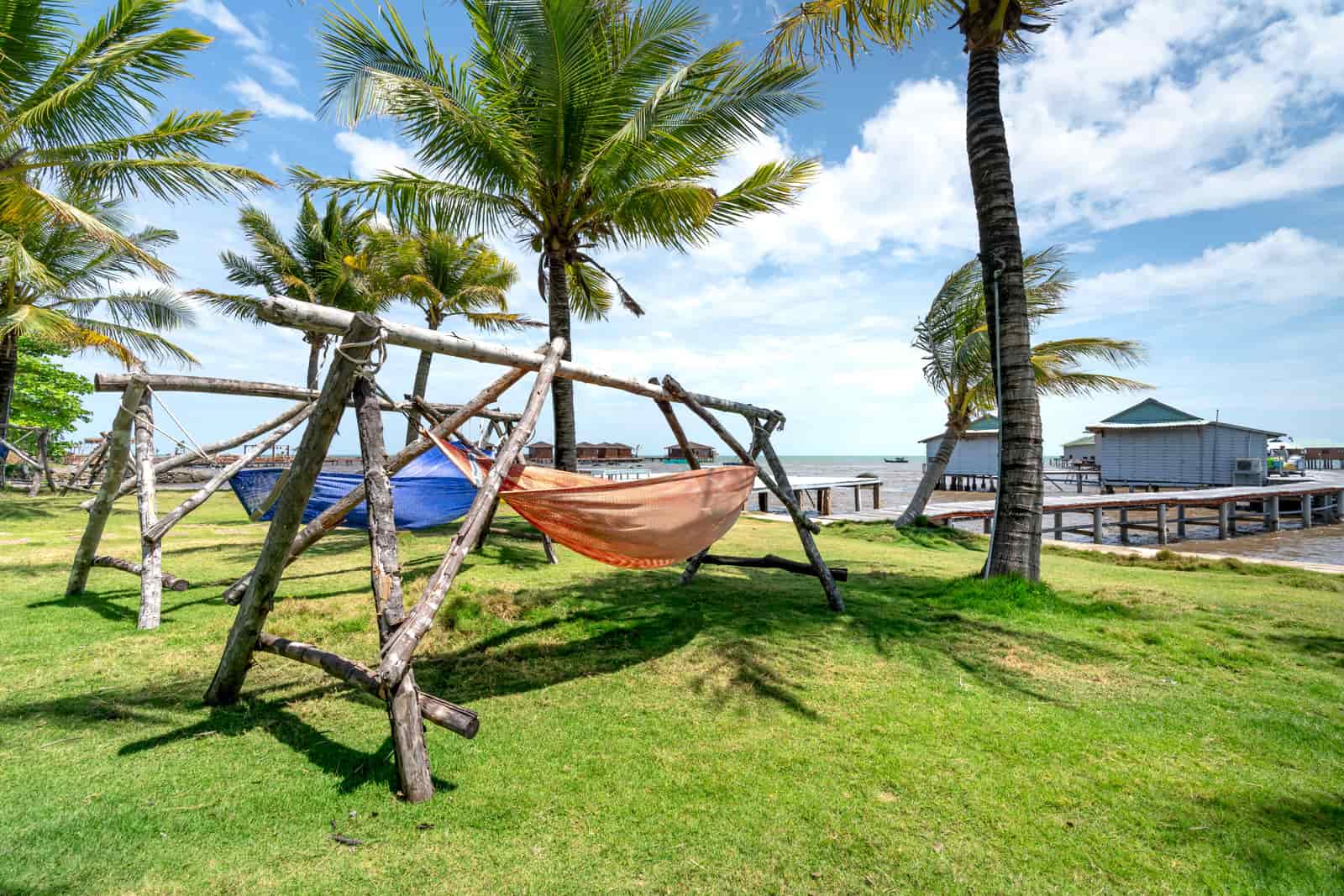 Kammok Swiftlet Hammock StandBob Vila's reviewer calls it the best stand they have tested — high quality, robust and surprisingly light. | Premium portable | Described by Bob Vila's reviewer as "the best stand I've tested so far: high-quality, robust, thoughtfully designed and surprisingly lightweight" |
#ad — the buy links above are affiliate links. See our affiliate disclosure.
Why uneven ground is a real problem, not a fussy one
A hammock stand is a lever. Put a person in the middle and the load tries to pull the two ends toward each other and push the feet outward. On flat ground those forces are symmetrical and the frame is stable. On a slope they are not: one end carries more, the frame twists slightly under each movement, and over a season the low feet dig in while the high feet lift.
You notice it first as a rocking motion when you get in. That rocking is the frame telling you its footprint is not fully in contact with the ground.
1. Uneven ground
ENO Nomad Hammock Stand
Six adjustment points and 15 lb of frame — it earns its place on adjustability, not strength.
Specifications
- Six adjustment points
- 15 lb
- 300 lb capacity
- Works on uneven ground and gravel
Source: The Atlas Heart, Parked In Paradise and 2026 uneven-ground research. We publish specs we can attribute and leave the rest blank rather than assuming a typical value.
What it does well
- Six adjustment points set up level on ground where a fixed frame will not
- 15 lb is light enough to actually carry to the site
Where it falls short
- 300 lb is the lowest capacity of any stand here — one person only
- Adjustability costs setup time compared with a fixed frame
Illustrative photograph of the category, not this exact product.
2. Tight spaces on rough ground
ENO SoloPod Hammock Stand
Rubber feet, 400 lb, and a footprint that sets up in spaces where a full frame does not fit.
Specifications
- Rubber feet
- 400 lb capacity
- Sets up on uneven surfaces in tight spaces
Source: 2026 uneven-ground hammock stand research. We publish specs we can attribute and leave the rest blank rather than assuming a typical value.
What it does well
- 400 lb with genuine uneven-ground tolerance is a rare combination
- Rubber feet keep it from walking on a hard deck
Where it falls short
- Heavier and bulkier than the Nomad
- Packed weight is not published
Illustrative photograph of the category, not this exact product.
3. Heavy-duty and still portable
Tranquillo 600 lb 2-Person Adjustable Hammock Stand
600 lb, adjustable and collapsible — the rare stand that does not trade capacity for portability.
Specifications
- 600 lb capacity
- Adjustable
- Collapsible
- Portable
Source: Walmart product listing, surfaced 2026-09-22. We publish specs we can attribute and leave the rest blank rather than assuming a typical value.
What it does well
- 600 lb with a collapsible frame is an unusual combination
- Adjustable length covers several hammock sizes
Where it falls short
- Heavier than a true backpacking stand
- Packed weight is not published
Illustrative photograph of the category, not this exact product.
4. Premium portable
Kammok Swiftlet Hammock Stand
Bob Vila's reviewer calls it the best stand they have tested — high quality, robust and surprisingly light.
Specifications
- Described by Bob Vila's reviewer as "the best stand I've tested so far: high-quality, robust, thoughtfully designed and surprisingly lightweight"
Source: Bob Vila 2026. We publish specs we can attribute and leave the rest blank rather than assuming a typical value.
What it does well
- The strongest single endorsement in the fetched stand coverage
- Light for a stand that is described as robust
Where it falls short
- Capacity and weight figures are not published in the sources we verified
- Premium positioning
Illustrative photograph of the category, not this exact product.
What to look for
| Feature | Why it matters on bad ground |
|---|---|
| Independently adjustable legs | Lets each foot reach the ground at a different height — the actual fix |
| Wide or padded feet | Spreads load so the frame does not sink into soft ground |
| Rubber feet | Grip on rock and hardstanding, where metal slides |
| A low center of gravity | Reduces the leverage any remaining tilt has on the frame |
| Tool-free adjustment | You will re-level it every time you move it; make that cheap to do |
Fixes that do not work
- Shimming with stones. They shift under dynamic load, which is precisely when you need them not to.
- Digging the high side down. It works until it rains and the hole fills.
- Paving slabs under one end. Better than stones, still a fixed solution to a variable problem, and it only levels one axis.
- Ignoring it. The frame will find its own level eventually, usually by bending.
The one non-adjustable fix that genuinely works is building a small level pad — compacted gravel with an edge restraint. That is a landscaping project rather than a purchase, but if the stand is staying put it is the most durable answer.
Setting up on a slope
- Site the frame across the slope rather than up and down it where you can — the ends then differ by less.
- Extend the downhill legs until the top rail looks level by eye, then sight along it.
- Sit in the hammock gently and watch the feet. Any that lift need another turn.
- Re-check after ten minutes. Soft ground settles under load.
Common questions
Can you put a hammock stand on a slope?
Yes, with an adjustable-leg stand. Fixed frames rock on a slope because not all four feet reach the ground, and that rocking becomes a twisting load every time you move. Stands with independently adjustable legs, such as the ENO Nomad with its six adjustment points, are built for exactly this.
What about gravel?
Gravel is fine for a stand with wide or rubber feet. The ENO Nomad is specifically described as working on uneven ground and gravel. Narrow metal feet will sink and shift.
Will a hammock stand sink into a lawn?
Over a wet season, yes, especially at the feet carrying the most load. Spread the load with boards or pads, or move the stand every few weeks. This is one of the clearest arguments for a stand you can disassemble easily.
Is there a stand that works on completely rough ground?
Adjustable stands handle a lot, but every stand needs its feet to reach solid ground. On terrain so rough that they cannot, the honest answer is to move the setup or hang from trees instead — see how to hang a hammock without trees for the full set of options.
Sources
Every specification on this page traces to one of these. Where a recommendation rests on another publication's hands-on testing, we name it — we do not run a test lab.
Read next
Spotted something we got wrong? Tell us — corrections are part of our editorial policy.