Hammock vs Tent Camping
A hammock beats a tent on terrain and ground comfort and loses on treeless sites and cold-weather simplicity. Where you camp decides it.
By Mike M. · Last updated
Knot & Nap is reader-supported. We earn from qualifying purchases as an Amazon Associate, at no extra cost to you. Commissions never decide what gets recommended — here is how we pick.
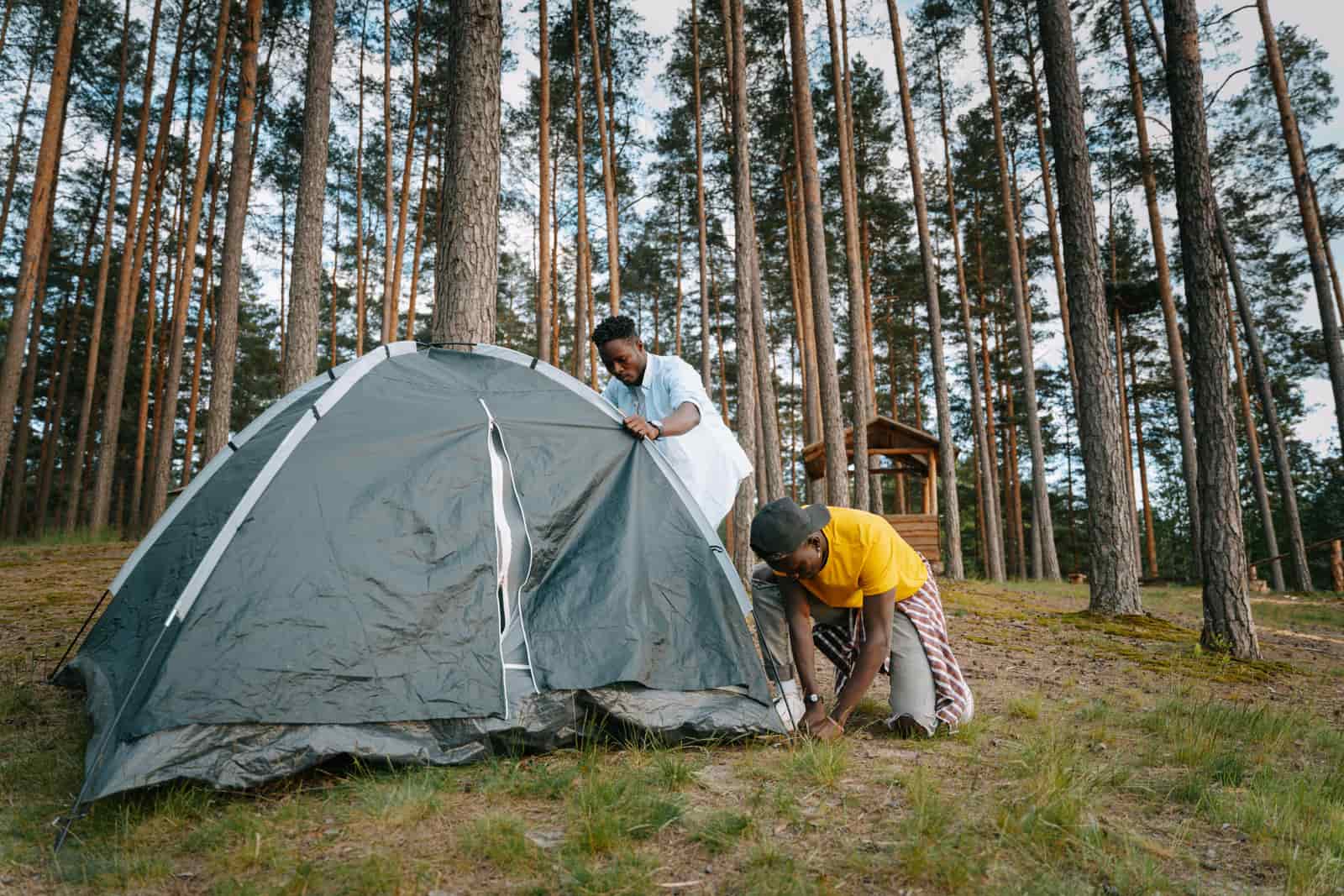
Choose a hammock if you camp in trees, on rough or sloping ground, or in wet conditions where the ground is the problem. Choose a tent if you camp above the treeline, in open country, in cold weather, or with a partner in one shelter.
Part of our comparisons hub. This is the decision that determines everything else you buy, so it is worth making it deliberately rather than by default.
Factor by factor
| Factor | Hammock | Tent |
|---|---|---|
| Weight | 26 oz for hammock, net and suspension; 42 oz with a tarp | Competitive at the ultralight end; heavier in family sizes |
| Setup time | Two minutes once practiced; needs two anchors | Two to ten minutes; needs flat ground |
| Comfort | No ground, no rocks, no roots — once the diagonal clicks | Familiar; only as good as the ground and your pad |
| Terrain | Rocky, sloping, wet, uneven — all fine | Needs a flat, clear, reasonably dry pitch |
| Treeless sites | Does not work without a stand | Works anywhere |
| Rain | Excellent under a tarp; you are off the wet ground | Good; the floor can pool in heavy rain |
| Cold | Needs an underquilt — air moves underneath you | Simpler; a pad handles it |
| Bugs | Needs a net; exposed on all sides without one | Built in |
| Two people | Two hammocks is better than one shared | One tent handles two comfortably |
| Cost to complete | Hammock plus straps plus tarp plus net plus quilt | One purchase, mostly |
Quick picks
Tap any row to jump to the full write-up. Prices are not shown anywhere on this site — we link straight to Amazon so you see the live figure.
| # | Product | Best for | Headline spec | Price |
|---|---|---|---|---|
| 1 | 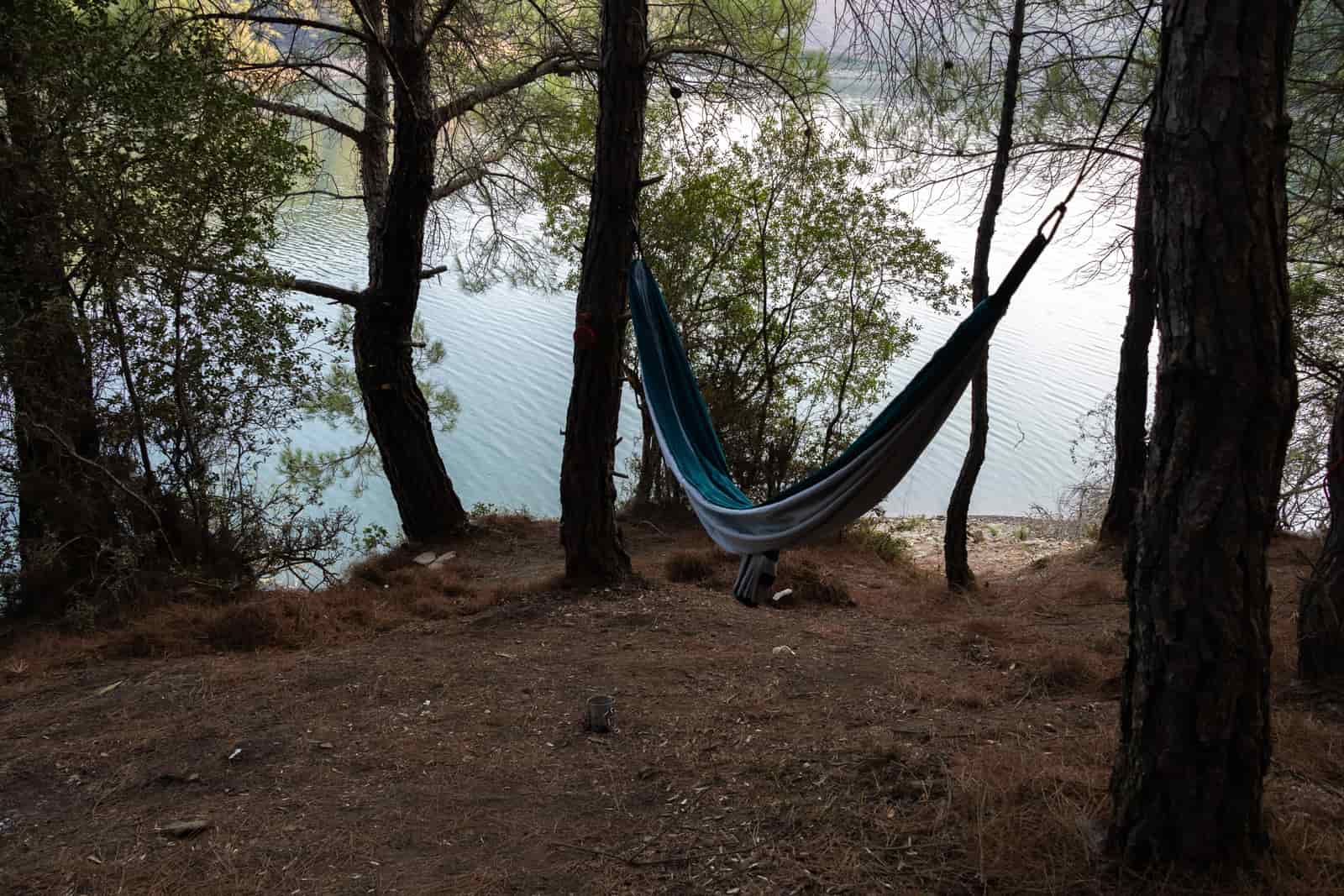 ENO DoubleNest HammockThe most widely sold camping hammock there is, and OutdoorGearLab's best all-around pick. | Best all-around camping hammock | Ranked best all-around hammock by OutdoorGearLab | |
| 2 | 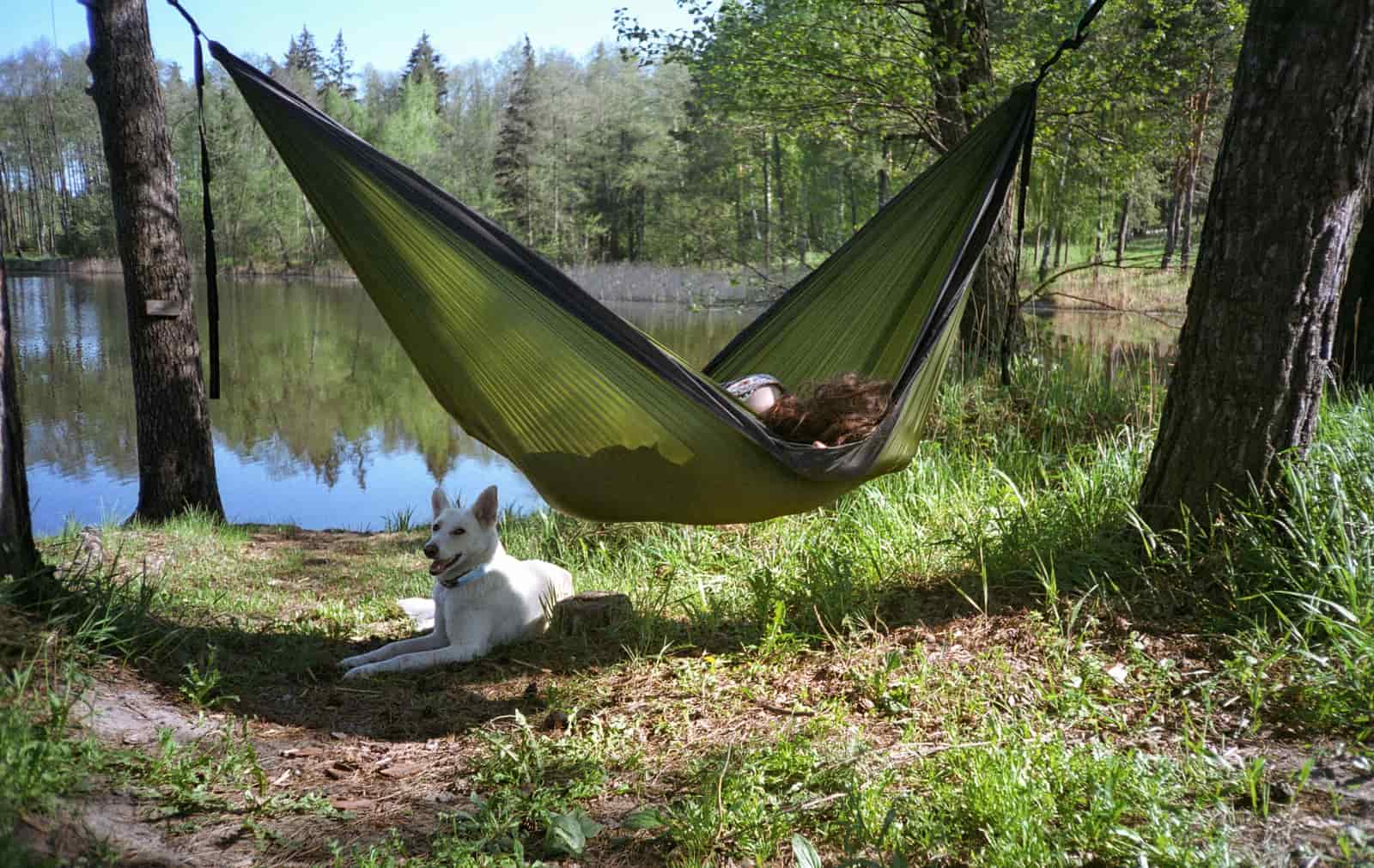 Warbonnet Original BlackbirdOutdoorGearLab's backcountry pick, with the bug net already built in and the lightest weight in their test. | Best for backcountry | Named best for backcountry by OutdoorGearLab | |
| 3 | 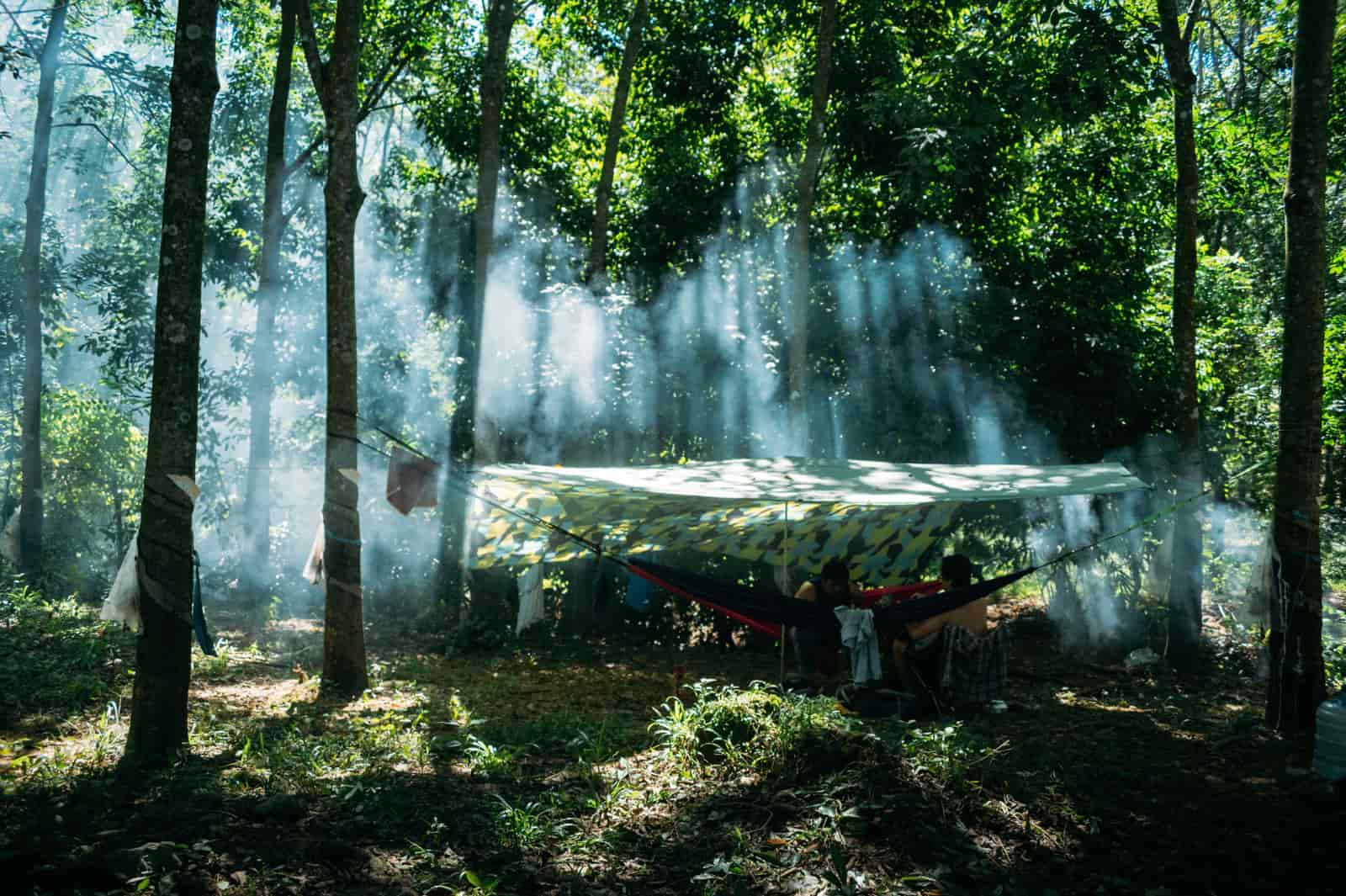 ENO ProFly Rain TarpThe default hammock tarp: 10 ft 6 in of 70D ripstop with a 1000 mm coating, sized for a standard camping hammock. | Best all-round rain tarp | 10 ft 6 in x 6 ft 4 in | |
| 4 |  Onewind Hammock UnderquiltOnewind's standard underquilt range, rated 35–50°F and 45–70°F depending on the model you pick. | Three-season warmth | Temperature ratings from 35°F to 50°F (2°C to 10°C) and 45°F to 70°F (7°C to 21°C) depending on model |
#ad — the buy links above are affiliate links. See our affiliate disclosure.
Where a hammock genuinely wins
- Bad ground. A slope, a root field, a rock shelf, a bog — a hammock does not care about any of it, and a tent cares about all of it.
- Wet sites. Being off the ground entirely is a different experience from a good groundsheet.
- Low-impact camping. No cleared pitch, no flattened vegetation.
- Hot weather. Air moves all around you, which no tent can offer.
- Long trips with bad backs. No pressure points at hip or shoulder once you sleep on the diagonal.
Where a tent wins, without argument
- No trees. Above the treeline, in desert, on beaches, at many developed sites. A hammock without anchors is fabric.
- Cold weather. A tent plus a pad is simpler and lighter than a hammock plus an underquilt at the same temperature.
- Two people in one shelter. Two adults in one hammock is uncomfortable for a full night.
- Somewhere to sit out a storm. A tent gives you an interior; a tarp gives you shelter.
- Sites that prohibit tree hanging, which is a growing list.
Cost, properly counted
A hammock is cheap and a hammock system is not. To match a tent you need the hammock, straps, a bug net, a tarp and under-insulation. That is five purchases against one, and it is the most common reason people feel misled after their first hammock buy. Our beginner's guide sets out the full list in the order to buy it.
If you are going to try it
Hang with plenty of sag at roughly a 30-degree suspension angle, anchors 12 to 17 feet apart, around 16 to 19 inches of clearance, and lie diagonally. Get those right on your first night and the comparison above is decided by terrain. Get them wrong and you will conclude hammocks are uncomfortable, which is the wrong conclusion drawn from the right experience.
Common questions
Is a hammock better than a tent for camping?
In trees and on bad ground, yes. Above the treeline, in cold weather, or with two people sharing one shelter, a tent is better. The terrain you camp on decides it more than any feature comparison.
Is a hammock lighter than a tent?
A hammock alone is much lighter. A complete hammock system — hammock, suspension, tarp and under-insulation — lands around 42 oz by OutdoorGearLab's figure for a Warbonnet setup, which is competitive with a lightweight tent rather than dramatically lighter.
Are hammocks warmer or colder than tents?
Colder, unless you have an underquilt. Air moves freely under a hammock and your sleeping bag compresses flat beneath you, so you lose heat at the one point a tent protects with a pad.
Can you use a hammock where there are no trees?
Only with a stand, and stands are heavy — the lightest we track is 15 lb. For a treeless site, a tent or a portable hammock stand are your options.
Sources
Every specification on this page traces to one of these. Where a recommendation rests on another publication's hands-on testing, we name it — we do not run a test lab.
Read next
Spotted something we got wrong? Tell us — corrections are part of our editorial policy.