Hammock vs Tent for Backpacking
Everyone compares a bare hammock to a whole tent, which is why hammocks look weightless and then are not. Here is the arithmetic with every piece of the system counted.
By Mike M. · Last updated
Knot & Nap is reader-supported. We earn from qualifying purchases as an Amazon Associate, at no extra cost to you. Commissions never decide what gets recommended — here is how we pick.
For backpacking, a hammock is competitive on weight only when you count the whole system. The lightest credible three-season build on this site adds up to 44.35 oz — 2 lb 12 oz — of hammock, straps, tarp and underquilt. A comfortable build with a bug net built in comes to 64.2 oz, almost exactly 4 lb. Put your tent's published trail weight next to those two numbers and you have your answer.
Part of our comparisons hub. Our general hammock vs tent page covers the comfort, weather and cost argument for camping broadly. This page exists because backpacking changes the question into something much narrower and much more answerable: what does the complete shelter weigh, how much pack volume does it take, and can you use it where you are going. The comfort argument barely matters at mile eighteen. The weight does.
Quick picks
Tap any row to jump to the full write-up. Prices come straight from Amazon and are refreshed daily; where a figure is missing the link takes you to the live one.
| # | Product | Best for | Headline spec | Price |
|---|---|---|---|---|
| 1 | No image ENO Sub6 Ultralight HammockENO's ultralight — the weight-first option when the hammock has to disappear into the pack. | Cutting pack weight | 300 lb capacity | |
| 2 | No image Hummingbird Hammocks Tree Straps1.55 oz for a 400 lb rating — the lightest credible straps in the category by a wide margin. | Best ultralight straps | 400 lb combined capacity | |
| 3 | No image Warbonnet Superfly TarpA 132 x 120 in four-season tarp with doors, in 20D silpoly at 12.3 oz — winter coverage at a summer weight. | Four-season coverage | 132 x 120 in | |
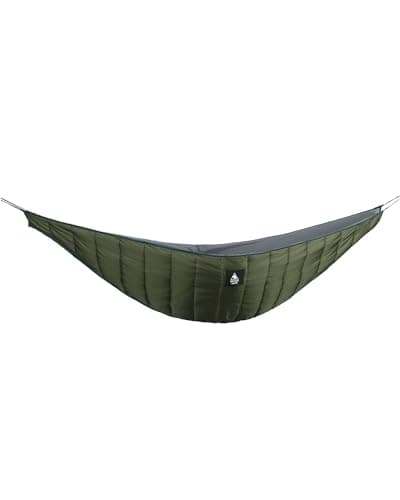
| 4 | OneTigris Night Protector Ultralight Hammock UnderquiltUnder 25 oz for a full-length synthetic quilt, in a three-season and a winter version, for when down is out of budget but weight still matters. | Lightest synthetic here | 24.7 oz / 700 g | |
| 5 | No image Warbonnet Blackbird XLCThe long version of the Blackbird: 11 ft of body and a published rating to 7 ft of user, at a weight that still belongs in a backpack. | Backpacking at 11 ft | 11 ft (132 in) body length | |
| 6 | 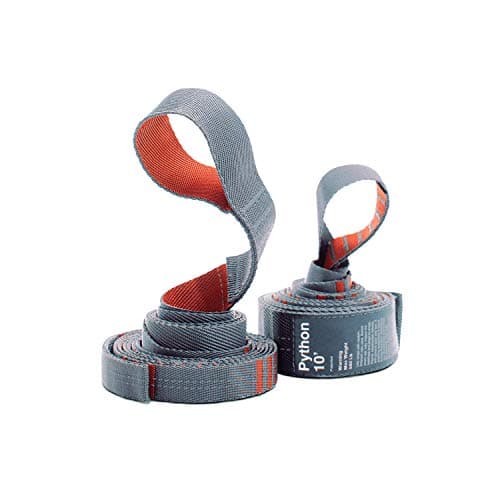 Kammok Python 10 Hammock StrapsLonger, lighter and higher-rated than the category default — the straps most people should buy. | Best straps overall | 500 lb combined capacity |
#ad — the buy links above are affiliate links. See our affiliate disclosure.
The mistake almost every comparison makes
A tent is sold as a system. The published trail weight of a tent includes the body, the fly and the poles, and you are comparing a complete shelter. A hammock is sold as a bed. The number on the listing — 19 oz for an ENO DoubleNest, 5.8 oz for an ENO Sub6 — is the fabric you lie in and nothing else.
A hammock shelter needs four things, and three of them are separate purchases:
- The hammock. The bed. Sometimes with a bug net built in, which saves you the fifth item.
- Suspension. Tree straps. Not optional, and not a rope — inch-wide webbing is what keeps you off the cambium, per are hammocks bad for trees.
- A tarp. This is the one people forget. A hammock has no fly. Without a tarp you have no rain shelter at all, which is a different situation from a tent you decided not to pitch properly.
- Under-insulation. Also not optional below about 70F, because a sleeping bag compresses flat under your back and stops working. The full explanation is in do I need an underquilt.
Count all four and the comparison becomes honest. Count only the first and a hammock looks like it weighs nothing, which is how people end up carrying a 5.8 oz hammock and a cold, wet night.
The arithmetic, with published figures only
| Component | Light build | Comfortable build |
|---|---|---|
| Hammock | ENO Sub6 — 5.8 oz, 300 lb, 9 ft x 4 ft, 30D | Warbonnet Blackbird XLC single layer — 19 oz, bug net integrated |
| Suspension | Hummingbird tree straps — 1.55 oz, 400 lb, 8 ft 4 in | Kammok Python 10 — 8.2 oz, 500 lb, 10 ft 2.5 in |
| Tarp | Warbonnet Superfly — 12.3 oz, 132 x 120 in, 20D silpoly | Warbonnet Superfly — 12.3 oz |
| Under-insulation | OneTigris Night Protector — 24.7 oz, 40 to 68F | OneTigris Night Protector — 24.7 oz |
| Bug protection | Not included — the Sub6 is a bare hammock | Included in the hammock |
| Total | 44.35 oz — 2 lb 12.4 oz | 64.2 oz — 4 lb 0.2 oz |
| Total, warm nights with no quilt | 19.65 oz — 1 lb 3.7 oz | 39.5 oz — 2 lb 7.5 oz |
Those last two rows are the ones worth staring at. Above about 70F, when you genuinely do not need under-insulation, a hammock shelter drops to 1 lb 4 oz at the light end and beats nearly anything with poles. Add a quilt for a shoulder-season night and the same setup is 2 lb 12 oz, which is competitive but no longer magic. The quilt is more than half the system weight, and that single fact is the real answer to this comparison.
One honest gap: the light build has no bug protection. Adding an ENO Guardian bug net fixes it, but ENO does not publish a weight or packed size for the Guardian, so we cannot put a number in the table. That is exactly why the comfortable build uses a hammock with the net sewn in — the Blackbird XLC's 19 oz already includes it, which makes it the more predictable system even though it is heavier on paper.
1. Cutting pack weight
ENO Sub6 Ultralight Hammock
ENO's ultralight — the weight-first option when the hammock has to disappear into the pack.
Specifications
- 300 lb capacity
- 9 ft x 4 ft
- 5.8 oz
- 30D ripstop nylon
Source: Treeline Review 2026 spec table. We publish specs we can attribute and leave the rest blank rather than assuming a typical value.
What it does well
- 5.8 oz is a third of the weight of a SingleNest
- ENO suspension compatibility
Where it falls short
- Thin 30D fabric is less forgiving of rough bark and sharp gear
- 300 lb is the lowest rating in the ENO range
No licensed photograph of this product is available to us yet.
2. Best ultralight straps
Hummingbird Hammocks Tree Straps
1.55 oz for a 400 lb rating — the lightest credible straps in the category by a wide margin.
Specifications
- 400 lb combined capacity
- 8 ft 4 in long
- 1.55 oz
- Single attachment point
Source: 99Boulders 2026 hammock strap test. We publish specs we can attribute and leave the rest blank rather than assuming a typical value.
What it does well
- 1.55 oz against the Atlas's 9 oz is a real pack-weight difference
- 400 lb capacity despite the weight
Where it falls short
- One attachment point means the hang angle is set with a knot, not a loop
- 8 ft 4 in is the shortest here — big trunks will defeat it
No licensed photograph of this product is available to us yet.
3. Four-season coverage
Warbonnet Superfly Tarp
A 132 x 120 in four-season tarp with doors, in 20D silpoly at 12.3 oz — winter coverage at a summer weight.
Specifications
- 132 x 120 in
- 11 ft long, 10 ft wide at center
- 12.3 oz
- 20D ripstop silpoly with fully taped seams
- Four-season tarp with doors
Source: Warbonnet Outdoors product page and Trailspace, 2026. We publish specs we can attribute and leave the rest blank rather than assuming a typical value.
What it does well
- Doors close off the ends, which is what four-season coverage actually means
- 12.3 oz for that coverage is remarkable
Where it falls short
- 20D silpoly needs care around sharp branches
- Cottage-brand availability, not shelf stock
No licensed photograph of this product is available to us yet.
4. Lightest synthetic here
OneTigris Night Protector Ultralight Hammock Underquilt
Under 25 oz for a full-length synthetic quilt, in a three-season and a winter version, for when down is out of budget but weight still matters.
Specifications
- 24.7 oz / 700 g
- Full length 7.9 ft x 4 ft (240 cm x 120 cm)
- Three-season version rated 40F to 68F (5C to 20C)
- Winter version rated 23F to 41F (-5C to 5C)
- Compression stuff sack included
Source: OneTigris Night Protector Amazon listing, 2026. We publish specs we can attribute and leave the rest blank rather than assuming a typical value.
What it does well
- 24.7 oz is lighter than both ENO synthetic quilts
- Synthetic fill keeps working damp, which is the failure mode down has under a hammock
- Two versions cover summer and winter without a custom order
Where it falls short
- Synthetic packs bulkier than 850-fill down at the same warmth
- Seller-published temperature bands with no standardized test behind them
Product photograph supplied by Amazon.
#ad we may earn a commission · price as of November 3, 2026
5. Backpacking at 11 ft
Warbonnet Blackbird XLC
The long version of the Blackbird: 11 ft of body and a published rating to 7 ft of user, at a weight that still belongs in a backpack.
Specifications
- 11 ft (132 in) body length
- 63 in standard width
- 111 in ridgeline
- Rated for users up to 7 ft
- Single layer: max comfort range to 250 lb, max load 300 lb
- Single layer weighs 19 oz without suspension
- Integrated bug netting
Source: Warbonnet Outdoors published specifications and hammock comparison chart, 2026. We publish specs we can attribute and leave the rest blank rather than assuming a typical value.
What it does well
- The extra two feet over the Original Blackbird is exactly the dimension tall sleepers are short of
- 19 oz for an 11 ft hammock with the net built in is a genuinely light full system
- Configurable at order time — layer, width and netting are chosen rather than fixed
Where it falls short
- Ordered direct from Warbonnet, so expect cottage-brand lead times rather than shelf stock
- Max load is 300 lb, lower than several shorter hammocks on this page
- The integrated net comes along on bug-free nights whether you want it or not
No licensed photograph of this product is available to us yet.
6. Best straps overall
Kammok Python 10 Hammock Straps
Longer, lighter and higher-rated than the category default — the straps most people should buy.
Specifications
- 500 lb combined capacity
- 10 ft 2.5 in long
- 8.2 oz
- 20 attachment points
Source: 99Boulders 2026 hammock strap test. We publish specs we can attribute and leave the rest blank rather than assuming a typical value.
What it does well
- 500 lb combined is the highest rating in 99Boulders' 2026 strap test
- 10 ft reaches around trees the 9 ft straps cannot
- 20 attachment points give finer hang-angle control
Where it falls short
- Slightly bulkier packed than a minimalist strap
- Daisy-chain webbing is still coarser adjustment than a cord system
Product photograph supplied by Amazon.
#ad we may earn a commission · price as of November 3, 2026
Pack volume, which nobody publishes properly
Weight is the number people argue about; volume is the one that decides whether your pack closes. A hammock system is four or five separate soft items, which is an advantage — they stuff into gaps a tent cannot use, and there are no poles to lie diagonally across everything. A tent is one bundle plus a rigid pole set.
The catch is the underquilt. Synthetic insulation is bulky: OneTigris publishes the Hideout at 13 by 6.8 in packed, and that is a real chunk of a 50-liter pack. Down is the fix — Hammock Gear states a 40F Incubator stuffs to roughly 4.5 liters and a 20F to about 8.5 liters — and down under a hammock sits exactly where condensation collects. There is no free answer here, and underquilt vs sleeping pad is where we work through the trade.
Where you are going decides this more than weight does
The hammock wins
- Forested, broken, wet ground. The whole premise: you need two trees and no flat ground at all. Roots, slope, rocks and standing water stop mattering.
- Established forest trails below the treeline. Appalachian-style corridors are hammock country, which is why the format took hold there first.
- Warm, buggy nights. Airflow underneath you is a genuine comfort advantage a tent floor cannot offer, and above 70F you drop the heaviest component.
- Leave-no-trace sites. A hammock touches the ground nowhere. Done with wide straps, it is the gentlest shelter in the woods.
The tent wins
- Above the treeline. No trees, no hammock. This is not a preference, it is a hard stop, and it rules out most alpine and desert itineraries.
- Shared shelters. Two people in one tent split the weight of one shelter. Two hammocks is two complete systems, and the per-person weight advantage disappears entirely.
- Genuine cold. You can hammock in winter, but the under-insulation that makes it work is the heaviest part of the system, and a tent plus a pad on the ground is simpler.
- Sitting out weather. A tent is a room. A tarp over a hammock is a roof. A full day of rain in camp is noticeably worse in a hammock.
- Needing to change your mind. A tent pitches anywhere flat. A hammock needs a specific feature of a specific site, and finding out at dusk that the spacing is wrong is a bad evening.
Site selection is the real skill
A tent needs flat ground. A hammock needs two healthy trunks roughly 12 to 17 ft apart, both solid enough to take a multiplied load, with nothing dead overhead. Learning to see that spacing from the trail is the single competence that separates people who enjoy hammock backpacking from people who try it once.
It also pays to understand that hanging tight makes things worse, not safer. The Omni Calculator hang model shows how sharply the force at each anchor climbs as the hang angle flattens, so a tight, flat hammock loads the trees and the hardware far beyond body weight. Aim for roughly 30 degrees — the numbers are in hanging distance and angle and the tree-side technique is in how to hang a hammock between trees.
If you want one system for everything
Then buy the tent, honestly. The hammock is better in its own terrain and unusable outside it, and a shelter that cannot be pitched is a liability rather than a compromise. The people who go all-hammock are the ones whose hiking is overwhelmingly forested.
If you want to try hammock backpacking without committing, buy the comfortable build rather than the light one. A hammock with the bug net integrated removes the one piece of the system whose weight nobody publishes, a 10 ft strap reaches trunks a short strap will not, and a four-season tarp with doors means a wet night is survivable rather than instructive. Our best backpacking hammocks roundup is the shortlist, and what size tarp for hammock camping covers the coverage question.
Common questions
Is a hammock lighter than a tent for backpacking?
Only once you count the whole system, and then it depends on the season. Hammock, straps, tarp and a synthetic underquilt comes to 44.35 oz — 2 lb 12 oz — using published component weights at the light end. Drop the quilt on nights above about 70F and the same setup is 1 lb 4 oz. The quilt is more than half the weight.
What do you need for hammock backpacking besides the hammock?
Three more things, all separate purchases: tree straps, a tarp and under-insulation. The tarp is the one people forget — a hammock has no fly, so without it you have no rain shelter. Under-insulation is needed below about 70F because a sleeping bag compresses flat under your back and stops insulating.
Can you use a hammock above the treeline?
No. No trees means no hammock, and that is a hard stop rather than a preference. It rules out most alpine and desert itineraries, which is the strongest single argument for carrying a tent if your hiking is not overwhelmingly forested.
Is a hammock or tent better for two people backpacking?
A tent, clearly. Two people in one tent split the weight of a single shelter. Two hammocks means two complete systems — two hammocks, two sets of straps, two tarps and two underquilts — so any per-person weight advantage disappears.
How far apart do trees need to be for a backpacking hammock?
Roughly 12 to 17 ft for most hammocks, both trunks healthy and solid, with nothing dead overhead. Hang each end at about a 30-degree line rather than pulling it tight: a flat, tight hang multiplies the force at each anchor well beyond body weight.
Sources
Every specification on this page traces to one of these — manufacturer data, owner's manuals, published standards and named independent publications, all linked so you can check them yourself.
- Warbonnet Outdoors — Superfly tarp published specifications
- Warbonnet Outdoors — Blackbird XLC published specifications
- OneTigris — Night Protector and Hideout underquilt published specifications
- ENO — current hammock range and published specifications
- 99Boulders — 5 Best Hammock Tree Straps (2026 test)
- CleverHiker — Best Backpacking Hammocks
- Omni Calculator — Hammock Hang Calculator
- OutdoorGearLab — The Best Hammocks of 2026
Read next
Spotted something we got wrong? Tell us — corrections are part of our editorial policy.