Do I Need an Underquilt for My Hammock?
Below about 70F you will feel the air under you. Below about 50F you will not sleep without something there. The question is which something, not whether.
By Mike M. · Last updated
Knot & Nap is reader-supported. We earn from qualifying purchases as an Amazon Associate, at no extra cost to you. Commissions never decide what gets recommended — here is how we pick.
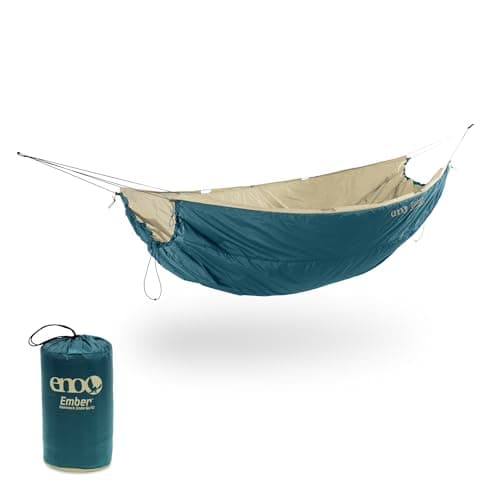
Yes, if you are sleeping out below roughly 70F. A sleeping bag compresses flat under your back in a hammock so its insulation stops working, which is why underquilts exist. The published summer quilts start at 40 to 68F — ENO rates the Ember 40 to 60F and OneTigris rates the Hideout 41 to 68F — so even mild nights are inside their range.
Part of our guides hub. This question is usually asked by someone who has just had a cold first night in a hammock and cannot work out why, because they had a perfectly good sleeping bag. The answer is that the bag was fine and the physics were not: lying in a hammock presses the bag flat between your body and the fabric, and flat insulation has almost no loft, which means almost no insulation. The air moving underneath then takes heat away all night.
The temperature where it stops being optional
| Product | Published range | Insulation | Published weight |
|---|---|---|---|
| ENO Ember UnderQuilt | 40 to 60F (4 to 15C) | 160 g recycled polyester | 27 oz / 754 g |
| OneTigris Hideout | 41 to 68F (5 to 20C) | 700 g polyester fill | 1.7 lb / 770 g |
| OneTigris Night Protector | 40 to 68F three-season; 23 to 41F winter version | Synthetic | 24.7 oz / 700 g |
| Onewind Flare | 30 to 50F | Synthetic | Not published |
| Onewind Solstice | 32 to 56F (0 to 15C) | Down | Not published |
| Hammock Gear Incubator | 40F, 30F, 20F, 10F and 0F models | 850 fill-power down | Not published per rating |
| Warbonnet Wooki | 40F, 20F, 0F and -20F models | 850-fill Expi-Dry Gold down | Not published per rating |
Read the top of those ranges rather than the bottom. The most common summer quilts are published as useful up to 60F and 68F, which tells you the makers expect them to be doing work on nights most people would call warm. If your nights are reliably above 70F you can get away without one; if they dip into the fifties, nothing else on this page will keep you comfortable.
What to look for when you do buy one
- A published temperature range, not a season name. Half this category sells on the word three-season and publishes no figures at all.
- Length against your hammock, and against you. The OneTigris Hideout publishes 9.2 ft of length, which covers an 11 ft hammock end to end. Hammock Gear publishes three fitted lengths, from 5 ft 2 in up to 6 ft 7 in of user height, which stops you paying for insulation past your calves.
- Synthetic versus down. Synthetic keeps insulating when damp, which matters because the underside of a hammock is exactly where condensation collects. Down packs smaller for the same warmth and loses loft when wet.
- A published fit for your hammock, if one exists. ENO states the Ember fits every ENO hammock except the DayLoft and SuperNest. That is a compatibility statement rather than an inference from dimensions, and it is rare.
- Suspension in the box. The Hideout ships with bungee cord loops and two carabiners; several quilts ship with nothing.
Quick picks
Tap any row to jump to the full write-up. Prices come straight from Amazon and are refreshed daily; where a figure is missing the link takes you to the live one.
| # | Product | Best for | Headline spec | Price |
|---|---|---|---|---|
| 1 | ENO Ember UnderQuiltENO's own synthetic quilt, and the only one whose fit with a DoubleNest is a published compatibility statement rather than an assumption. | Best underquilt for a DoubleNest | 40 to 60 degrees F (4 to 15 C) | |
| 2 | 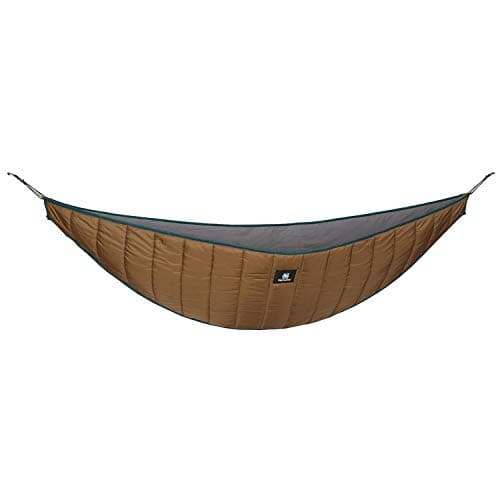 OneTigris Hideout Hammock UnderquiltThe budget benchmark: a full-length quilt that publishes its temperature band, its fill weight and its packed size, which most cheap quilts never do. | Best cheap underquilt | Rated 41F to 68F (5C to 20C) | |
| 3 | No image Klymit Insulated Hammock V Sleeping PadA 47-inch-wide pad with wings and non-slip zones — the one sleeping pad designed to stay under you in a hammock instead of squirting out. | The pad built for hammocks | R-value 4.4 insulated; 1.6 uninsulated | |
| 4 | No image Onewind Flare Hammock UnderquiltOnewind's entry quilt, rated 30F to 50F, which is a colder published band than most cheap quilts reach. | The coldest budget rating | Rated 30F to 50F |
#ad — the buy links above are affiliate links. See our affiliate disclosure.
1. Best underquilt for a DoubleNest
ENO Ember UnderQuilt
ENO's own synthetic quilt, and the only one whose fit with a DoubleNest is a published compatibility statement rather than an assumption.
Specifications
- 40 to 60 degrees F (4 to 15 C)
- 100% recycled polyester insulation (160 g) in dual-layer offset quilting
- 27 oz / 754 g
- 6 ft 10 in x 4 ft laid out; packs to 12 x 7 x 7 in
- ENO states compatibility with all ENO hammocks except the DayLoft and SuperNest
Source: eaglesnestoutfittersinc.com Ember UnderQuilt product page, 2026. We publish specs we can attribute and leave the rest blank rather than assuming a typical value.
What it does well
- Published compatibility with the DoubleNest, not inferred from dimensions
- Synthetic keeps working damp, which matters under a hammock
- Recycled insulation at a mainstream price
Where it falls short
- 40 to 60 F is a summer and shoulder-season range, not a cold-weather one
- 27 oz and around 9 liters packed is bulky against a down quilt
Product photograph supplied by Amazon.
#ad we may earn a commission · price as of October 17, 2026
2. Best cheap underquilt
OneTigris Hideout Hammock Underquilt
The budget benchmark: a full-length quilt that publishes its temperature band, its fill weight and its packed size, which most cheap quilts never do.
Specifications
- Rated 41F to 68F (5C to 20C)
- 1.7 lb / 770 g
- Unfolded 9.2 ft x 4 ft (2.8 m x 1.2 m)
- 700 g polyester fill
- 210T Terylene shell with a 300T polyester pongee lining
- Packs to 13 in x 6.8 in (33 cm x 17 cm)
- Bungee cord loops and two carabiners included
Source: camping.onetigris.com Hideout underquilt product page, 2026. We publish specs we can attribute and leave the rest blank rather than assuming a typical value.
What it does well
- Publishes fill weight, packed size and shell fabric, which is rare at this end of the market
- 9.2 ft of length covers an 11 ft hammock end to end
- Bungee suspension and carabiners in the box, so there is nothing else to source
Where it falls short
- 41F at the bottom of its range is a shoulder-season quilt, not a winter one
- 13 x 6.8 in packed is bulky next to a down quilt
Product photograph supplied by Amazon.
#ad we may earn a commission · price as of October 17, 2026
3. The pad built for hammocks
Klymit Insulated Hammock V Sleeping Pad
A 47-inch-wide pad with wings and non-slip zones — the one sleeping pad designed to stay under you in a hammock instead of squirting out.
Specifications
- R-value 4.4 insulated; 1.6 uninsulated
- 35 oz
- 78 x 47 x 2.5 in inflated; packs to 5 x 10 in
- Klymalite synthetic insulation in the V chambers
- Non-slip zones; Klymit claims 180 degrees of draft protection
Source: Klymit and REI product listings for the Insulated Hammock V, 2026. We publish specs we can attribute and leave the rest blank rather than assuming a typical value.
What it does well
- 47 in wide with wings, so shoulders and hips stay on it
- R-4.4 is a real winter number that no summer underquilt matches
- Works on the ground too, which an underquilt does not
Where it falls short
- A pad still compresses your insulation and squeaks against nylon
- 35 oz is heavier than the ENO Ember underquilt
No licensed photograph of this product is available to us yet.
4. The coldest budget rating
Onewind Flare Hammock Underquilt
Onewind's entry quilt, rated 30F to 50F, which is a colder published band than most cheap quilts reach.
Specifications
- Rated 30F to 50F
- Sold in more than one length on the maker's own store
- Offered as a quilt alone or bundled with a blanket
Source: onewindoutdoors.com quilts collection (Flare Hammock Underquilt), 2026. We publish specs we can attribute and leave the rest blank rather than assuming a typical value.
What it does well
- A 30F bottom end is genuinely colder than the 40F floor most budget quilts publish
- Sold direct and through Amazon, so it is not a cottage-brand wait
Where it falls short
- Weight and packed size are not published on the listing we checked
- Onewind's ratings are seller figures, not standardized test results
No licensed photograph of this product is available to us yet.
The two things that work instead
A hammock-specific sleeping pad
A pad goes inside the hammock rather than under it, so your weight compresses it and it still works — that is the whole difference from a sleeping bag. The Klymit Insulated Hammock V publishes an R-value of 4.4, 78 x 47 x 2.5 in inflated and 35 oz, with wings and non-slip zones specifically to stop it squirting out from under you. R-4.4 is a genuine winter number that no summer underquilt matches, and the pad works on the ground too. The costs are squeak against nylon, 35 oz of weight and a narrower sense of warmth across the shoulders. We compare the two formats properly in underquilt vs sleeping pad.
A double-layer hammock with a pad sleeve
Several hammocks are built as two layers of fabric so a pad slides between them and cannot move. The Warbonnet Ridgerunner double layer does exactly this, and it is the neatest answer to the pad-sliding problem because the hammock holds the pad rather than you holding it in place. It is not warmer than a quilt of the same rating; it is just much less annoying than a loose pad.
What does not work
- A sleeping bag alone. Compressed flat under your back, its insulation does nothing. This is the number one cold-night cause and it is not the bag.
- A blanket thrown over the top. Useful above you, irrelevant below you, and the underside is where the heat is going.
- A closed-cell foam pad meant for the ground. It works thermally and it slides constantly. If this is your plan, use a double-layer hammock to hold it.
- Assuming an enclosed hammock is insulated. A built-in bug net adds no warmth at all — see best hammock bug nets.
Common questions
Do you need an underquilt for hammock camping?
Below roughly 70F, yes. A sleeping bag compresses flat under your back in a hammock and stops insulating, so the air moving beneath you removes heat all night. The common summer underquilts publish ranges of 40 to 60F and 41 to 68F, which shows the makers expect them to be working on mild nights.
At what temperature do you need an underquilt?
Most people notice the cold under them below about 70F and cannot sleep without insulation below about 50F. Match the published range to your actual nights: 40 to 68F quilts for summer and shoulder season, and the 30F, 20F, 0F and -20F models from Hammock Gear or Warbonnet for genuine cold.
Do you need an underquilt in the summer?
Usually yes, unless your nights stay above 70F. The ENO Ember is published at 40 to 60F and the OneTigris Hideout at 41 to 68F, and both are summer and shoulder-season quilts rather than cold-weather ones.
Can you use a sleeping pad instead of an underquilt?
Yes. A pad goes inside the hammock so your weight does not defeat it. The Klymit Insulated Hammock V publishes an R-value of 4.4 at 78 x 47 x 2.5 in and 35 oz, with wings and non-slip zones to stop it sliding. A double-layer hammock with a pad sleeve solves the sliding entirely.
Is a sleeping bag enough in a hammock?
No. It works above you and fails below you, because lying on it compresses the insulation flat and flat insulation has no loft. Keep the bag as a top layer and add an underquilt or an in-hammock pad for the underside.
Sources
Every specification on this page traces to one of these — manufacturer data, owner's manuals, published standards and named independent publications, all linked so you can check them yourself.
Read next
Spotted something we got wrong? Tell us — corrections are part of our editorial policy.