What Size Tarp for Hammock Camping?
The published rule is simple: the tarp should reach at least six inches past each end of the hammock. Everything else is how much side coverage you want to carry.
By Mike M. · Last updated
Knot & Nap is reader-supported. We earn from qualifying purchases as an Amazon Associate, at no extra cost to you. Commissions never decide what gets recommended — here is how we pick.
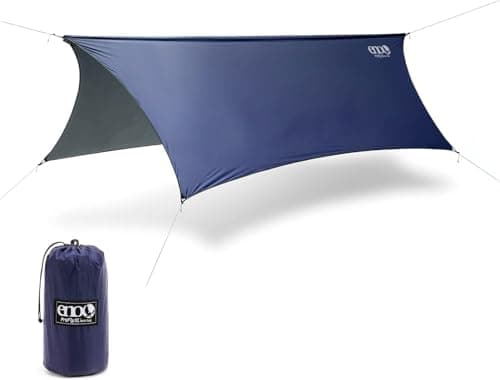
Published guidance is that a tarp should extend at least 6 in past each end of the hammock, and that a ridgeline of 12 ft is more than enough for maximum coverage on most hammocks. In practice that means an 11 ft tarp for a 10 to 11 ft hammock. The ENO ProFly XL is 13 ft by 9 ft 2 in; the Warbonnet Superfly is 132 by 120 in.
Part of our hammock gear hub. Tarp sizing is one of the few specification questions in hammock camping with a published answer, which makes it refreshingly settled. The complications are not about length — they are about width, and about whether you want doors.
The length rule
The reference guidance on tarp coverage states plainly that to cover a hammock, a tarp should extend at least 6 in past each end of the hammock, and that for most hammocks a ridgeline of 12 ft is more than enough for maximum coverage. That gives you a one-line calculation: take your hammock's length, add a foot, and look for a tarp at least that long.
| Hammock length | Minimum tarp length | Comfortable tarp length |
|---|---|---|
| 9 ft 6 in (ENO SingleNest, DoubleNest) | 10 ft 6 in | 11 ft |
| 10 ft (Wise Owl DoubleOwl, ENO JungleNest) | 11 ft | 11 ft |
| 10 ft 6 in (Grand Trunk Skeeter Beeter Pro) | 11 ft 6 in | 12 ft |
| 11 ft (Onewind Aerie 11, Warbonnet Blackbird XLC) | 12 ft | 12 ft or more |
| 12 ft (Hennessy Safari Deluxe XXL bottom fabric, 144 in) | 13 ft | 13 ft |
Quick picks
Tap any row to jump to the full write-up. Prices come straight from Amazon and are refreshed daily; where a figure is missing the link takes you to the live one.
| # | Product | Best for | Headline spec | Price |
|---|---|---|---|---|
| 1 | ENO ProFly XL Rain Tarp13 ft by 9 ft 2 in of coverage — the tarp for sideways rain and for keeping gear dry under the hammock. | Maximum coverage | 13 ft x 9 ft 2 in | |
| 2 | No image Warbonnet Superfly TarpA 132 x 120 in four-season tarp with doors, in 20D silpoly at 12.3 oz — winter coverage at a summer weight. | Four-season coverage | 132 x 120 in | |
| 3 | No image ENO ProFly Rain TarpThe default hammock tarp: 10 ft 6 in of 70D ripstop with a 1000 mm coating, sized for a standard camping hammock. | Best all-round rain tarp | 10 ft 6 in x 6 ft 4 in | |
| 4 | No image ENO ProFly Sil Rain TarpSame coverage as the ProFly in 30D silnylon — 4 oz lighter and half the packed bulk. | Lighter tarp, same footprint | 10 ft 6 in x 6 ft 4 in |
#ad — the buy links above are affiliate links. See our affiliate disclosure.
Real tarp dimensions
| Tarp | Published size | Weight | Fabric | Shape |
|---|---|---|---|---|
| ENO ProFly XL | 13 ft x 9 ft 2 in | 33 oz | 70D ripstop nylon, 1000 mm polyurethane coating | Hex |
| Warbonnet Superfly | 132 x 120 in (11 ft long, 10 ft wide at center) | 12.3 oz | 20D ripstop silpoly, fully taped seams | Four-season with doors |
| ENO ProFly | 10 ft 6 in x 6 ft 4 in | 22 oz | 70D ripstop nylon, 1000 mm coating | Hex |
| ENO ProFly Sil | 10 ft 6 in x 6 ft 4 in | 18 oz | 30D silicone-impregnated nylon, 1000 mm coating | Hex |
Two things in that table are worth pausing on. First, the standard ENO ProFly at 10 ft 6 in only just satisfies the 6 in rule on a 9 ft 6 in hammock and does not satisfy it on an 11 ft one — which is exactly why the XL exists. Second, the Superfly is 11 ft long and 12.3 oz while the ProFly XL is 13 ft and 33 oz: fabric choice, not size, is what drives weight in this category.
1. Maximum coverage
ENO ProFly XL Rain Tarp
13 ft by 9 ft 2 in of coverage — the tarp for sideways rain and for keeping gear dry under the hammock.
Specifications
- 13 ft x 9 ft 2 in
- 33 oz
- 70D ripstop nylon with 1000 mm PU coating
- Packed 5 x 9 in
Source: ENO product listing and retail listings, 2026. We publish specs we can attribute and leave the rest blank rather than assuming a typical value.
What it does well
- The extra width is what actually keeps you dry in wind-driven rain
- Covers gear as well as the hammock
Where it falls short
- 33 oz is a car-camping weight
- Needs more clear space to pitch
2. Four-season coverage
Warbonnet Superfly Tarp
A 132 x 120 in four-season tarp with doors, in 20D silpoly at 12.3 oz — winter coverage at a summer weight.
Specifications
- 132 x 120 in
- 11 ft long, 10 ft wide at center
- 12.3 oz
- 20D ripstop silpoly with fully taped seams
- Four-season tarp with doors
Source: Warbonnet Outdoors product page and Trailspace, 2026. We publish specs we can attribute and leave the rest blank rather than assuming a typical value.
What it does well
- Doors close off the ends, which is what four-season coverage actually means
- 12.3 oz for that coverage is remarkable
Where it falls short
- 20D silpoly needs care around sharp branches
- Cottage-brand availability, not shelf stock
No licensed photograph of this product is available to us yet.
3. Best all-round rain tarp
ENO ProFly Rain Tarp
The default hammock tarp: 10 ft 6 in of 70D ripstop with a 1000 mm coating, sized for a standard camping hammock.
Specifications
- 10 ft 6 in x 6 ft 4 in
- 22 oz
- 70D ripstop nylon with 1000 mm PU coating
- Packed 8 x 4.5 x 4.5 in
Source: ENO product listing via REI and retail listings, 2026. We publish specs we can attribute and leave the rest blank rather than assuming a typical value.
What it does well
- 70D fabric takes abuse that a 20D tarp will not
- Sized to cover a standard camping hammock without fuss
Where it falls short
- 22 oz is heavy next to a silnylon or silpoly tarp
- 6 ft 4 in width offers no storm doors
No licensed photograph of this product is available to us yet.
4. Lighter tarp, same footprint
ENO ProFly Sil Rain Tarp
Same coverage as the ProFly in 30D silnylon — 4 oz lighter and half the packed bulk.
Specifications
- 10 ft 6 in x 6 ft 4 in
- 18 oz
- 30D silicone-impregnated nylon with 1000 mm PU coating
- Packed 3.5 x 7 in
Source: ENO product listing and retail listings, 2026. We publish specs we can attribute and leave the rest blank rather than assuming a typical value.
What it does well
- Packs to roughly half the bulk of the standard ProFly
- Identical coverage footprint
Where it falls short
- 30D is more easily punctured than 70D
- Costs more than the standard ProFly
No licensed photograph of this product is available to us yet.
Width is the part you actually choose
Length is determined by your hammock. Width is a judgement about weather. A narrow tarp sheds vertical rain and leaves you exposed to anything blowing sideways; a wide one closes the gap at the cost of fabric and weight. The ProFly's 6 ft 4 in is a fair-weather width; the ProFly XL's 9 ft 2 in and the Superfly's 10 ft at the center are storm widths.
The reference coverage comparison makes a related point about shape: an asymmetric tarp is described as the least amount of tarp for the most protection, but only works when pitched diagonally and snugly, with your body aligned to the tarp's orientation. Hex tarps evolved from diamond tarps by cutting away unused side panels to save weight while keeping similar ridgeline coverage. In other words, a smaller tarp can cover as well as a larger one if you are willing to pitch it precisely.
Doors, and when they earn their weight
Doors are end panels that close off the open ends of the tarp. They turn a shelter that is good at rain into one that is good at wind-driven rain and spindrift, which is why the Warbonnet Superfly is positioned as a four-season tarp and the ENO ProFly range is not. If you camp above treeline, in shoulder seasons, or anywhere that "rain" arrives horizontally, doors are the upgrade that matters more than another foot of length. Cold-weather context is on hammock camping in rain and cold.
What comes supplied, and what does not
Some hammocks arrive with a fly already matched to them: Hennessy includes a detachable rainfly with the Explorer Deluxe Zip XL, and publishes a hexagonal rainfly of 143 in centerline by 120 in wide for the Safari Deluxe XXL. If you own one of those, the sizing question is already answered. If you own a plain hammock, it is not — and the tarp is the purchase that decides whether a wet trip is memorable for the right reason. Full roundup on best hammock rain flies.
Common questions
What size tarp do I need for hammock camping?
At least a foot longer than your hammock. Published coverage guidance is that the tarp should extend at least 6 in past each end, so a 10 to 11 ft hammock wants an 11 to 12 ft tarp.
How long should a tarp ridgeline be?
The published reference figure is 12 ft, described as more than enough for maximum coverage on most hammocks. Shorter ridgelines work but need the tarp pitched closer to the hammock.
Is an 11 ft tarp big enough?
For a hammock up to about 10 ft, comfortably. For an 11 ft hammock such as the Onewind Aerie 11 or the Warbonnet Blackbird XLC it is the minimum rather than the comfortable choice.
How wide should a hammock tarp be?
Width is a weather decision. The ENO ProFly's published 6 ft 4 in is a fair-weather width; the ProFly XL at 9 ft 2 in and the Warbonnet Superfly at 10 ft across the center are built for wind-driven rain.
Do I need a tarp with doors?
Only if the rain arrives sideways. Doors close off the tarp's ends and are what make the Superfly a four-season shelter, at the cost of fabric and pitching time. In settled summer weather a hex tarp is enough.
Sources
Every specification on this page traces to one of these — manufacturer data, owner's manuals, published standards and named independent publications, all linked so you can check them yourself.
Read next
Spotted something we got wrong? Tell us — corrections are part of our editorial policy.