Hammock vs Camping Cot
Both solve the same problem — cold, hard, wet ground — in opposite ways. One needs trees; the other needs floor space.
By Mike M. · Last updated
Knot & Nap is reader-supported. We earn from qualifying purchases as an Amazon Associate, at no extra cost to you. Commissions never decide what gets recommended — here is how we pick.
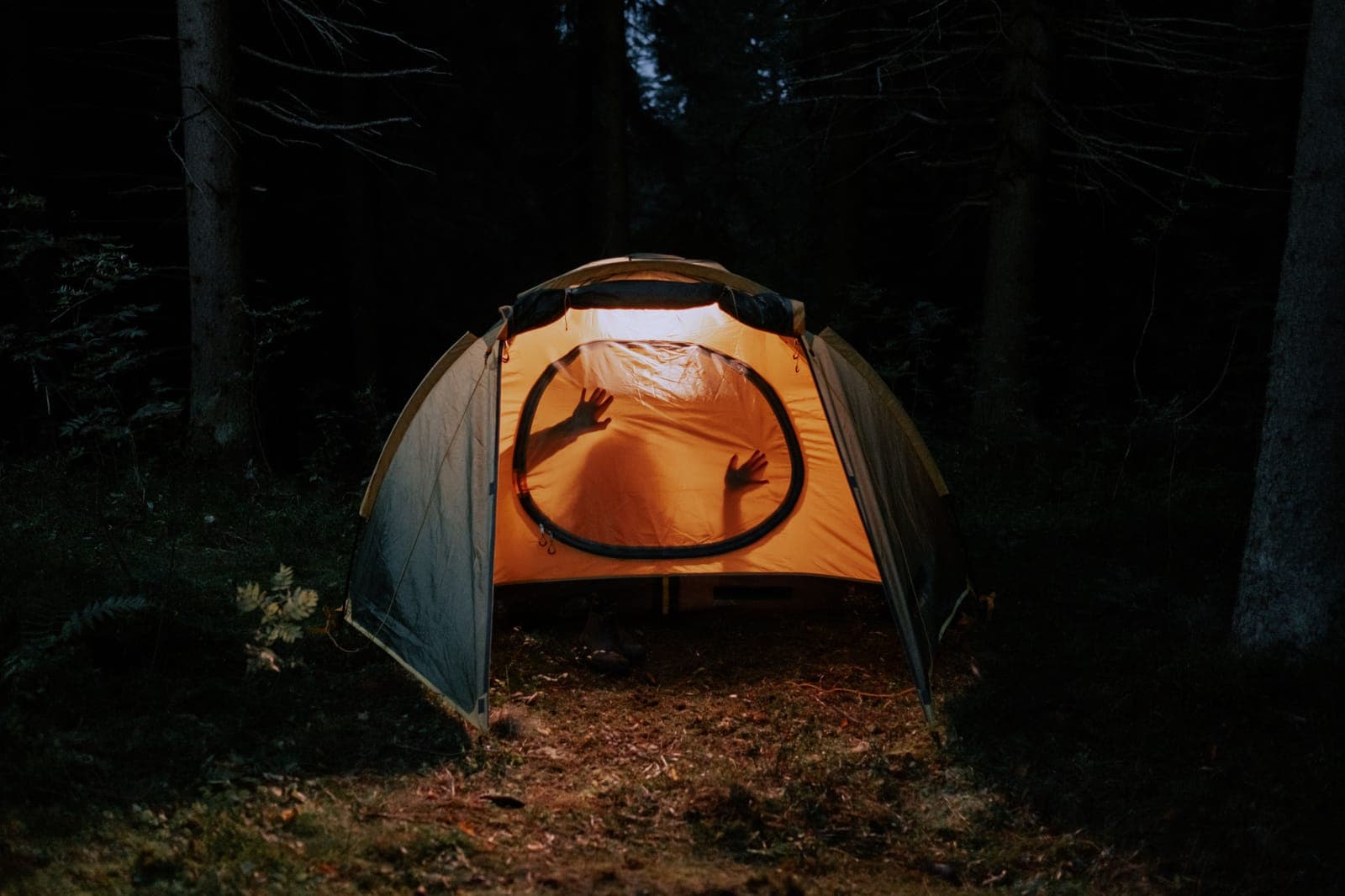
A hammock needs two anchors and no floor space; a cot needs floor space and no anchors. A hammock is lighter and packs far smaller; a cot is flat, works anywhere and still needs a tent around it.
Part of our comparisons hub. These two rarely get compared directly and they should be, because people looking at cots are usually looking for the same thing hammock campers already found.
Side by side
| Factor | Hammock | Camping cot |
|---|---|---|
| What it needs | Two anchors 12 to 17 ft apart | Flat floor space, usually inside a tent |
| Weight | Light; 26 oz for hammock, net and suspension | Heavy — a car-camping item |
| Packed size | Small enough for a daypack | Bulky, rigid frame |
| Lie | Curved, flat on the diagonal | Genuinely flat |
| Insulation | Needs an underquilt — air moves underneath | Needs a pad — air moves underneath |
| Shelter | Needs a tarp | Needs a tent |
| Terrain | Rocky, sloping, wet — all fine | Needs a flat pitch for the tent |
| Treeless sites | Needs a stand | Fine |
| Getting in and out | A skill for a night or two | Like a low bed |
Quick picks
Tap any row to jump to the full write-up. Prices are not shown anywhere on this site — we link straight to Amazon so you see the live figure.
| # | Product | Best for | Headline spec | Price |
|---|---|---|---|---|
| 1 |  ENO DoubleNest HammockThe most widely sold camping hammock there is, and OutdoorGearLab's best all-around pick. | Best all-around camping hammock | Ranked best all-around hammock by OutdoorGearLab | |
| 2 | Kammok Roo Double HammockSofter fabric, a roomier flat lay and climbing-grade hardware — the comfort upgrade over a standard nylon double. | Best comfort upgrade | Buttery-soft fabric | |
| 3 |  Onewind Hammock UnderquiltOnewind's standard underquilt range, rated 35–50°F and 45–70°F depending on the model you pick. | Three-season warmth | Temperature ratings from 35°F to 50°F (2°C to 10°C) and 45°F to 70°F (7°C to 21°C) depending on model |
#ad — the buy links above are affiliate links. See our affiliate disclosure.
The shared problem nobody mentions
Both suspend you in air, and air moves. A cot has exactly the same cold-underneath issue as a hammock: your sleeping bag compresses flat beneath you and the space below is ventilated. Cot campers who skip a pad get the same cold back that hammock campers who skip an underquilt do.
So insulation underneath is not a hammock quirk. It is a property of sleeping off the ground, and both options require it. See best hammock underquilts.
Where each one wins
- Hammock, for backpacking. A cot is not a carryable item.
- Cot, for treeless car camping. No anchors required, and you were bringing the tent anyway.
- Hammock, for rough ground. A cot still needs a flat tent pitch underneath it.
- Cot, for anyone who cannot get comfortable in a curve and does not want to learn the diagonal.
- Hammock, for wet sites. You are above the ground entirely rather than a foot above it.
- Cot, for shared tents. Two cots in one tent is simpler than two hammocks in a small clearing.
1. Best all-around camping hammock
ENO DoubleNest Hammock
The most widely sold camping hammock there is, and OutdoorGearLab's best all-around pick.
Specifications
- Ranked best all-around hammock by OutdoorGearLab
- Best-seller at REI and industry-wide
Source: OutdoorGearLab 2026 and REI. We publish specs we can attribute and leave the rest blank rather than assuming a typical value.
What it does well
- The safest first camping hammock — everything is built to fit it
- Double width gives a diagonal lay for one person
Where it falls short
- Straps are sold separately
- Plain nylon with none of the comfort upgrades of the cottage brands
Illustrative photograph of the category, not this exact product.
2. Best comfort upgrade
Kammok Roo Double Hammock
Softer fabric, a roomier flat lay and climbing-grade hardware — the comfort upgrade over a standard nylon double.
Specifications
- Buttery-soft fabric
- Roomy flat-lay dimensions
- Climbing-grade hardware
- Rated better for comfort and durability than standard nylon by OutdoorGearLab
Source: OutdoorGearLab 2026 and Treeline Review 2026. We publish specs we can attribute and leave the rest blank rather than assuming a typical value.
What it does well
- The fabric is the single biggest comfort difference in this category
- Climbing-grade hardware rather than generic carabiners
Where it falls short
- Heavier than an ultralight
- Costs more than the ENO equivalent
Illustrative photograph of the category, not this exact product.
3. Three-season warmth
Onewind Hammock Underquilt
Onewind's standard underquilt range, rated 35–50°F and 45–70°F depending on the model you pick.
Specifications
- Temperature ratings from 35°F to 50°F (2°C to 10°C) and 45°F to 70°F (7°C to 21°C) depending on model
Source: onewindoutdoors.com, 2026. We publish specs we can attribute and leave the rest blank rather than assuming a typical value.
What it does well
- Two rating bands means you can match the quilt to your actual season
- Underquilts beat sleeping pads for hammock insulation
Where it falls short
- You have to read carefully to buy the right band
- Fill weight is not published per model
Illustrative photograph of the category, not this exact product.
Cost, counted fairly
A complete hammock system is hammock, straps, net, tarp and quilt. A complete cot system is cot, tent and pad. Neither is a single purchase, and the honest comparison is system against system rather than hammock against cot.
Common questions
Is a hammock or a cot more comfortable?
A cot is flat, which some people simply prefer. A hammock has no pressure points at hip or shoulder once you lie diagonally, which others find better. The cot needs no adjustment period; the hammock needs a few nights.
Do camping cots get cold?
Yes, for exactly the reason hammocks do: air circulates underneath and your sleeping bag compresses flat beneath you. Both need insulation on the underside.
Which is lighter?
The hammock, by a wide margin. A full hammock system runs around 42 oz including a tarp, by OutdoorGearLab's figure for a Warbonnet setup. A cot is a car-camping item and does not compete on weight.
Can you use a cot without a tent?
You can, in settled weather, but you have no rain or bug protection. Most cot campers use one inside a tent — which means the shelter and the pitch are still part of the equation.
Sources
Every specification on this page traces to one of these. Where a recommendation rests on another publication's hands-on testing, we name it — we do not run a test lab.
Read next
Spotted something we got wrong? Tell us — corrections are part of our editorial policy.