The Best Hammocks for Sleeping
Sleeping in a hammock is mostly a hanging problem, not a product problem. Get the sag and the diagonal right and almost any long hammock works.
By Mike M. · Last updated
Knot & Nap is reader-supported. We earn from qualifying purchases as an Amazon Associate, at no extra cost to you. Commissions never decide what gets recommended — here is how we pick.
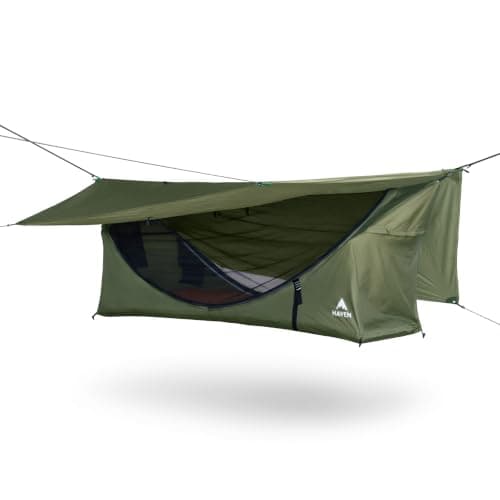
For sleeping, buy long and wide, then hang with plenty of sag and lie diagonally. A flat-lay hammock tent removes the learning curve entirely; a long Mayan weave or a wide gathered-end camping hammock gets you most of the way for less.
Part of our camping hammocks hub. This page assumes you want a full night, not an afternoon — a genuinely different requirement from everything in our backyard hammock roundup.
Quick picks
Tap any row to jump to the full write-up. Prices come straight from Amazon and are refreshed daily; where a figure is missing the link takes you to the live one.
| # | Product | Best for | Headline spec | Price |
|---|---|---|---|---|
| 1 | Haven Tent Original Lay-Flat Hammock TentA hammock tent built around a genuinely flat lay, for people who cannot sleep in a curve. | Sleeping flat off the ground | 24 x 78 in (60 x 198 cm) sleeping platform | |
| 2 | 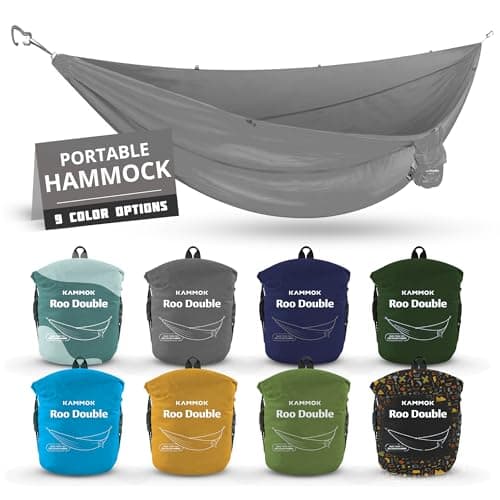 Kammok Roo Double HammockSofter fabric, a roomier flat lay and climbing-grade hardware — the comfort upgrade over a standard nylon double. | Best comfort upgrade | Buttery-soft fabric | |
| 3 | No image Harmony Hammocks Artisan Mayan HammockA Mexican-made handwoven Mayan marketed as a bed replacement rather than a garden accessory. | Sleeping in, not just lounging | Mexican-made, handwoven | |
| 4 | No image Warbonnet Original BlackbirdOutdoorGearLab's backcountry pick, with the bug net already built in and the lightest weight in their test. | Best for backcountry | Named best for backcountry by OutdoorGearLab | |
| 5 | No image Hammock Universe XL Family-Sized Thick Cord Mayan HammockThe family-size Mayan in thick cord — the version to buy if more than two people will be in it at once. | More than two people | XL family size |
#ad — the buy links above are affiliate links. See our affiliate disclosure.
The two things that decide whether you sleep
- The diagonal. Lying along the center line of a gathered-end hammock forces your body into a curve. Lying across it at an angle flattens you out dramatically. This is the single most important hammock skill and it is free.
- Insulation underneath. Your sleeping bag compresses flat under your body and stops working, while air moves below. Without an underquilt or pad you will be cold long before the air temperature justifies it.
Both of those matter more than which hammock you own. A cheap wide hammock hung well outsleeps an expensive one hung badly, every time.
1. Sleeping flat off the ground
Haven Tent Original Lay-Flat Hammock Tent
A hammock tent built around a genuinely flat lay, for people who cannot sleep in a curve.
Specifications
- 24 x 78 in (60 x 198 cm) sleeping platform
- 285 lb / 129 kg published weight rating
- 104 in minimum distance between end loops
- 210T polyester body, 4,000 mm waterproofing
- Hammock alone: 2 lb 15 oz trail weight
- With standard fly and Premium pad: 5 lb 13.2 oz trail weight
- Packed size with pad and fly 15 x 6 x 6 in
- Premium insulated pad R5, 2 lb 1 oz, 30d brushed polyester
Source: haventents.com Haven Tent product page, read 2026-11-04. We publish specs we can attribute and leave the rest blank rather than assuming a typical value.
What it does well
- Flat lay solves the single biggest complaint about hammock sleeping
- Enclosed, so netting and weather cover are part of the design
- Haven publishes a trail weight for every fly and pad combination, not one headline figure
Where it falls short
- Heavier than a plain hammock plus net
- Haven points campers over roughly 160 lb at the wider XL instead
- 104 in between end loops is a longer span than a gathered-end hammock needs
Product photograph supplied by Amazon.
#ad we may earn a commission · price as of November 7, 2026
2. Best comfort upgrade
Kammok Roo Double Hammock
Softer fabric, a roomier flat lay and climbing-grade hardware — the comfort upgrade over a standard nylon double.
Specifications
- Buttery-soft fabric
- Roomy flat-lay dimensions
- Climbing-grade hardware
- Rated better for comfort and durability than standard nylon by OutdoorGearLab
Source: OutdoorGearLab 2026 and Treeline Review 2026. We publish specs we can attribute and leave the rest blank rather than assuming a typical value.
What it does well
- The fabric is the single biggest comfort difference in this category
- Climbing-grade hardware rather than generic carabiners
Where it falls short
- Heavier than an ultralight
- Costs more than the ENO equivalent
Product photograph supplied by Amazon.
#ad we may earn a commission · price as of November 7, 2026
3. Sleeping in, not just lounging
Harmony Hammocks Artisan Mayan Hammock
A Mexican-made handwoven Mayan marketed as a bed replacement rather than a garden accessory.
Specifications
- Mexican-made, handwoven
- Marketed as a bed replacement
Source: harmonyhammocks.com collection page, 2026. We publish specs we can attribute and leave the rest blank rather than assuming a typical value.
What it does well
- Sized and woven for full-night sleeping, not an afternoon
- Handwoven construction
Where it falls short
- Full-time hammock sleeping is a real adjustment for most people
- Capacity not published
No licensed photograph of this product is available to us yet.
4. Best for backcountry
Warbonnet Original Blackbird
OutdoorGearLab's backcountry pick, with the bug net already built in and the lightest weight in their test.
Specifications
- Named best for backcountry by OutdoorGearLab
- Easy setup
- Includes a bug net
- Lightest hammock in OutdoorGearLab's test
- Hammock, bug net and suspension weigh 26 oz; the whole kit with the Mini Fly tarp weighs 42 oz
Source: OutdoorGearLab 2026. We publish specs we can attribute and leave the rest blank rather than assuming a typical value.
What it does well
- Bug net is integrated, so there is no separate net to buy or fit
- 26 oz for hammock, net and suspension is excellent for a full system
- Configurable to your trip style at order time
Where it falls short
- Cottage-brand lead times, not shelf stock
- Integrated net means you carry it even on bug-free nights
No licensed photograph of this product is available to us yet.
5. More than two people
Hammock Universe XL Family-Sized Thick Cord Mayan Hammock
The family-size Mayan in thick cord — the version to buy if more than two people will be in it at once.
Specifications
- XL family size
- Thick cord weave
Source: hammockuniverseusa.com product page, 2026. We publish specs we can attribute and leave the rest blank rather than assuming a typical value.
What it does well
- Thick cord is more forgiving than fine Mayan thread
- Genuinely fits more than two
Where it falls short
- Needs a long span — this is not a small-yard hammock
- Published capacity is not listed
No licensed photograph of this product is available to us yet.
What to look for in a sleeping hammock
| Attribute | Why it matters for sleeping | What to aim for |
|---|---|---|
| Length | Longer hammocks allow a flatter diagonal | As long as your span allows |
| Width | You need room to move off the center line | Double width or greater |
| Weave / fabric | A weave that spreads under load conforms better | Mayan diamond weave, or soft wide nylon |
| Flat-lay design | Removes the diagonal learning curve | A hammock tent such as Haven |
| Integrated net | Uninterrupted sleep in insect season | Warbonnet Blackbird, Hennessy |
Hang settings for sleeping
Aim for roughly a 30-degree angle between the suspension and the anchor — that is the widely published optimum, and the Omni Calculator hammock hang guidance uses it as the default. Anchors 12 to 17 feet apart suit most hammocks, and a clearance of 16 to 19 inches is about chair-seat height.
A structural ridgeline makes those settings repeatable. DutchWare's rule of thumb is that a ridgeline runs about 83% of the hammock's length, with fixed lines at 100 and 110 inches for 10- and 11-foot hammocks. Set it once and the hammock hangs the same way every night regardless of how far apart the trees are. See hammock ridgelines.
Side sleepers and stomach sleepers
Side sleeping in a hammock works well on the diagonal, and many people find it more comfortable than on a mattress because there is no pressure point at the hip or shoulder. Stomach sleeping is genuinely hard in a curved hammock, and it is the case where a flat-lay design like the Haven earns its weight.
Sleeping out for a weekend and sleeping in a hammock permanently are different questions. The second one is can you sleep in a hammock every night, with the straight head-to-head in hammock vs bed.
Sleeping position changes which of these is right for you. Side sleepers should read the best hammocks for side sleepers, and anyone who sleeps face down should start with the best camping hammocks for stomach sleepers, where the flat-lay question is the whole page.
Our recommendation
Best for Sleeping
Haven Tent Original Lay-Flat Hammock Tent
A hammock tent built around a genuinely flat lay, for people who cannot sleep in a curve.
#ad we may earn a commission · price as of November 7, 2026
Runner-up — Best comfort upgrade
Kammok Roo Double Hammock
Softer fabric, a roomier flat lay and climbing-grade hardware — the comfort upgrade over a standard nylon double.
#ad we may earn a commission · price as of November 7, 2026
Common questions
Is hammock sleeping comfortable?
For most people, once the hang is right — plenty of sag, a diagonal lie, and insulation underneath. It typically takes a few nights to adjust. Stomach sleepers have the hardest time and are the group best served by a flat-lay hammock tent.
Can you sleep in a hammock every night?
Plenty of people do, and in much of Central and South America it is the norm. Harmony Hammocks markets its Mayan hammocks specifically as bed replacements. Give yourself a couple of weeks before judging it.
How do you sleep better in a hammock?
Three changes cover almost everything: add sag until the hammock hangs at roughly a 30-degree suspension angle, lie diagonally rather than along the center line, and put insulation underneath you. See how to make a hammock more comfortable.
What size hammock is best for sleeping?
Long and wide. Longer hammocks allow a flatter diagonal, and double width gives you room to get off the center line. If your anchor span limits length, prioritize width. Over six feet, start from hammocks for tall people, where the published lengths are listed side by side.
Sources
Every specification on this page traces to one of these — manufacturer data, owner's manuals, published standards and named independent publications, all linked so you can check them yourself.
Read next
Spotted something we got wrong? Tell us — corrections are part of our editorial policy.