Hammock vs Bed
The rocking has measured evidence behind it. The posture does not. Here is what each side of that sentence means if you are thinking about swapping your bed for a hammock.
By Mike M. · Last updated
Knot & Nap is reader-supported. We earn from qualifying purchases as an Amazon Associate, at no extra cost to you. Commissions never decide what gets recommended — here is how we pick.
A hammock beats a bed on one measured dimension — motion. A 2019 Current Biology study from the University of Geneva found that rocked sleepers fell asleep faster, with longer deep sleep and fewer micro-wakes. A bed wins on posture, adjustability and the clinical caution around sleeping in a curve. For nightly use, buy a flat-lying design: a bridge hammock such as the Warbonnet Ridgerunner.
Part of our comparisons hub. This is one of the few comparisons on this site where the honest verdict is not "it depends on your use case" — it is that the two things are good at genuinely different parts of sleeping, and whether that trade works is partly a fact about your spine. So this page separates the evidence from the opinion, and then tells you what to buy if you want to try it properly.
Quick picks
Tap any row to jump to the full write-up. Prices come straight from Amazon and are refreshed daily; where a figure is missing the link takes you to the live one.
| # | Product | Best for | Headline spec | Price |
|---|---|---|---|---|
| 1 | No image Warbonnet Ridgerunner Bridge HammockA bridge hammock with aluminum spreader bars at both ends, holding the bed flat instead of curved, which is the design side and stomach sleepers are actually looking for. | Best for side sleepers | Bridge design with aluminum spreader bars at the head and foot ends | |
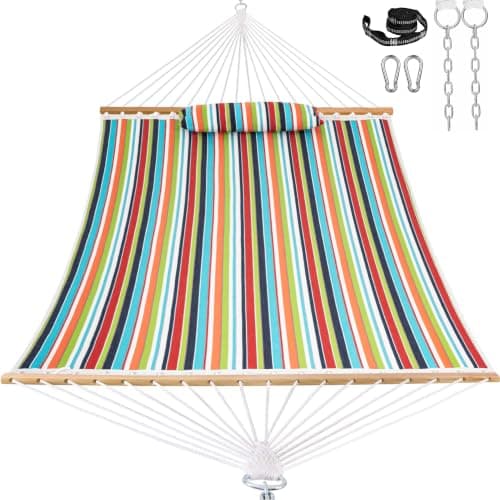
| 2 | Lazy Daze 12 FT Double Quilted Fabric HammockA 450 lb quilted double with a genuinely large bed — the quilted hammock to beat on specs alone. | Quilted comfort with a real capacity | 450 lb capacity | |
| 3 | 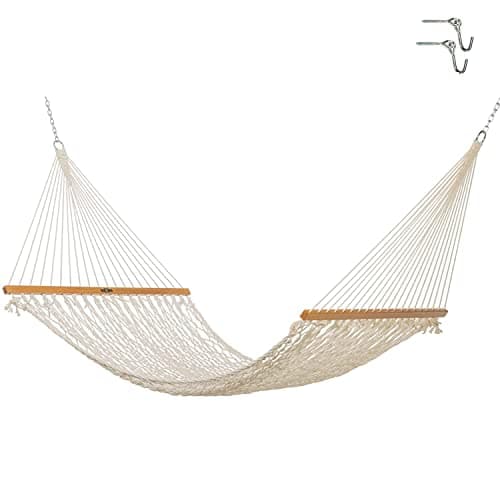 Pawleys Island Presidential Original Cotton Rope HammockThe largest hammock in the Original cotton line — for people who want more bed than a standard double gives. | The widest cotton bed | 450 lb capacity | |
| 4 | No image DutchWare Adjustable Structural RidgelineAn adjustable UCR ridgeline from 26 to 135 in — set your sag once and the hammock hangs the same way forever. | Repeatable sag, every time | Adjustable UCR ridgeline, 26 in minimum to 135 in maximum |
#ad — the buy links above are affiliate links. See our affiliate disclosure.
Head to head
| Hammock | Bed | |
|---|---|---|
| Falling asleep | Faster when rocking — measured in a 2019 Current Biology study | No motion effect |
| Deep sleep | Longer periods and fewer micro-wakes while rocked, same study | Baseline |
| Posture | A curve unless the design prevents it; clinical guidance is cautious | Flat and neutral by default |
| Sleeping on your side | Only comfortable in a bridge design or a very wide bed | Unrestricted |
| Two people | Possible, but you roll together | The normal case |
| Pressure points | No hard surface under hips or shoulders | Depends entirely on the mattress |
| Temperature | Cold from underneath — needs insulation below you | Neutral |
| Floor space | Hangs; the floor stays clear | Occupies the room |
| Cost of trying it | A hammock and two anchors | A mattress |
1. Best for side sleepers
Warbonnet Ridgerunner Bridge Hammock
A bridge hammock with aluminum spreader bars at both ends, holding the bed flat instead of curved, which is the design side and stomach sleepers are actually looking for.
Specifications
- Bridge design with aluminum spreader bars at the head and foot ends
- 44 in wide at head and foot, 32 in in the middle
- CleverHiker lists 10.1 ft x 3.7 ft and 2 lb 9.3 oz for hammock, guylines and spreader bars, plus 8.5 oz of suspension
- 250 lb capacity in the double-layer version; the single layer is rated lower
- The double layer acts as a sleeve for a sleeping pad
- Integrated zippered bug net that stows in its own pocket
- Saddlebag storage pockets along both long sides
Source: Warbonnet Outdoors published specifications and CleverHiker's Ridgerunner review, 2026. We publish specs we can attribute and leave the rest blank rather than assuming a typical value.
What it does well
- Spreader bars hold a flat bed, so you are not fighting a curve to sleep on your side
- The double layer takes a pad, which solves under-insulation without a quilt
- The bug net is built in and stows away rather than coming off
Where it falls short
- 250 lb is a low capacity for a hammock this size
- Spreader bars are bulky in a pack, which is the price of the flat lay
- Made to order from a cottage brand rather than held in stock
No licensed photograph of this product is available to us yet.
2. Quilted comfort with a real capacity
Lazy Daze 12 FT Double Quilted Fabric Hammock
A 450 lb quilted double with a genuinely large bed — the quilted hammock to beat on specs alone.
Specifications
- 450 lb capacity
- 12 ft overall
- Bed 78 x 55 in
- Spreader bar
- Detachable pillow
- Two-person
Source: Amazon product listing title and lazydazehammocks.com, 2026. We publish specs we can attribute and leave the rest blank rather than assuming a typical value.
What it does well
- 78 x 55 in is one of the largest quilted beds published in this class
- Padded quilting means no rope marks and no need for a pad
Where it falls short
- Quilted fabric holds water — it needs to dry before storage
- Spreader bars make it tippier than a gathered-end hammock
Product photograph supplied by Amazon.
#ad we may earn a commission · price as of October 10, 2026
3. The widest cotton bed
Pawleys Island Presidential Original Cotton Rope Hammock
The largest hammock in the Original cotton line — for people who want more bed than a standard double gives.
Specifications
- 450 lb capacity
- 13 ft long, 65 in wide bed
- Accommodates 2 people
- Largest variant in the Original cotton rope line
- Ships with extension chains and tree hooks
- Handcrafted in the USA
Source: Pawleys Island 15OC retail listing, 2026. We publish specs we can attribute and leave the rest blank rather than assuming a typical value.
What it does well
- A 65 in bed is 10 in wider than the Deluxe — the widest cotton bed here
- Same American-made cotton weave
- 450 lb covers two adults
Where it falls short
- Needs the longest span of the Original line
- Cotton absorbs water and can mildew if it lives outside
Product photograph supplied by Amazon.
#ad we may earn a commission · price as of October 10, 2026
4. Repeatable sag, every time
DutchWare Adjustable Structural Ridgeline
An adjustable UCR ridgeline from 26 to 135 in — set your sag once and the hammock hangs the same way forever.
Specifications
- Adjustable UCR ridgeline, 26 in minimum to 135 in maximum
- Fixed alternatives at 100 in and 110 in for 10 ft and 11 ft hammocks
- DutchWare's rule of thumb: a ridgeline runs about 83% of the hammock's length
Source: dutchwaregear.com product pages, 2026. We publish specs we can attribute and leave the rest blank rather than assuming a typical value.
What it does well
- Fixes the hammock's sag independent of how far apart the trees are
- Adjustable range covers nearly any hammock length
Where it falls short
- One more thing in the suspension to learn and set up
- A ridgeline set too short makes the lay worse, not better
No licensed photograph of this product is available to us yet.
What the research measured
The useful study is the 2019 one published in Current Biology by a University of Geneva team, working with eighteen healthy young adults in a sleep medicine center. Rocked participants fell asleep more quickly, had longer periods of deep sleep and fewer micro-wakes, and remembered word pairs better after a night in motion than after a still night. A parallel mouse study in the same program found that animals without vestibular function got no benefit from swaying, which is good evidence that the effect runs through the balance system rather than being imagination.
Note carefully what that is not. It is not a study of hammocks, it is not a study of spinal alignment, and it is not a study of long-term nightly use. It measured what rocking does to sleep architecture over a night. That is a real finding and it is the strongest thing anyone can honestly say in favor of a hammock as a bed.
What the clinical side says
The published spine view is cautious rather than hostile. A spine practice writing on hammock beds notes that they put you in a sleeping position with a curved spine, that they can be especially painful for people with scoliosis or a pinched spinal nerve, and that recommendations vary by patient so anyone with a pre-existing condition should ask their own physician. The same source allows that a hammock requires you to sleep on your back and can be comfortable for some people with back pain.
In other words: the curve is the open question, and it is individual. Which makes the design of the hammock the lever you actually control — and the reason the picks on this page are all flat-lying or very wide rather than being the lightest or cheapest hammocks on the site.
If you want to actually try it
- Pick a design that does not curl you. The Warbonnet Ridgerunner is a bridge hammock with aluminum spreader bars at head and foot, 44 in wide at both ends. A wide spreader-bar bed such as the Pawleys Island Presidential at 65 in, or the padded Lazy Daze quilted double at 78 x 55 in, are the backyard versions of the same idea.
- Fit a structural ridgeline. DutchWare publishes a rule of thumb of roughly 83% of the hammock's length, with an adjustable line covering 26 to 135 in. It makes the sag identical every night, which is what turns a hammock into furniture.
- Hang it correctly, not tidily. Roughly 30 degrees from horizontal, seat 16 to 19 in off the floor. The arithmetic is on hammock hanging distance and angle.
- Solve the cold. A hammock compresses whatever is beneath you, so a duvet does nothing under your back. Indoors this matters less than outdoors, but it still matters — see best hammock underquilts.
- Give it two weeks before judging. Almost everyone who switches reports an adjustment period, and almost nobody's first night is representative.
Common questions
Is a hammock better than a bed?
For falling asleep, there is measured support — a 2019 Current Biology study found rocked sleepers fell asleep faster with longer deep sleep. For posture, a bed is flat and neutral and a hammock is not, and published clinical guidance on sleeping in a curve is cautious.
Can a hammock replace a bed permanently?
Some people do it. The published research does not cover long-term nightly use either way, and spine specialists advise anyone with a diagnosed condition to ask their own physician first. If you try it, use a flat-lying design rather than a narrow camping hammock.
Is sleeping in a hammock bad for your back?
It depends on the hammock and on you. The curve is the concern, and it comes from hanging too tight and from a bed too narrow to lie diagonally in. A bridge hammock removes the curve by construction. See are hammocks bad for your back.
Why do I sleep so well in a hammock?
Most likely the motion. The University of Geneva work found that rocking synchronizes brain activity in a way that lengthens deep sleep, and that mice without vestibular function got no benefit — so the effect appears to run through the balance system.
Can two people sleep in a hammock?
In a wide one, yes, but you roll toward each other because the bed has a center. A 65 in Pawleys Island Presidential or a 78 x 55 in quilted double are the most realistic two-person beds on this site.
Sources
Every specification on this page traces to one of these — manufacturer data, owner's manuals, published standards and named independent publications, all linked so you can check them yourself.
Read next
Spotted something we got wrong? Tell us — corrections are part of our editorial policy.