Are Hammocks Bad for Your Back?
Not inherently. A badly hung hammock is bad for your back, and a badly hung hammock is the default because a tight hang looks right.
By Mike M. · Last updated
Knot & Nap is reader-supported. We earn from qualifying purchases as an Amazon Associate, at no extra cost to you. Commissions never decide what gets recommended — here is how we pick.

Hammocks are not inherently bad for your back. Most hammock back pain comes from hanging too tight, which forces the spine into a curve, and from lying along the center line instead of diagonally. Fix both and most people lie close to flat.
Part of our guides hub. We are not going to make a medical claim here — we are going to explain what changes the shape your body is held in, because that is the mechanical part and it is the part people get wrong.
What actually causes hammock back pain
- A tight hang. The tighter the suspension, the deeper and narrower the curve you lie in. A near-horizontal hammock is the worst case, not the best.
- Lying along the center line. This follows the curve exactly and produces the banana shape people describe.
- A hammock that is too short. There is not enough fabric to lie diagonally on, so you have no choice but the center line.
- A hammock that is too narrow. Same problem from the other direction.
- Sleeping in it before adjusting to it. Most people need a few nights before a hammock feels normal.
Notice that four of those five are setup, not product. That is the honest answer to the question.
The two fixes
| Fix | What to do | Why it works |
|---|---|---|
| Add sag | Adjust until the suspension sits at roughly 30 degrees to horizontal | A deeper curve spreads the fabric wider, so it supports rather than folds you |
| Lie diagonally | Shift your body across the hammock at an angle, head one side, feet the other | You lie on fabric drawn from a wider section, which flattens under you |
Thirty degrees is the widely published optimum hang angle and is the default in the hammock hang guidance published by Omni Calculator. It is also the safety figure — a tighter hang sharply increases the force on your anchors.
Quick picks
Tap any row to jump to the full write-up. Prices are not shown anywhere on this site — we link straight to Amazon so you see the live figure.
| # | Product | Best for | Headline spec | Price |
|---|---|---|---|---|
| 1 | 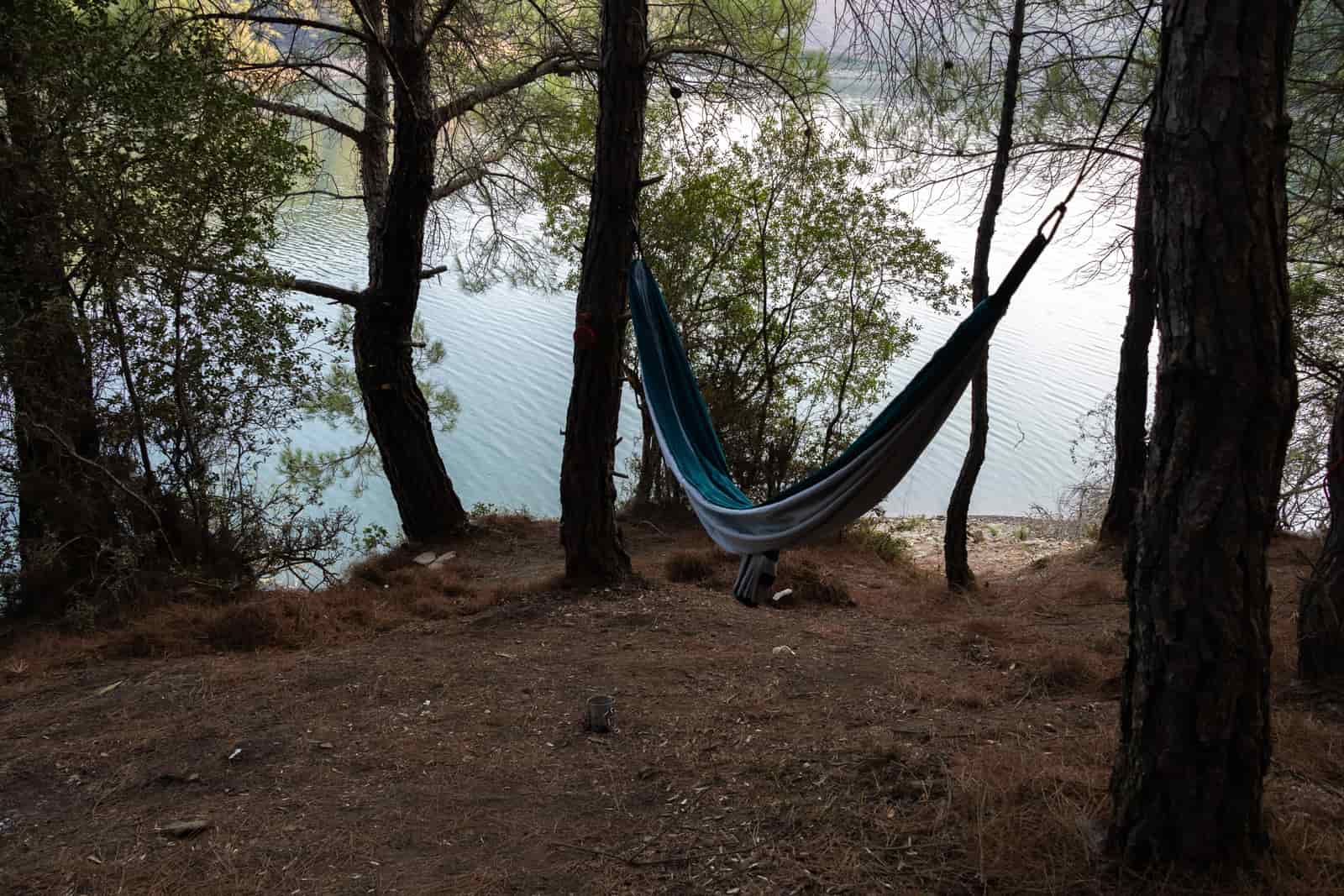 Kammok Roo Double HammockSofter fabric, a roomier flat lay and climbing-grade hardware — the comfort upgrade over a standard nylon double. | Best comfort upgrade | Buttery-soft fabric | |
| 2 | 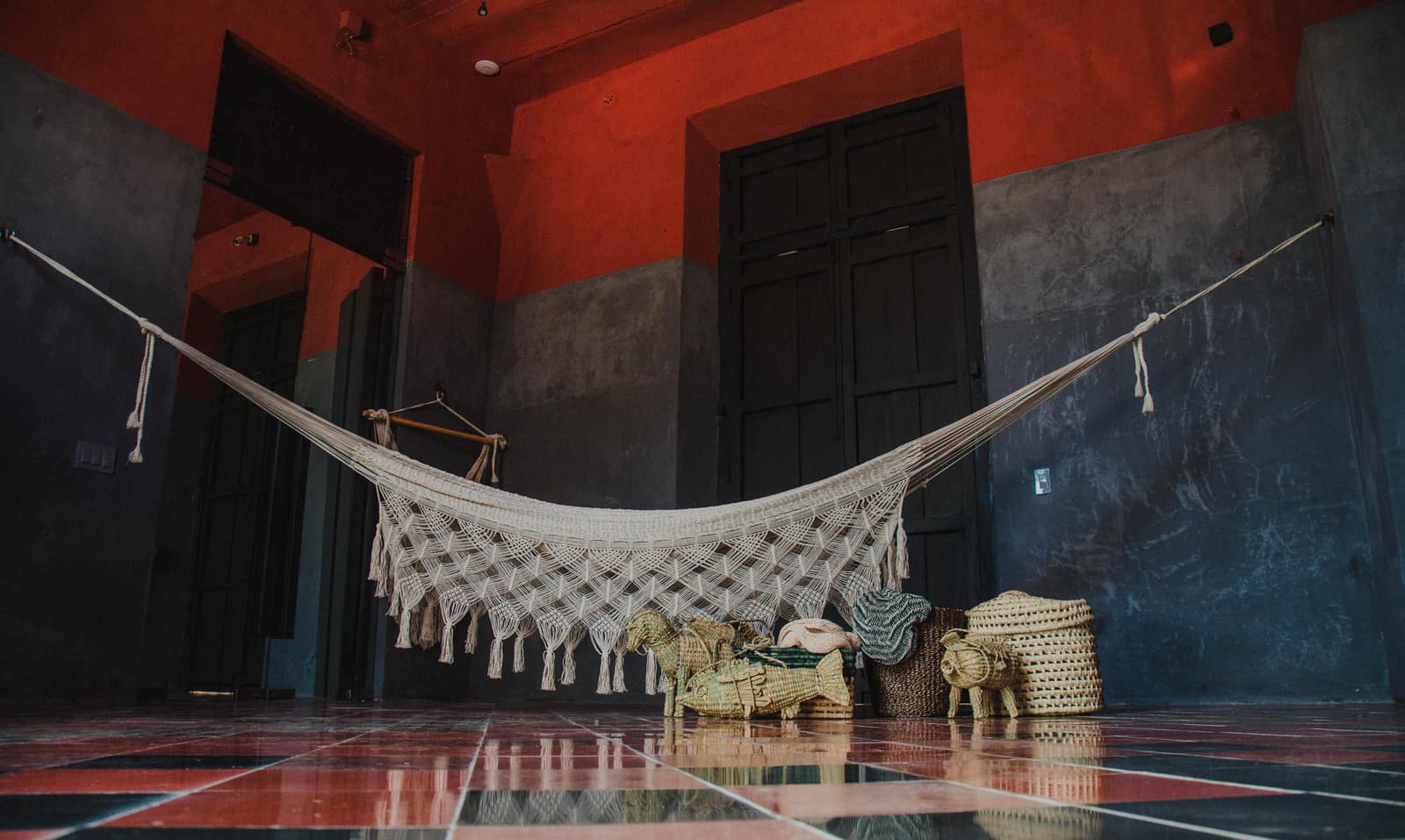 Hammock Universe Mayan Hammock — DoubleA Yucatán diamond-weave double — the stretchiest, most enveloping hammock style there is. | The Mayan diamond weave | Handwoven in the Yucatán by Mayan artisans | |
| 3 | 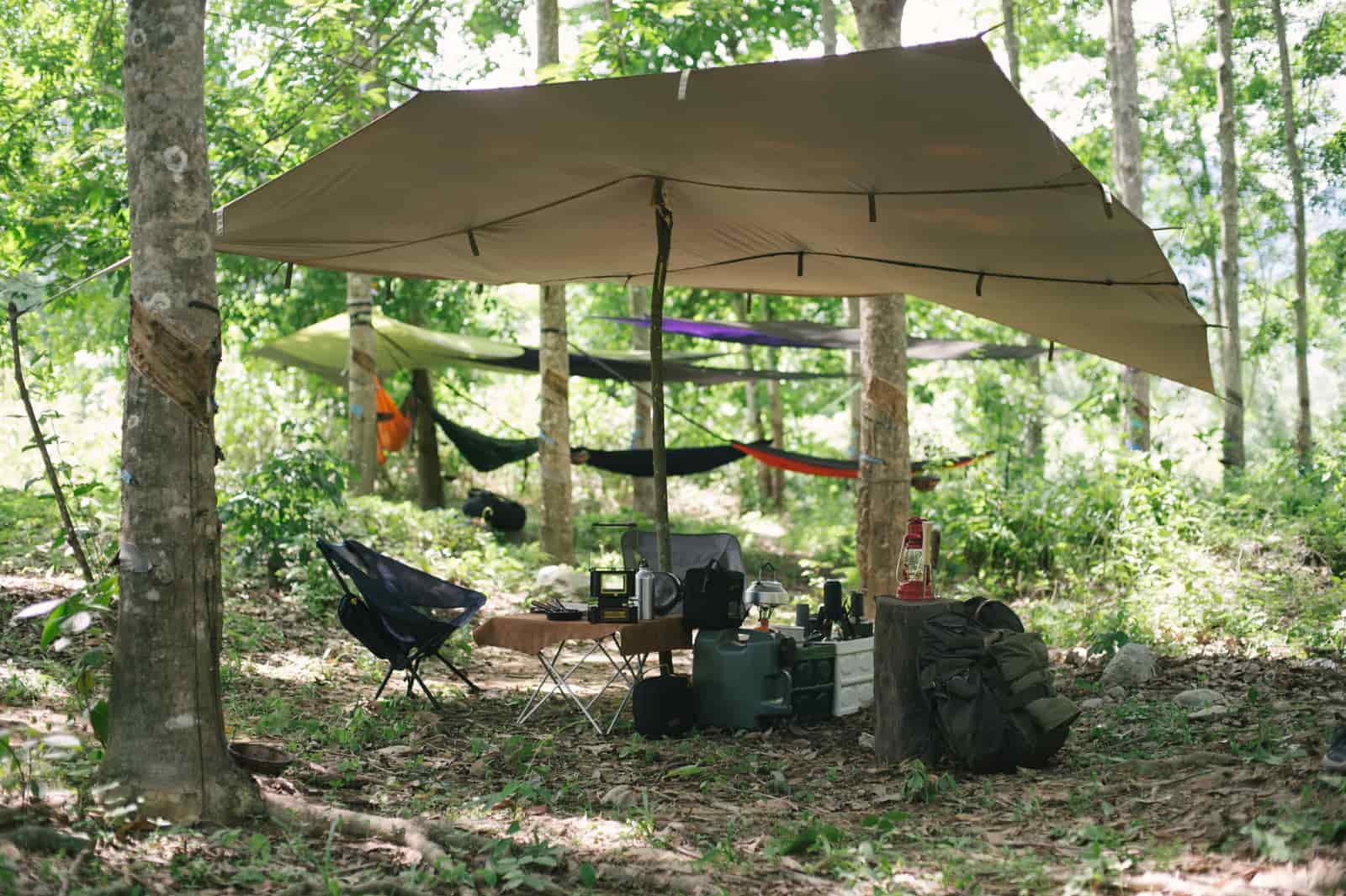 Haven Tent Flat-Lay Hammock TentA hammock tent built around a genuinely flat lay, for people who cannot sleep in a curve. | Sleeping flat off the ground | Flat-lay hammock tent | |
| 4 |  DutchWare Adjustable Structural RidgelineAn adjustable UCR ridgeline from 26 to 135 in — set your sag once and the hammock hangs the same way forever. | Repeatable sag, every time | Adjustable UCR ridgeline, 26 in minimum to 135 in maximum |
#ad — the buy links above are affiliate links. See our affiliate disclosure.
Why some people find hammocks better than a mattress
A hammock has no hard surface, so there is no pressure point at the hip or shoulder — the fabric conforms rather than pushing back. People who wake with a numb arm or a sore hip on a firm mattress often report the opposite in a hammock.
The weave matters here. A Mayan hammock spreads under load, which is why the diamond weave is the traditional sleeping construction across the Yucatán. A wide soft-fabric camping hammock does something similar.
1. Best comfort upgrade
Kammok Roo Double Hammock
Softer fabric, a roomier flat lay and climbing-grade hardware — the comfort upgrade over a standard nylon double.
Specifications
- Buttery-soft fabric
- Roomy flat-lay dimensions
- Climbing-grade hardware
- Rated better for comfort and durability than standard nylon by OutdoorGearLab
Source: OutdoorGearLab 2026 and Treeline Review 2026. We publish specs we can attribute and leave the rest blank rather than assuming a typical value.
What it does well
- The fabric is the single biggest comfort difference in this category
- Climbing-grade hardware rather than generic carabiners
Where it falls short
- Heavier than an ultralight
- Costs more than the ENO equivalent
Illustrative photograph of the category, not this exact product.
2. The Mayan diamond weave
Hammock Universe Mayan Hammock — Double
A Yucatán diamond-weave double — the stretchiest, most enveloping hammock style there is.
Specifications
- Handwoven in the Yucatán by Mayan artisans
- Diamond weave
- Double size
Source: hammockuniverseusa.com product page, 2026. We publish specs we can attribute and leave the rest blank rather than assuming a typical value.
What it does well
- The diamond weave spreads under load and forms a cocoon around you
- Packs down smaller than any spreader-bar hammock
Where it falls short
- Needs a longer span than a spreader-bar hammock of the same nominal size
- Open weave catches jewelry and buckles
Illustrative photograph of the category, not this exact product.
3. Sleeping flat off the ground
Haven Tent Flat-Lay Hammock Tent
A hammock tent built around a genuinely flat lay, for people who cannot sleep in a curve.
Specifications
- Flat-lay hammock tent
Source: Docs/KeywordData.md and CleverHiker retailer list, 2026. We publish specs we can attribute and leave the rest blank rather than assuming a typical value.
What it does well
- Flat lay solves the single biggest complaint about hammock sleeping
- Enclosed, so netting and weather cover are part of the design
Where it falls short
- Heavier than a plain hammock plus net
- Published weight and capacity were not verifiable in our sources
Illustrative photograph of the category, not this exact product.
4. Repeatable sag, every time
DutchWare Adjustable Structural Ridgeline
An adjustable UCR ridgeline from 26 to 135 in — set your sag once and the hammock hangs the same way forever.
Specifications
- Adjustable UCR ridgeline, 26 in minimum to 135 in maximum
- Fixed alternatives at 100 in and 110 in for 10 ft and 11 ft hammocks
- DutchWare's rule of thumb: a ridgeline runs about 83% of the hammock's length
Source: dutchwaregear.com product pages, 2026. We publish specs we can attribute and leave the rest blank rather than assuming a typical value.
What it does well
- Fixes the hammock's sag independent of how far apart the trees are
- Adjustable range covers nearly any hammock length
Where it falls short
- One more thing in the suspension to learn and set up
- A ridgeline set too short makes the lay worse, not better
Illustrative photograph of the category, not this exact product.
If you have tried all that and it still hurts
- Go longer. More length means more diagonal available, which means a flatter lie.
- Go wider. A double gives a single sleeper considerably more room to get off the center line.
- Add a structural ridgeline at about 83% of the hammock's length so your preferred sag is reproducible rather than re-guessed each night.
- Add a knee pillow. A small roll under the knees relieves the residual curve for a lot of people.
- Consider a flat-lay design. A hammock tent removes the curve entirely — see best hammock tents.
Common questions
Are hammocks bad for your back?
Not inherently. A hammock hung tight and used along the center line forces the spine into a curve, and that is what causes most hammock back pain. Add sag toward a 30-degree suspension angle and lie diagonally, and most people lie close to flat.
Are hammocks good for your back?
Many people find them better than a mattress because there is no hard surface and therefore no pressure point at the hip or shoulder. Whether that applies to you depends on your back, and it is not a claim we can make on your behalf.
Is hammock sleeping bad for your back?
The same rules apply as for lounging, and they matter more over eight hours. Plenty of people sleep in hammocks nightly. Give yourself a few nights to adjust before judging it, and fix the hang first.
How should you lie in a hammock?
Diagonally. Get in from the center, then shift your body across the hammock at an angle — head toward one side, feet toward the other. This is the single most important hammock technique and it costs nothing.
Sources
Every specification on this page traces to one of these. Where a recommendation rests on another publication's hands-on testing, we name it — we do not run a test lab.
Read next
Spotted something we got wrong? Tell us — corrections are part of our editorial policy.