The Best Camping Hammocks for Stomach Sleepers
A gathered-end hammock curves. That is fine on your back, workable on your side, and the single hardest thing about sleeping face down. The fix is geometry, not fabric.
By Mike M. · Last updated
Knot & Nap is reader-supported. We earn from qualifying purchases as an Amazon Associate, at no extra cost to you. Commissions never decide what gets recommended — here is how we pick.
For a stomach sleeper, the Warbonnet Ridgerunner is the pick: a bridge hammock with aluminum spreader bars at the head and foot ends, published 44 in wide at both, which holds the bed flat instead of curved. If a bridge is too bulky to carry, the Onewind Aerie 11 ft Double publishes 11 ft x 68 in — the widest diagonal here, and width is what a front sleeper is really short of.
Part of our camping hammocks hub. This page exists because the honest answer to whether you can sleep face down in a hammock is: not the way you do in a bed, and not in most hammocks at all. A standard gathered-end hammock pulls its fabric into a shallow U. Lying face down in a U means your hips sit at the bottom while your chest and knees sit up the sides, which hyperextends the lower back exactly where a front sleeper already loads it. No amount of good fabric fixes that. What fixes it is a hammock whose bed is held flat, or one wide enough that the diagonal lay gives you a genuinely level patch to lie on.
Quick picks
Tap any row to jump to the full write-up. Prices come straight from Amazon and are refreshed daily; where a figure is missing the link takes you to the live one.
| # | Product | Best for | Headline spec | Price |
|---|---|---|---|---|
| 1 | No image Warbonnet Ridgerunner Bridge HammockA bridge hammock with aluminum spreader bars at both ends, holding the bed flat instead of curved, which is the design side and stomach sleepers are actually looking for. | Best for side sleepers | Bridge design with aluminum spreader bars at the head and foot ends | |
| 2 | No image Onewind Aerie 11 ft Double Camping HammockAn 11 ft by 68 in single-panel bed with a 500 lb load rating, a removable bug net and straps in the box — the value route to a long hammock. | The most published length for the money | Bed size 11 ft x 68 in | |
| 3 | No image Haven Tent Flat-Lay Hammock TentA hammock tent built around a genuinely flat lay, for people who cannot sleep in a curve. | Sleeping flat off the ground | Flat-lay hammock tent | |
| 4 | No image Warbonnet Blackbird XLCThe long version of the Blackbird: 11 ft of body and a published rating to 7 ft of user, at a weight that still belongs in a backpack. | Backpacking at 11 ft | 11 ft (132 in) body length | |
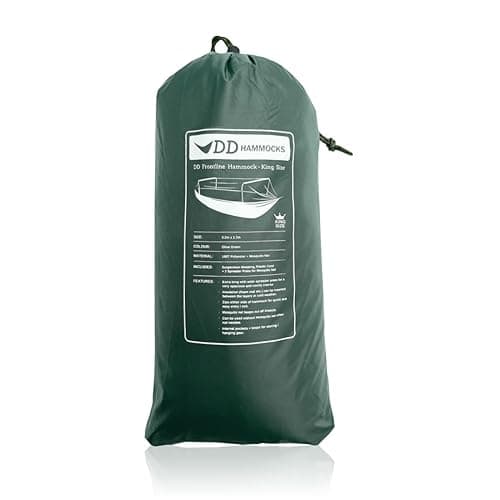
| 5 | DD Frontline Hammock KING SizeHalf a meter longer and 30 cm wider than the standard Frontline, with longer spreader poles to match — the DD to buy if the standard one is the right idea at the wrong size. | Tall campers and anyone who sprawls | 3.2 m x 1.7 m flat (about 10 ft 6 in x 5 ft 7 in) | |
| 6 | 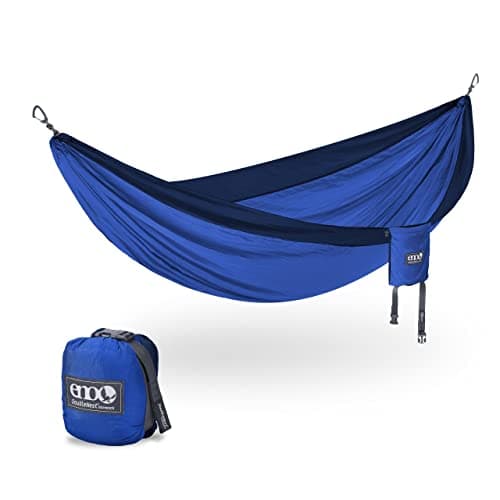 ENO DoubleNest HammockThe most widely sold camping hammock there is, and OutdoorGearLab's best all-around pick. | Best all-around camping hammock | 400 lb capacity |
#ad — the buy links above are affiliate links. See our affiliate disclosure.
Two designs work, and they work differently
1. Bridge hammocks — flat by construction
A bridge hammock puts a rigid spreader bar at each end and hangs the bed from them, so the fabric is pulled taut across its width rather than gathered. Warbonnet publishes 44 in of width at the head and foot and 32 in in the middle for the Ridgerunner, and CleverHiker lists it at 10.1 ft x 3.7 ft and 2 lb 9.3 oz for hammock, guylines and spreader bars, plus 8.5 oz of suspension. That is the closest thing in this category to lying on a cot that hangs. The trade is in the numbers too: 250 lb capacity in the double-layer version, and bars that are awkward in a pack.
2. Very wide gathered-end hammocks — flat by diagonal
The other route keeps the simple gathered-end design and buys its flatness with width. Lying diagonally across a wide bed, head toward one gathered end and feet toward the other, flattens the curve under your torso. It is the same trick we describe in how to hang a hammock, and the wider the bed the more of it works. The Onewind Aerie publishes 11 ft x 68 in on a single-panel bed with no center seam under your chest; the Warbonnet Blackbird XLC publishes 132 in of body on a 63 in standard width; the DD Frontline KING is published at 3.2 m x 1.7 m.
Published dimensions, side by side
| Pick | Bed shape | Published size | Published capacity | Weight |
|---|---|---|---|---|
| Warbonnet Ridgerunner | Bridge, spreader bars both ends | 44 in wide head and foot, 32 in center; 10.1 ft x 3.7 ft | 250 lb double layer | 2 lb 9.3 oz plus 8.5 oz suspension |
| Onewind Aerie 11 ft Double | Gathered end, single panel | 11 ft x 68 in | 500 lb | 2.6 lb total; bed alone 0.95 lb |
| Haven Tent | Flat-lay hammock tent | Not published in our sources | Not published in our sources | Not published in our sources |
| Warbonnet Blackbird XLC | Gathered end, asymmetric | 132 in x 63 in, 111 in ridgeline | 300 lb max load, 250 lb comfort | 19 oz single layer, no suspension |
| DD Frontline KING | Gathered end, double layer | 3.2 m x 1.7 m | 125 kg | 1250 g without webbing and poles |
| ENO DoubleNest | Gathered end | 114 in x 76 in | 400 lb | 19 oz |
Read the width column first and the capacity column second, because for a front sleeper they pull against each other. The flattest bed here, the Ridgerunner, carries the lowest published capacity on the page. The highest capacity, the Onewind at 500 lb, delivers its flatness only if you set the hang angle properly and actually lie across the diagonal. There is no pick that is both the flattest and the strongest, and anyone saying otherwise has not read the spec sheets.
What makes a front-sleeping hang work
- Hang at about 30 degrees. A shallow, tight hang makes the curve sharper and the ridge under your sternum worse. The Omni Calculator hang model and our hanging distance and angle table both start from the same 30-degree figure.
- Use a structural ridgeline. It fixes the sag at the same depth every night, so the bed you learned to lie in is the bed you get. See hammock ridgelines.
- Lie diagonally, not down the centerline. On a gathered-end hammock this is the whole technique, and on a 68 in or 76 in bed it is the difference between a U and a plane.
- Put something under your ankles, not your head. Front sleepers get sore from the feet-up curve as much as the chest-down one. A rolled jacket under the shins flattens it.
- Try a half-front position first. Most people who sleep face down in a bed end up at roughly 45 degrees in a hammock — chest partly down, one knee drawn up. It is less a compromise than what the shape allows.
What we would not recommend for this
- A single-width camping hammock. A 58 in bed has no usable diagonal for a front sleeper. The ENO SingleNest is a good hammock and the wrong one here.
- Spreader-bar backyard hammocks. They are flat, which sounds perfect, and tippy, which is not. A flat shallow bed plus a face-down sleeper rolling in the night is the one combination we would avoid — see spreader bar vs gathered end.
- Any hammock hung tight to kill the curve. Tightening a gathered-end hammock raises the force at the anchors and makes the ridge under you worse, not better.
Common questions
Can you sleep on your stomach in a hammock?
Partly. A standard gathered-end hammock curves into a shallow U, which hyperextends the lower back when you lie face down. A bridge hammock with spreader bars at both ends holds the bed flat and makes it workable, and a very wide gathered-end hammock lain across the diagonal gets close. Most front sleepers settle at roughly 45 degrees rather than fully face down.
What is the best hammock for a stomach sleeper?
The Warbonnet Ridgerunner, because the flat bed is a construction feature rather than a technique — aluminum spreader bars at the head and foot ends, published 44 in wide at both. Its published capacity is 250 lb in the double-layer version, which is the trade.
Is a bridge hammock better than a regular hammock for front sleeping?
For front sleeping, yes. A bridge holds the fabric taut across its width so there is no curve under your chest. The costs are a lower published capacity, bulkier packed size because of the bars, and cottage-brand lead times.
How wide does a hammock need to be to sleep on your stomach?
Width is what creates a usable diagonal, so wider is better and 58 in single-width hammocks do not work. The Onewind Aerie publishes 68 in, the ENO DoubleNest 76 in and the DD Frontline KING 1.7 m. None of those is flat on its own — they are wide enough for the diagonal lay to flatten the curve.
Will a hammock hurt my back if I sleep face down?
It can, in the same way a sagging mattress can: the curve drops your hips below your chest and knees and loads the lumbar spine. Flattening the bed is the fix, either by buying a bridge hammock or by hanging at 30 degrees and lying across the diagonal. Our are hammocks bad for your back guide covers the wider question.
Sources
Every specification on this page traces to one of these — manufacturer data, owner's manuals, published standards and named independent publications, all linked so you can check them yourself.
Read next
Spotted something we got wrong? Tell us — corrections are part of our editorial policy.