Hammock Camping for Beginners
Five pieces of kit, three settings to get right, and one mistake almost everyone makes on their first night.
By Mike M. · Last updated
Knot & Nap is reader-supported. We earn from qualifying purchases as an Amazon Associate, at no extra cost to you. Commissions never decide what gets recommended — here is how we pick.
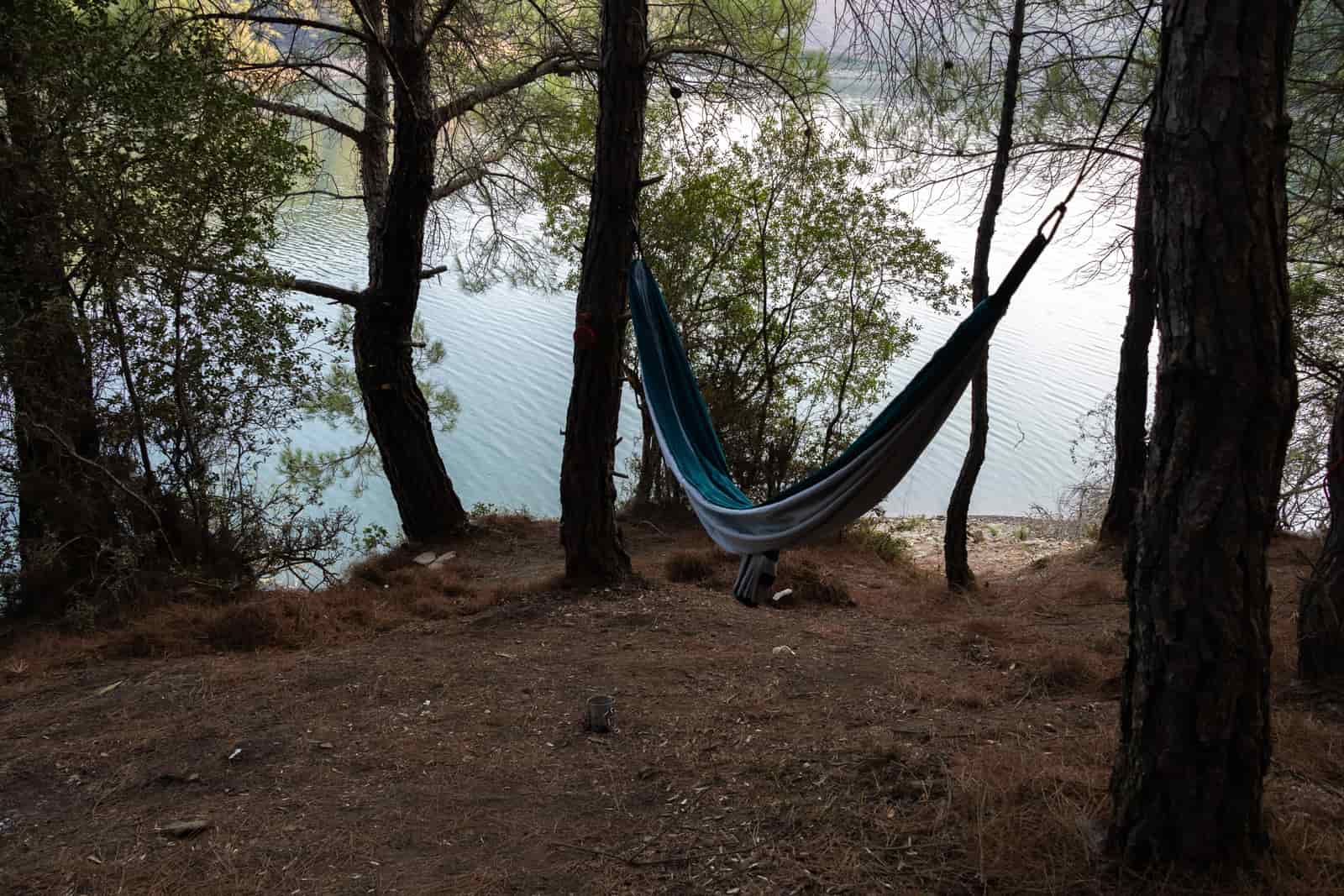
A hammock camping setup is five pieces: hammock, straps, bug net, tarp and under-insulation. Buy them in that order, hang with plenty of sag at roughly a 30-degree angle, and lie diagonally. The mistake everyone makes once is skipping the insulation.
Part of our camping hammocks hub. If you have already bought a hammock and are wondering why your first night was cold, skip to the insulation section.
The five pieces
- 1The hammockA gathered-end nylon hammock, double width. The ENO DoubleNest is OutdoorGearLab's best all-around pick and the industry best-seller, which means every accessory fits it. See best camping hammocks.
- 2StrapsAt least one inch wide, to protect bark and because many sites require it. The Kammok Python 10 straps are rated 500 lb combined at 10 ft 2.5 in, the highest rating in the 2026 strap test we cite. See best hammock straps.
- 3A bug netUnless you camp somewhere genuinely insect-free. Some hammocks include one; most do not. See best hammock bug nets.
- 4A tarpThis is what makes it a shelter. A standard three-season tarp like the ENO ProFly covers 10 ft 6 in by 6 ft 4 in. See best hammock rain flies.
- 5Under-insulationAn underquilt outside the hammock or a pad inside it. This is the piece beginners skip and the one that ruins the first night.
Quick picks
Tap any row to jump to the full write-up. Prices are not shown anywhere on this site — we link straight to Amazon so you see the live figure.
| # | Product | Best for | Headline spec | Price |
|---|---|---|---|---|
| 1 | ENO DoubleNest HammockThe most widely sold camping hammock there is, and OutdoorGearLab's best all-around pick. | Best all-around camping hammock | Ranked best all-around hammock by OutdoorGearLab | |
| 2 |  Kammok Python 10 Hammock StrapsLonger, lighter and higher-rated than the category default — the straps most people should buy. | Best straps overall | 500 lb combined capacity | |
| 3 | 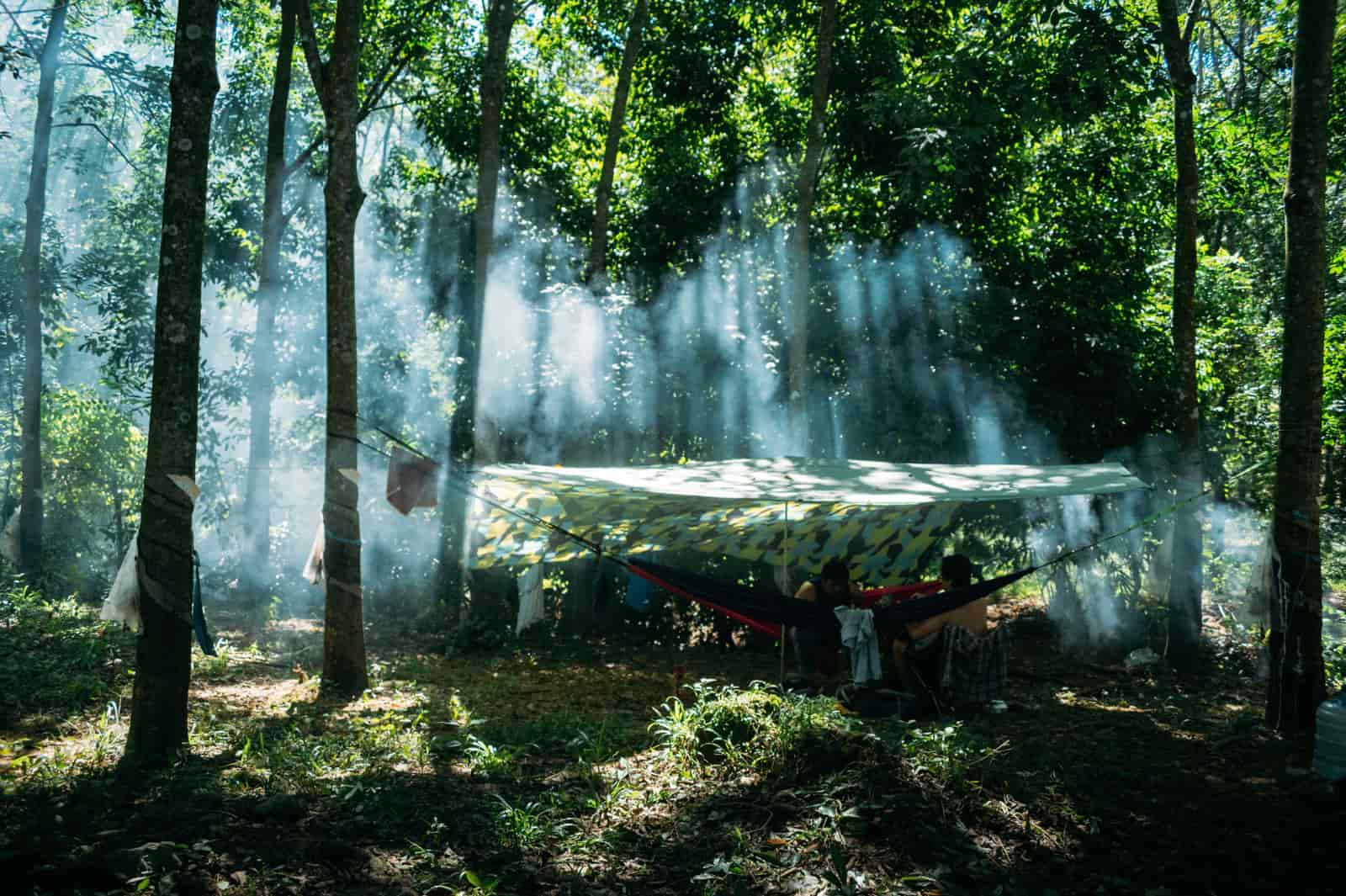 ENO ProFly Rain TarpThe default hammock tarp: 10 ft 6 in of 70D ripstop with a 1000 mm coating, sized for a standard camping hammock. | Best all-round rain tarp | 10 ft 6 in x 6 ft 4 in | |
| 4 |  ENO Guardian Bug Net360-degree netting with a vertical zip door, built to drop over the hammocks most people already own. | Best bug net overall | Breathable SkyWeave mesh | |
| 5 |  Onewind Hammock UnderquiltOnewind's standard underquilt range, rated 35–50°F and 45–70°F depending on the model you pick. | Three-season warmth | Temperature ratings from 35°F to 50°F (2°C to 10°C) and 45°F to 70°F (7°C to 21°C) depending on model |
#ad — the buy links above are affiliate links. See our affiliate disclosure.
The mistake everyone makes once
You will be cold underneath. Not because the night was cold, but because your sleeping bag's insulation is crushed flat beneath you and does nothing, while air moves freely under the fabric. People routinely get cold in a hammock at temperatures where they would be fine in a tent.
The fix is insulation on the outside of the hammock. Onewind publishes ratings from 45 to 70°F on its summer underquilts down to 32 to 56°F on the Solstice down quilt, so match the quilt to your season rather than assuming one covers everything. A closed-cell foam pad inside the hammock is the budget version and works, if less comfortably.
1. Best all-around camping hammock
ENO DoubleNest Hammock
The most widely sold camping hammock there is, and OutdoorGearLab's best all-around pick.
Specifications
- Ranked best all-around hammock by OutdoorGearLab
- Best-seller at REI and industry-wide
Source: OutdoorGearLab 2026 and REI. We publish specs we can attribute and leave the rest blank rather than assuming a typical value.
What it does well
- The safest first camping hammock — everything is built to fit it
- Double width gives a diagonal lay for one person
Where it falls short
- Straps are sold separately
- Plain nylon with none of the comfort upgrades of the cottage brands
Illustrative photograph of the category, not this exact product.
2. Best straps overall
Kammok Python 10 Hammock Straps
Longer, lighter and higher-rated than the category default — the straps most people should buy.
Specifications
- 500 lb combined capacity
- 10 ft 2.5 in long
- 8.2 oz
- 20 attachment points
Source: 99Boulders 2026 hammock strap test. We publish specs we can attribute and leave the rest blank rather than assuming a typical value.
What it does well
- 500 lb combined is the highest rating in 99Boulders' 2026 strap test
- 10 ft reaches around trees the 9 ft straps cannot
- 20 attachment points give finer hang-angle control
Where it falls short
- Slightly bulkier packed than a minimalist strap
- Daisy-chain webbing is still coarser adjustment than a cord system
Illustrative photograph of the category, not this exact product.
3. Best all-round rain tarp
ENO ProFly Rain Tarp
The default hammock tarp: 10 ft 6 in of 70D ripstop with a 1000 mm coating, sized for a standard camping hammock.
Specifications
- 10 ft 6 in x 6 ft 4 in
- 22 oz
- 70D ripstop nylon with 1000 mm PU coating
- Packed 8 x 4.5 x 4.5 in
Source: ENO product listing via REI and retail listings, 2026. We publish specs we can attribute and leave the rest blank rather than assuming a typical value.
What it does well
- 70D fabric takes abuse that a 20D tarp will not
- Sized to cover a standard camping hammock without fuss
Where it falls short
- 22 oz is heavy next to a silnylon or silpoly tarp
- 6 ft 4 in width offers no storm doors
Illustrative photograph of the category, not this exact product.
4. Best bug net overall
ENO Guardian Bug Net
360-degree netting with a vertical zip door, built to drop over the hammocks most people already own.
Specifications
- Breathable SkyWeave mesh
- 360-degree insect protection
- Vertical zipper door
- Interior gear loops
- No-Knots-Needed attachment
- Compatible with all ENO hammocks except the Sky-series, DayLoft and SuperNest
Source: ENO product page (eaglesnestoutfittersinc.com), 2026. We publish specs we can attribute and leave the rest blank rather than assuming a typical value.
What it does well
- Vertical zip door beats climbing in through the bottom
- Interior gear loops keep a headlamp and phone off the ground
Where it falls short
- Not compatible with the DayLoft, SuperNest or Sky-series
- Weight and packed size are not published on the product page
Illustrative photograph of the category, not this exact product.
5. Three-season warmth
Onewind Hammock Underquilt
Onewind's standard underquilt range, rated 35–50°F and 45–70°F depending on the model you pick.
Specifications
- Temperature ratings from 35°F to 50°F (2°C to 10°C) and 45°F to 70°F (7°C to 21°C) depending on model
Source: onewindoutdoors.com, 2026. We publish specs we can attribute and leave the rest blank rather than assuming a typical value.
What it does well
- Two rating bands means you can match the quilt to your actual season
- Underquilts beat sleeping pads for hammock insulation
Where it falls short
- You have to read carefully to buy the right band
- Fill weight is not published per model
Illustrative photograph of the category, not this exact product.
Hanging it: three numbers
| Setting | Target | Why |
|---|---|---|
| Anchor spacing | 12 to 17 ft | Suits most hammock lengths |
| Suspension angle | About 30 degrees | Balances comfort against force on the anchors |
| Clearance under the hammock | 16 to 19 in | Roughly chair-seat height; easy to get in and out |
Then lie diagonally. This is the part nobody tells beginners and it changes everything — across the hammock at an angle, your body lies much flatter than along the center line. Full detail in how to hang a hammock.
Your first night, in order
- Find two healthy trees 12 to 17 feet apart. Look up before you commit — dead branches overhead are the real hazard.
- Hang the tarp ridgeline first if rain is likely. You can then set everything else up dry.
- Wrap the straps at about head height and clip in, aiming for a 30-degree suspension angle.
- Check clearance: sit in the middle and make sure you are around chair height off the ground.
- Fit the bug net and the underquilt before dark, not after.
- Get in from the center, sit, then swing your legs across. Lie diagonally.
What you do not need yet
Whoopie slings, structural ridgelines, top quilts, gear slings and ultralight hardware are all genuinely useful and none of them belongs in a first purchase. Get the five basics, sleep out three or four times, and you will know exactly which upgrade you want first — it is usually the suspension.
Common questions
Is it safe to camp in a hammock?
Yes, with normal precautions. Hang low so a fall is a short one, use straps rated above your load, and check for dead branches overhead before you commit to a spot — widowmakers are the real hazard, not the hammock.
What do you need for hammock camping?
Five things: the hammock, straps at least an inch wide, a bug net, a tarp, and insulation underneath you. The last one is the piece beginners skip and the one that most often ruins a first night.
How cold is too cold for a hammock?
There is no fixed number — it depends entirely on your insulation. Onewind's summer underquilts are rated 45 to 70°F and the Solstice down quilt 32 to 56°F. Below your quilt's rating you will be cold, and the air underneath makes it feel colder than the same temperature in a tent.
Do I need a hammock stand for camping?
Only if the site has no trees or tree hanging is prohibited. Where trees are available they give a better hang than any stand. See camping hammock stands.
Sources
Every specification on this page traces to one of these. Where a recommendation rests on another publication's hands-on testing, we name it — we do not run a test lab.
Read next
Spotted something we got wrong? Tell us — corrections are part of our editorial policy.