Hammock Rope and Knots
Most hammock rope questions have the same answer now: use webbing at the tree and an adjustable sling at the hammock. Knots are the backup, not the system.
By Mike M. · Last updated
Knot & Nap is reader-supported. We earn from qualifying purchases as an Amazon Associate, at no extra cost to you. Commissions never decide what gets recommended — here is how we pick.

Do not put rope against bark — it cuts in and can girdle a tree. Use webbing at least an inch wide around the trunk, and if you want rope in the system, use it between the strap and the hammock. For adjustment, an Amsteel whoopie sling has replaced knots for most people.
Part of our guides hub. This page exists because the question keeps being asked, and because the honest answer is that the equipment has moved on.
The rule about bark
Rope concentrates the load into a narrow band. Under a shifting load that band saws at the bark, and over repeated use it can girdle and kill the tree. That is why a growing number of parks specify a minimum strap width rather than a minimum strength. See are hammocks bad for trees?
So the first rule is not about which rope. It is about where the rope is allowed to be: never in contact with a living trunk.
What rope is actually used in hammocks
| Material | Used for | Notes |
|---|---|---|
| Cotton rope | The hammock bed itself | Soft and breathable; absorbs water, stretches and can mildew |
| Synthetic rope (DURACORD and similar) | The hammock bed | Marketed to withstand sun and rain; firmer than cotton |
| Polyester rope | Bed and suspension | A middle option on feel and weather tolerance |
| Amsteel (UHMWPE) | Whoopie slings and ridgelines | Very strong for its diameter; what cottage suspension is built from |
| Polypropylene | Nothing you should hang from | Degrades quickly in UV and is often unrated |
Quick picks
Tap any row to jump to the full write-up. Prices are not shown anywhere on this site — we link straight to Amazon so you see the live figure.
| # | Product | Best for | Headline spec | Price |
|---|---|---|---|---|
| 1 | 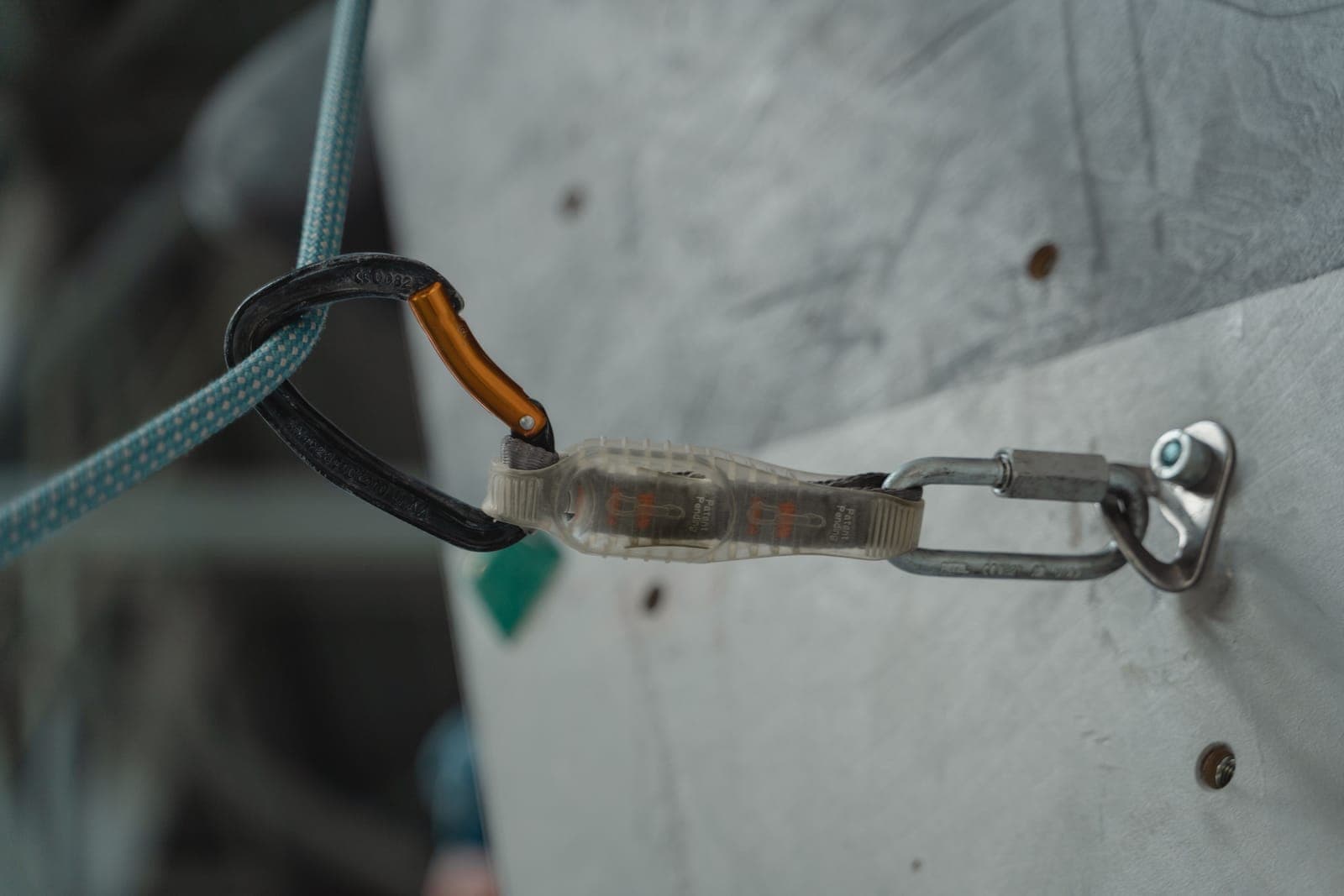 Hammock Gear Whoopie SlingAn adjustable Amsteel sling that replaces bulky daisy-chain webbing at the hammock end of the suspension. | Adjustable suspension without webbing | Adjustable Amsteel whoopie sling, sold singly | |
| 2 |  DutchWare Adjustable Structural RidgelineAn adjustable UCR ridgeline from 26 to 135 in — set your sag once and the hammock hangs the same way forever. | Repeatable sag, every time | Adjustable UCR ridgeline, 26 in minimum to 135 in maximum | |
| 3 |  Kammok Python 10 Hammock StrapsLonger, lighter and higher-rated than the category default — the straps most people should buy. | Best straps overall | 500 lb combined capacity | |
| 4 | ENO Atlas Hammock Suspension SystemThe straps everyone else gets compared against — proven, stocked everywhere, a step behind the Python on specs. | The industry standard | 400 lb combined capacity |
#ad — the buy links above are affiliate links. See our affiliate disclosure.
Why knots lost
Knots work, and two things beat them for everyday use. First, a daisy-chain strap lets you change the hang angle by moving one loop, with no untying. Second, an adjustable Amsteel whoopie sling gives continuous adjustment in a package far lighter and less bulky than webbing — DutchWare's adjustable UCR ridgeline covers 26 to 135 inches, for instance.
Neither slips, neither needs to be re-learned after a winter, and neither requires you to remember which knot you used last time. That is why most hammock camping has moved to them.
1. Adjustable suspension without webbing
Hammock Gear Whoopie Sling
An adjustable Amsteel sling that replaces bulky daisy-chain webbing at the hammock end of the suspension.
Specifications
- Adjustable Amsteel whoopie sling, sold singly
Source: hammockgear.com product page, 2026. We publish specs we can attribute and leave the rest blank rather than assuming a typical value.
What it does well
- Far less bulk and weight than daisy-chain webbing
- Infinite adjustment within its range
Where it falls short
- Still needs a tree-protection strap — a whoopie sling alone is not tree-friendly
- Published working load is not stated on the listing
Illustrative photograph of the category, not this exact product.
2. Repeatable sag, every time
DutchWare Adjustable Structural Ridgeline
An adjustable UCR ridgeline from 26 to 135 in — set your sag once and the hammock hangs the same way forever.
Specifications
- Adjustable UCR ridgeline, 26 in minimum to 135 in maximum
- Fixed alternatives at 100 in and 110 in for 10 ft and 11 ft hammocks
- DutchWare's rule of thumb: a ridgeline runs about 83% of the hammock's length
Source: dutchwaregear.com product pages, 2026. We publish specs we can attribute and leave the rest blank rather than assuming a typical value.
What it does well
- Fixes the hammock's sag independent of how far apart the trees are
- Adjustable range covers nearly any hammock length
Where it falls short
- One more thing in the suspension to learn and set up
- A ridgeline set too short makes the lay worse, not better
Illustrative photograph of the category, not this exact product.
3. Best straps overall
Kammok Python 10 Hammock Straps
Longer, lighter and higher-rated than the category default — the straps most people should buy.
Specifications
- 500 lb combined capacity
- 10 ft 2.5 in long
- 8.2 oz
- 20 attachment points
Source: 99Boulders 2026 hammock strap test. We publish specs we can attribute and leave the rest blank rather than assuming a typical value.
What it does well
- 500 lb combined is the highest rating in 99Boulders' 2026 strap test
- 10 ft reaches around trees the 9 ft straps cannot
- 20 attachment points give finer hang-angle control
Where it falls short
- Slightly bulkier packed than a minimalist strap
- Daisy-chain webbing is still coarser adjustment than a cord system
Illustrative photograph of the category, not this exact product.
4. The industry standard
ENO Atlas Hammock Suspension System
The straps everyone else gets compared against — proven, stocked everywhere, a step behind the Python on specs.
Specifications
- 400 lb combined capacity
- 9 ft long
- 9 oz
- 15 attachment points
Source: 99Boulders 2026 hammock strap test and ENO product listing. We publish specs we can attribute and leave the rest blank rather than assuming a typical value.
What it does well
- Stocked in nearly every outdoor store, so replacement is easy
- Proven design with a long track record
Where it falls short
- 400 lb and 9 ft both trail the Kammok Python 10
- Heavier than the Python despite being shorter
Illustrative photograph of the category, not this exact product.
If you are going to use knots anyway
- Use rope rated for the load, not whatever is in the garage. An unrated rope is an unrated setup.
- Keep the rope off the bark. Wide webbing around the trunk, rope only from the webbing to the hammock.
- Choose a knot you can untie under load. A knot that welds itself shut after a night's use is a knot you will cut off.
- Check it every time. Knots settle and work loose, and a tied system needs inspecting in a way a sewn loop does not.
- Accept some strength loss. Every knot reduces the rope's rated strength at the bend, which is a real factor when you are near the limit.
Replacing the rope on a rope hammock
Different question. A rope hammock's bed is the product, and re-roping one is a craft job rather than a repair. Pawleys Island and Hatteras both sell replacement beds and hardware, which is usually the better answer than re-weaving. Hardware, by contrast — S-hooks, eyelets, chains — is straightforward to replace and is usually what has actually failed. See how long does a hammock last?
Common questions
What kind of rope is used for a hammock?
For the bed, cotton rope for comfort or synthetic rope such as DURACORD for weather resistance. For suspension, Amsteel is the modern choice for whoopie slings and ridgelines. Polypropylene rope should not be used for hanging — it degrades in UV and is often unrated.
Can you hang a hammock with rope?
You can use rope between a tree strap and the hammock. You should not put rope directly against bark, because it concentrates the load, cuts in and can girdle the tree.
What knot is best for a hammock?
The better question is whether you need a knot at all — daisy-chain straps and whoopie slings have replaced knots for most people because they adjust without untying and do not settle loose. If you do use a knot, use one you can untie under load and inspect it every time.
How long should hammock rope be?
Long enough to reach from the strap to the hammock at your chosen hang angle, with some margin. If you are buying suspension rather than improvising, the published strap lengths in the 2026 test we cite run from 8 ft 1 in to 10 ft 2.5 in.
Sources
Every specification on this page traces to one of these. Where a recommendation rests on another publication's hands-on testing, we name it — we do not run a test lab.
Read next
Spotted something we got wrong? Tell us — corrections are part of our editorial policy.