How Long Does a Hammock Last?
Lifespan is decided by exposure, not by price. The same hammock lasts years on a covered porch and one season in an open yard.
By Mike M. · Last updated
Knot & Nap is reader-supported. We earn from qualifying purchases as an Amazon Associate, at no extra cost to you. Commissions never decide what gets recommended — here is how we pick.
A hammock's lifespan depends far more on exposure than on what you paid. Synthetics — polyester and nylon — resist moisture and dry quickly; cotton absorbs water, stretches and can mildew. The single biggest variable you control is whether it gets stored dry.
Part of our guides hub. We will not give you a number of years per material, because nobody has published a figure we could stand behind. What we can tell you is what fails, in what order, and why.
What wears out, in order
- Hardware. S-hooks, eyelets, carabiners and chain corrode and wear at the contact points. This is usually the first thing to fail and the easiest to replace.
- Suspension. Straps and chains take the concentrated load and the abrasion. Also cheap to replace.
- The bed's fibers. UV embrittles fabric and rope long before it looks worn out. Fading is the visible symptom of an invisible problem.
- Stitching and whipping. The gathered ends and the edges take the highest stress in the bed.
- The stand's coating. Chips at the joints and feet, then rust underneath.
Notice the top two are consumables. A hammock whose hardware has failed is not a dead hammock, and replacing a set of straps or S-hooks is a normal part of ownership rather than a defect.
What shortens a hammock's life
| Cause | What it does | How to avoid it |
|---|---|---|
| Storing it damp | Mildew in cotton, smell and rot in quilted batting | Dry it fully, every time |
| UV exposure | Embrittles fiber; fading is the warning sign | Site it with afternoon shade |
| Snow load | A static load the rating never contemplated | Bring it in for winter |
| Wind on an empty hammock | Flogs fabric against hardware for hours | Take it down or tie it off |
| Wet fabric on bare metal | Rust stains, then corrosion | Do not leave the bed bunched on the frame |
| Overloading | Stress at the gathered ends and hardware | Stay well inside the published rating |
Quick picks
Tap any row to jump to the full write-up. Prices are not shown anywhere on this site — we link straight to Amazon so you see the live figure.
| # | Product | Best for | Headline spec | Price |
|---|---|---|---|---|
| 1 | Pawleys Island DURACORD Rope HammockThe rope hammock built for weather — DURACORD is marketed specifically to withstand sun and rain where cotton cannot. | Rope you can leave outside | DURACORD rope, described by Pawleys Island as built to withstand sun and rain | |
| 2 | 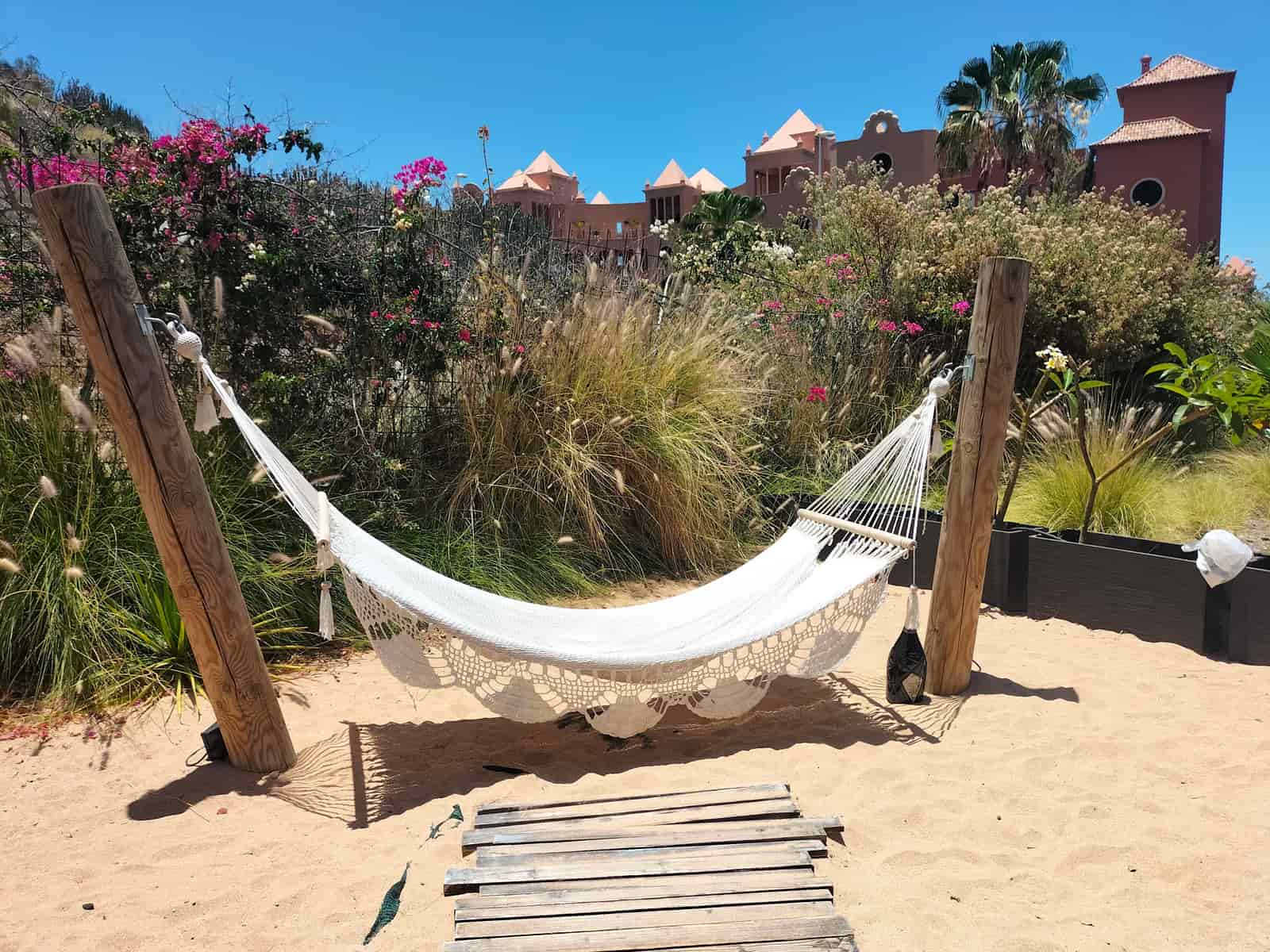 Sunnydaze Catalina Beach Quilted Double HammockDye-treated polyester that resists sun fading, which is the difference between a hammock that lasts a season and one that lasts several. | Quilted comfort that tolerates sun | 450 lb capacity | |
| 3 | 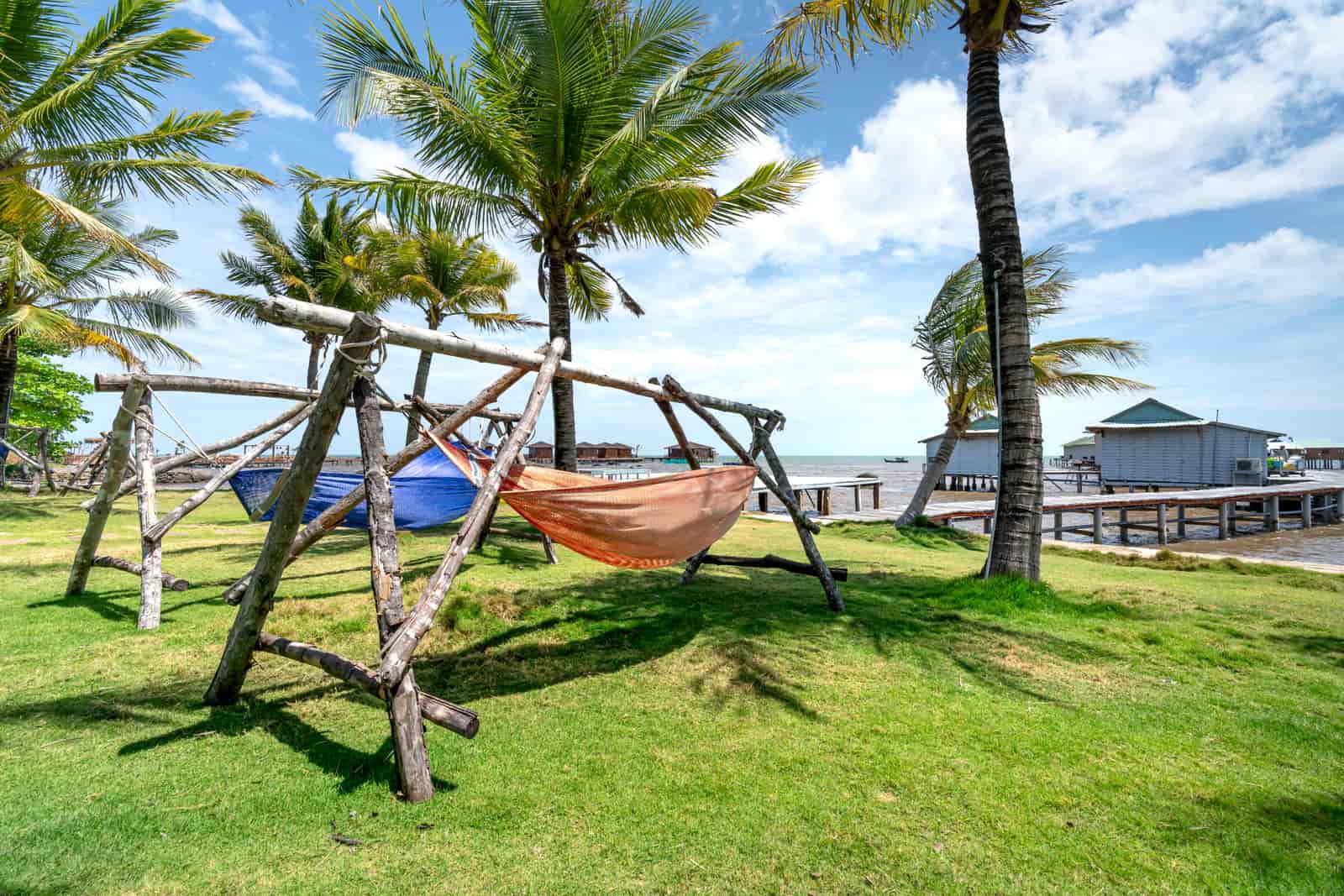 Sunnydaze Universal Hammock StandUniversal fit, powder-coated steel and a 550 lb rating — the stand most people should buy when the hammock came without one. | Best overall stand | Universal compatibility | |
| 4 | 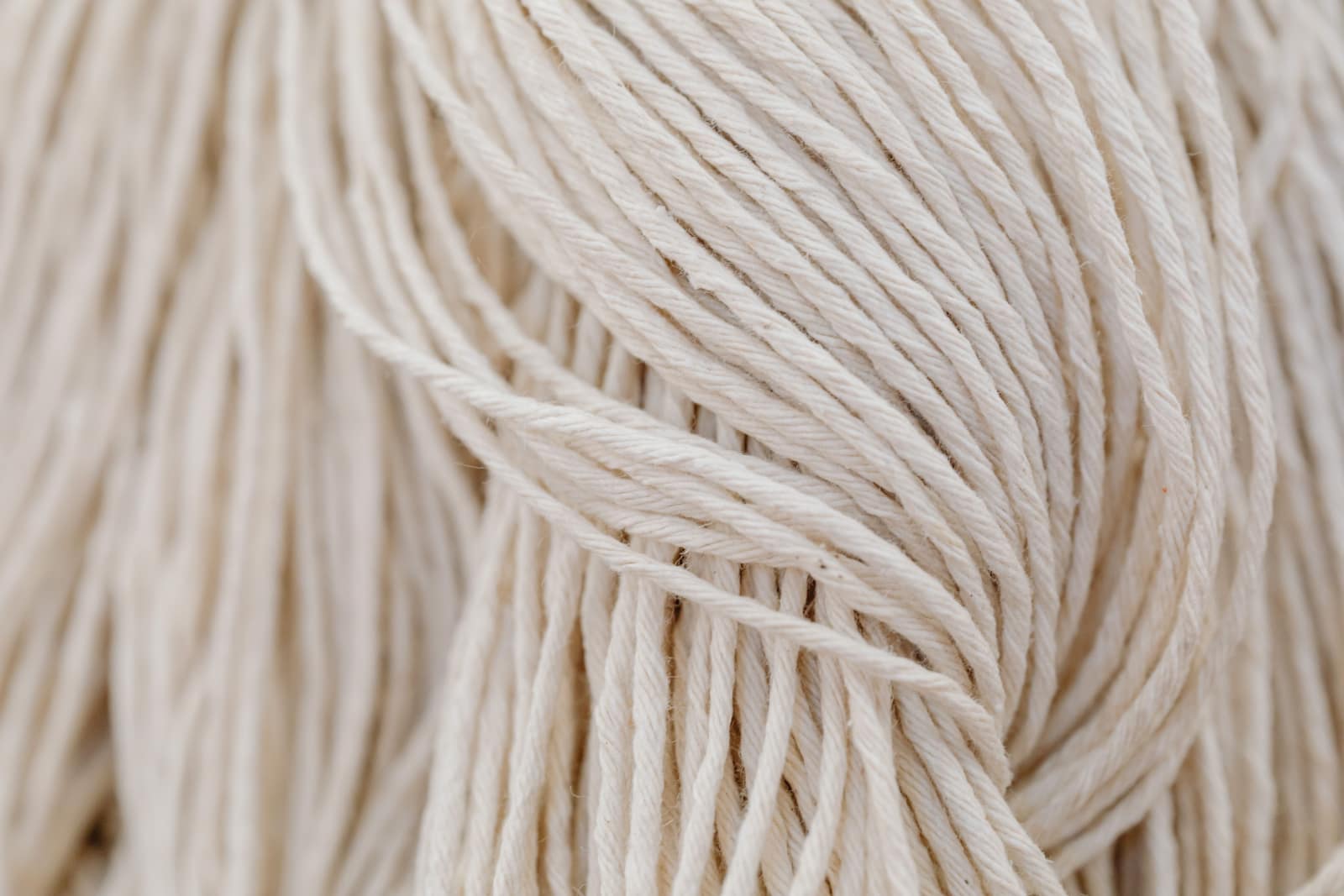 Pawleys Island Original Deluxe Cotton Rope HammockThe reference cotton rope hammock: soft, wide, American-made, and the one every other rope hammock gets measured against. | Classic rope comfort | 450 lb capacity |
#ad — the buy links above are affiliate links. See our affiliate disclosure.
Material by material
- Cotton (rope or woven) — the shortest-lived outdoors by a wide margin. It absorbs water, stretches, and can mildew. Under cover and stored dry, it lasts well.
- Synthetic rope (DURACORD and similar) — marketed specifically to withstand sun and rain, which is the reason the line exists alongside the cotton one.
- Polyester (quilted) — dye-treated versions resist fading; the batting is the vulnerability because it holds water.
- Nylon (camping) — dries fast, and is the most UV-sensitive of the group over seasons of exposure.
- Powder-coated or stainless steel frames — resist rust and humidity well; failure starts at coating chips.
- Timber frames — gray, absorb water and split unless sealed annually.
1. Rope you can leave outside
Pawleys Island DURACORD Rope Hammock
The rope hammock built for weather — DURACORD is marketed specifically to withstand sun and rain where cotton cannot.
Specifications
- DURACORD rope, described by Pawleys Island as built to withstand sun and rain
- Optional matching stand and pillow
Source: pawleysislandhammocks.com product page (HMK-ROPE), 2026. We publish specs we can attribute and leave the rest blank rather than assuming a typical value.
What it does well
- The synthetic rope is the reason this line survives a season outdoors
- Keeps the open rope weave and airflow of a cotton hammock
Where it falls short
- Synthetic rope has a firmer hand than cotton
- Capacity is not published on the product page
Illustrative photograph of the category, not this exact product.
2. Quilted comfort that tolerates sun
Sunnydaze Catalina Beach Quilted Double Hammock
Dye-treated polyester that resists sun fading, which is the difference between a hammock that lasts a season and one that lasts several.
Specifications
- 450 lb capacity
- Bed 74 x 55 in
- Two-person
- Spreader bar
- Sold without a stand
- Dye-treated, quick-dry, moisture-wicking polyester
Source: Amazon product listing title and Sunnydaze Decor product information, 2026. We publish specs we can attribute and leave the rest blank rather than assuming a typical value.
What it does well
- The fade-resistant polyester is the reason this one survives a sunny yard
- Quick-dry fabric recovers fast after rain
Where it falls short
- No stand included — budget for one
- 74 in bed is shorter than the Lazy Daze
Illustrative photograph of the category, not this exact product.
3. Best overall stand
Sunnydaze Universal Hammock Stand
Universal fit, powder-coated steel and a 550 lb rating — the stand most people should buy when the hammock came without one.
Specifications
- Universal compatibility
- Powder-coated steel
- 550 lb capacity
- Lightweight for its class
Source: Bob Vila 2026. We publish specs we can attribute and leave the rest blank rather than assuming a typical value.
What it does well
- Named best overall hammock stand by Bob Vila in 2026
- 550 lb clears nearly any hammock you would hang on it
- Universal fit means the hammock, not the stand, decides your options
Where it falls short
- Powder-coated steel still wants a dry winter home
- Span is adjustable but not published as a figure
Illustrative photograph of the category, not this exact product.
4. Classic rope comfort
Pawleys Island Original Deluxe Cotton Rope Hammock
The reference cotton rope hammock: soft, wide, American-made, and the one every other rope hammock gets measured against.
Specifications
- 450 lb capacity
- 13 ft long, 55 in wide bed
- Seats two
- Handcrafted in the USA
- Ships with extension chains and tree hooks
Source: Pawleys Island product listing (pawleysislandhammocks.com), 2026. We publish specs we can attribute and leave the rest blank rather than assuming a typical value.
What it does well
- Cotton rope is the softest surface in the category and breathes in heat
- Extension chains included, so a tree hang needs no extra hardware
- 450 lb rating covers two adults comfortably
Where it falls short
- Cotton absorbs water, stretches when wet and can mildew if left out
- Needs a 15 ft stand or a wide tree span once the chains are on
Illustrative photograph of the category, not this exact product.
The habit that matters most
Dry it before you store it. That is genuinely the highest-leverage thing you can do, and it is free. Quilted hammocks are the worst offenders because the batting holds water long after the surface feels dry — a quilted hammock folded away damp in October is a mildewed hammock in April.
Extending it
- Dry before storing, always.
- Replace hardware at the first sign of corrosion rather than waiting for it to fail.
- Site the hammock where it gets some afternoon shade.
- Take it down in winter, or at minimum take the bed off the frame.
- Check the stand's feet and joints each spring and touch up any chips.
- Rinse rather than scrub; aggressive cleaning damages cotton faster than weather does.
Common questions
How long does a hammock last?
It depends overwhelmingly on exposure rather than price. A cotton hammock on a covered porch, stored dry, lasts many seasons; the same hammock left out through winter can fail in one or two. Synthetics tolerate exposure considerably better.
What wears out first on a hammock?
Hardware — S-hooks, eyelets, carabiners and chain — because it takes the concentrated load and corrodes. It is also the cheapest part to replace, so a hammock whose hardware has failed is not finished.
Does a hammock stand last longer than the hammock?
Usually, if it is powder-coated or stainless steel. Those resist rust and humidity well, and failure starts at coating chips. Untreated timber frames do not outlast a synthetic hammock.
Can you repair a hammock?
Hardware and suspension, easily — they are replaceable parts. A torn bed or a broken cord in a woven hammock can often be repaired too, and repairing one broken cord in a Mayan weave is far easier than repairing ten.
Sources
Every specification on this page traces to one of these. Where a recommendation rests on another publication's hands-on testing, we name it — we do not run a test lab.
Read next
Spotted something we got wrong? Tell us — corrections are part of our editorial policy.