How to Store a Hammock
Storage is where most hammocks are quietly ruined. Not by cold, and not by the shed — by being put away one degree damper than they looked.
By Mike M. · Last updated
Knot & Nap is reader-supported. We earn from qualifying purchases as an Amazon Associate, at no extra cost to you. Commissions never decide what gets recommended — here is how we pick.
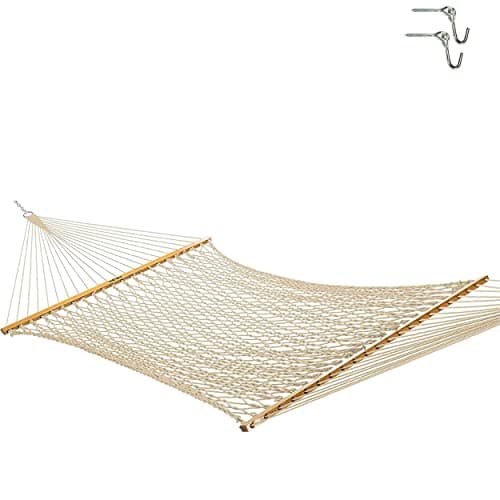
Clean it, dry it completely through rather than dry to the touch, then store it loosely in a breathable bag off the floor somewhere dry. Pawleys Island publishes the reason plainly: take the hammock down during prolonged bad weather, because repeated exposure to rain, snow and sleet shortens its life and affects its appearance.
Part of our guides hub. Hammocks almost never fail in use. They fail between seasons, in a plastic tub in a garage, because somebody rolled up a bed that still had water in the weave. Everything below is aimed at that one failure mode, with the fibre-by-fibre detail where it differs.
What to look for before you put it away
- Moisture in the thick parts. Rope knots, gathered ends, seams and quilted batting hold water long after the surface feels dry. Squeeze them.
- Dirt and organic matter. Leaves, pollen and bird mess feed mildew in storage. Clean first — see how to clean a hammock.
- A breathable container. The stuff sack the hammock came in is usually fine. A sealed plastic tub is the worst option, because any trapped moisture stays trapped.
- Somewhere off the floor and out of rodent range. Cotton and macrame cord are nesting material. A shelf or a hook beats a tub on the concrete.
Quick picks
Tap any row to jump to the full write-up. Prices come straight from Amazon and are refreshed daily; where a figure is missing the link takes you to the live one.
| # | Product | Best for | Headline spec | Price |
|---|---|---|---|---|
| 1 | Pawleys Island DURACORD Rope HammockThe rope hammock built for weather — DURACORD is marketed specifically to withstand sun and rain where cotton cannot. | Rope you can leave outside | 450 lb capacity | |
| 2 | 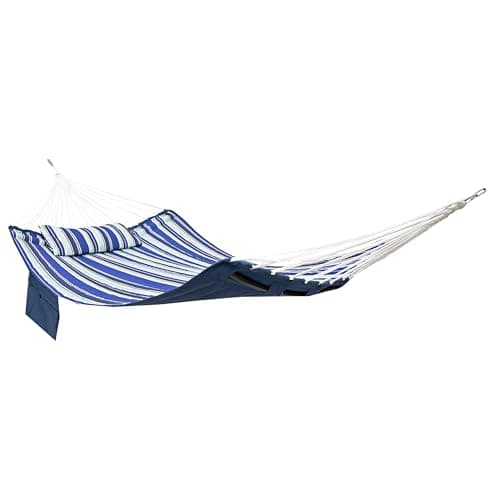 Sunnydaze Catalina Beach Quilted Double HammockDye-treated polyester that resists sun fading, which is the difference between a hammock that lasts a season and one that lasts several. | Quilted comfort that tolerates sun | 450 lb capacity | |
| 3 | 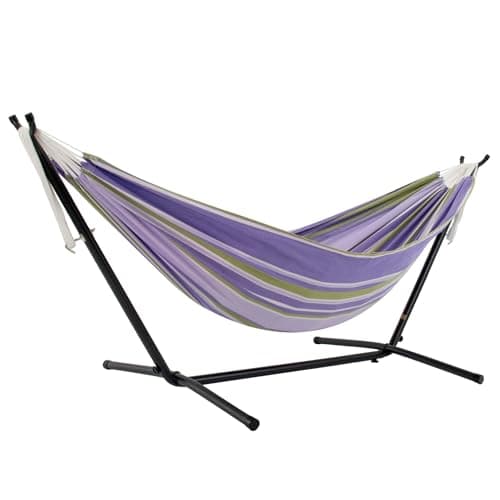 Vivere Double Cotton Hammock with Steel StandThe default answer to 'a hammock with a stand' — cotton bed, 9 ft zinc-coated frame, together in one box and assembled without tools. | Best overall set | 100% double cotton bed |
#ad — the buy links above are affiliate links. See our affiliate disclosure.
1. Rope you can leave outside
Pawleys Island DURACORD Rope Hammock
The rope hammock built for weather — DURACORD is marketed specifically to withstand sun and rain where cotton cannot.
Specifications
- 450 lb capacity
- 13 ft long, 55 in wide bed
- Seats two
- DURACORD rope, described by Pawleys Island as built to withstand sun and rain
- Oak spreader bars with zinc-plated hardware
- Handcrafted in the USA
Source: Pawleys Island DuraCord retail listing, 2026. We publish specs we can attribute and leave the rest blank rather than assuming a typical value.
What it does well
- The synthetic rope is the reason this line survives a season outdoors
- Keeps the open rope weave and airflow of a cotton hammock
- Matches the cotton Deluxe on capacity and bed size, without the mildew risk
Where it falls short
- Synthetic rope has a firmer hand than cotton
- Oak spreader bars still want sealing if they stay in the weather
Product photograph supplied by Amazon.
#ad we may earn a commission · price as of October 17, 2026
2. Quilted comfort that tolerates sun
Sunnydaze Catalina Beach Quilted Double Hammock
Dye-treated polyester that resists sun fading, which is the difference between a hammock that lasts a season and one that lasts several.
Specifications
- 450 lb capacity
- Bed 74 x 55 in
- Two-person
- Spreader bar
- Sold without a stand
- Dye-treated, quick-dry, moisture-wicking polyester
Source: Amazon product listing title and Sunnydaze Decor product information, 2026. We publish specs we can attribute and leave the rest blank rather than assuming a typical value.
What it does well
- The fade-resistant polyester is the reason this one survives a sunny yard
- Quick-dry fabric recovers fast after rain
Where it falls short
- No stand included — budget for one
- 74 in bed is shorter than the Lazy Daze
Product photograph supplied by Amazon.
#ad we may earn a commission · price as of October 17, 2026
3. Best overall set
Vivere Double Cotton Hammock with Steel Stand
The default answer to 'a hammock with a stand' — cotton bed, 9 ft zinc-coated frame, together in one box and assembled without tools.
Specifications
- 100% double cotton bed
- Polyester attachment strings with metal eyelets
- Zinc-coated steel frame
- 9 ft stand
- 450 lb capacity
- Carry bag included
- Assembles in roughly 15 minutes, no tools
Source: Bob Vila 2026 and CNN Underscored 2026, with capacity from the retail listing. We publish specs we can attribute and leave the rest blank rather than assuming a typical value.
What it does well
- Named best bang for the buck by Bob Vila and overall pick by CNN Underscored in 2026
- Tool-free assembly in about 15 minutes
- Zinc coating resists rust better than bare steel
Where it falls short
- Cotton bed should not live outdoors year round
- A 9 ft frame locks you out of longer hammocks if you upgrade the bed later
Product photograph supplied by Amazon.
#ad we may earn a commission · price as of October 17, 2026
The off-season routine
- 1Take it down before the weather turns, not afterThe damage is cumulative. A hammock brought in at the first hard rain is a different product by spring from one brought in at the third.
- 2Clean it and rinse the detergent out properlyDetergent left in a weave attracts dirt and, in rope, stiffens as it dries. Rinse until the water runs clear.
- 3Dry it flat and in moving airA dry day with a breeze beats a warm shed with no airflow. Turn it once. Quilted beds often need a second day.
- 4Separate the hardwareTake off S-hooks, carabiners, chains and straps and store them in a bag together, dry. Steel hardware left on damp rope is where rust marks come from.
- 5Fold loosely, do not compressHard compression sets creases in quilted fabric and flattens rope weave. Loose in a breathable sack is the goal.
- 6Store cool, dry, dark and off the floorDark matters more than people expect: ultraviolet degrades synthetic rope and nylon even through a window.
By material
Cotton rope and cotton beds
The least forgiving. Cotton absorbs water, stretches while wet and can mildew, and once it has mildewed the stain is effectively permanent because bleach is not an option. The Vivere cotton set is the standard example — a good hammock that should not live outdoors year round. Store cotton bone dry, loosely, and never in a sealed tub.
Synthetic rope
DURACORD and DuraCord are built to withstand sun and rain, which buys you a longer outdoor season rather than permission to skip storage. Pawleys Island still publishes the prolonged-bad-weather rule for rope hammocks generally. Store the same way; worry less about a day of damp.
Quilted and spreader-bar hammocks
Two fabric layers and batting mean these hold the most water and take the longest to dry, and compressing damp batting is how a quilted bed ends up smelling of a cellar. The Sunnydaze Catalina Beach publishes quick-dry, moisture-wicking polyester, which genuinely shortens this step. Store the spreader bars with the bed but check them first: timber bars want a wipe and, every couple of seasons, a reseal, because they are the part that rots.
Camping nylon
Easy, with one rule: store it loose rather than crammed in its stuff sack for months. Long compression creases thin ripstop along the same lines every time. A pillowcase on a shelf is better than the sack. Dry completely first — nylon does not mildew the way cotton does, but the seams and gathered ends will.
The stand is a storage question too
A powder-coated or zinc-coated steel frame tolerates a winter outside far better than any fabric will, but it still rewards being brought in: standing water sits in the feet and the joints, and that is where rust starts. A collapsible frame makes this trivial — the Tranquillo adjustable stand folds and ships with a carry bag. A wooden arc is the opposite case: wood wants sealing and does not want a wet winter, and a 14 ft frame is not moving, so a cover is the realistic answer. Our steel vs wooden hammock stand comparison goes through the trade in full.
Common storage mistakes
- Sealed plastic tubs. The single worst container, because trapped moisture has nowhere to go.
- Storing it on the garage floor. Cold concrete sweats, and that is where the rodents are.
- Leaving the straps on the trees. Webbing left wrapped round bark through a winter holds water against the trunk and degrades in ultraviolet — see are hammocks bad for trees.
- Putting it away dirty to deal with in spring. Organic matter plus moisture plus months is exactly the mildew recipe.
Common questions
How should you store a hammock over winter?
Clean it, dry it completely through, take the hardware off, fold it loosely into a breathable bag and keep it somewhere cool, dry, dark and off the floor. The one rule that matters more than all the others is that it must be fully dry, not dry to the touch.
Can you leave a hammock out all winter?
Pawleys Island publishes the opposite advice for rope hammocks: take it down during prolonged bad weather, because repeated exposure to rain, snow and sleet shortens its life and affects its appearance. A synthetic-rope or treated-polyester bed tolerates it better than cotton, but nothing gains from it.
Where should you store a hammock?
Somewhere cool, dry, dark, ventilated and off the floor — a shelf or a hook in a garage or closet. Avoid sealed plastic tubs, concrete floors and anywhere a rodent would find cotton or macrame cord attractive nesting material.
Should you store a hammock in its stuff sack?
For a few weeks, fine. For a season, store it loose instead. Months of compression set creases along the same lines in thin ripstop and flatten rope weave, and a compressed quilted bed with any moisture left in the batting is the classic cellar-smell outcome.
Do you need to store the hammock stand too?
Not necessarily, but it helps. Standing water collects in the feet and joints of a steel frame, which is where rust starts, so a folding stand is worth bringing in. A wooden stand is the one that genuinely suffers outdoors — it wants sealing and a dry winter, and if it cannot move, it wants a cover.
Sources
Every specification on this page traces to one of these — manufacturer data, owner's manuals, published standards and named independent publications, all linked so you can check them yourself.
Read next
Spotted something we got wrong? Tell us — corrections are part of our editorial policy.