How to Clean a Hammock
Nearly every hammock cleans the same way: flat on the ground, cold water, mild detergent, soft brush, rinse, air dry. The exceptions are what this page is really about.
By Mike M. · Last updated
Knot & Nap is reader-supported. We earn from qualifying purchases as an Amazon Associate, at no extra cost to you. Commissions never decide what gets recommended — here is how we pick.
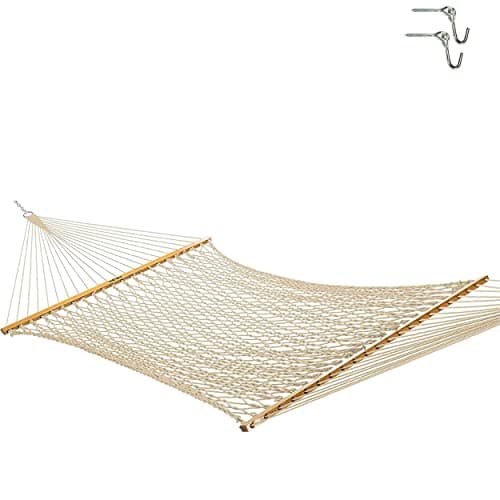
Stretch the hammock out flat on a clean, dry, non-abrasive surface, wet it with a hose, scrub gently with a soft brush and a mild detergent in warm water, rinse thoroughly and let it air dry completely. Pawleys Island publishes one important exception: no bleach on any rope hammock except DURACORD, which tolerates a 5-to-1 water-to-bleach solution on stubborn stains.
Part of our guides hub. The reason this needs a page is that the two most common instincts are both wrong. Putting a hammock in a washing machine abrades the weave and tangles the suspension; leaving a dirty hammock out through a wet season is how a cotton bed turns into a mildew problem that no amount of later cleaning fixes. Both are avoidable with about twenty minutes and a garden hose.
What to look for before you start
- Which fibre you have. Cotton rope, synthetic rope, quilted polyester and camping nylon all behave differently in water. If you do not know, the material is nearly always on the listing or the care tag.
- Whether bleach is permitted. Pawleys Island publishes that no cleaning product containing bleach or strong chemicals should be used on a rope hammock unless it is woven from DURACORD, in which case a 5-to-1 water-to-bleach solution is allowed on stubborn stains.
- Whether the stain is dirt or mildew. Dirt lifts with detergent. Mildew needs the bleach question answered first, and on a cotton hammock the honest answer is often that the mark will not fully come out.
- Somewhere to dry it flat and in air. Rolling a damp hammock away is how you create the next mildew problem.
Quick picks
Tap any row to jump to the full write-up. Prices come straight from Amazon and are refreshed daily; where a figure is missing the link takes you to the live one.
| # | Product | Best for | Headline spec | Price |
|---|---|---|---|---|
| 1 | Pawleys Island DURACORD Rope HammockThe rope hammock built for weather — DURACORD is marketed specifically to withstand sun and rain where cotton cannot. | Rope you can leave outside | 450 lb capacity | |
| 2 | 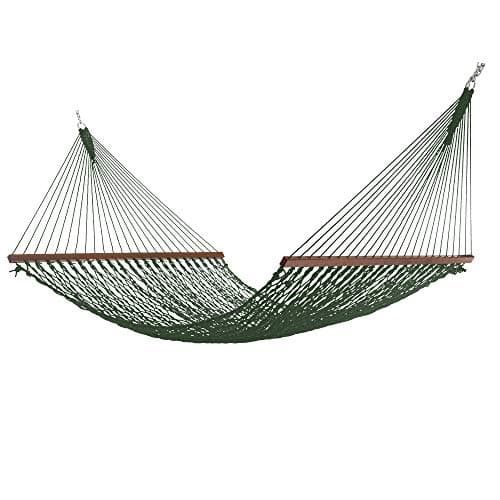 Hatteras Hammocks Deluxe DuraCord Rope Hammock, 13 ft x 60 inThirteen feet long and sixty inches wide — the published dimensions that make this the easiest backyard rope hammock to recommend to someone over six feet. | A backyard hammock with room to spare | 13 ft long, 60 in wide | |
| 3 | 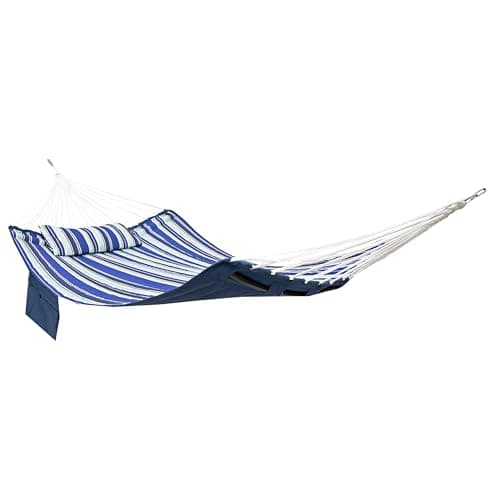 Sunnydaze Catalina Beach Quilted Double HammockDye-treated polyester that resists sun fading, which is the difference between a hammock that lasts a season and one that lasts several. | Quilted comfort that tolerates sun | 450 lb capacity |
#ad — the buy links above are affiliate links. See our affiliate disclosure.
1. Rope you can leave outside
Pawleys Island DURACORD Rope Hammock
The rope hammock built for weather — DURACORD is marketed specifically to withstand sun and rain where cotton cannot.
Specifications
- 450 lb capacity
- 13 ft long, 55 in wide bed
- Seats two
- DURACORD rope, described by Pawleys Island as built to withstand sun and rain
- Oak spreader bars with zinc-plated hardware
- Handcrafted in the USA
Source: Pawleys Island DuraCord retail listing, 2026. We publish specs we can attribute and leave the rest blank rather than assuming a typical value.
What it does well
- The synthetic rope is the reason this line survives a season outdoors
- Keeps the open rope weave and airflow of a cotton hammock
- Matches the cotton Deluxe on capacity and bed size, without the mildew risk
Where it falls short
- Synthetic rope has a firmer hand than cotton
- Oak spreader bars still want sealing if they stay in the weather
Product photograph supplied by Amazon.
#ad we may earn a commission · price as of October 17, 2026
2. A backyard hammock with room to spare
Hatteras Hammocks Deluxe DuraCord Rope Hammock, 13 ft x 60 in
Thirteen feet long and sixty inches wide — the published dimensions that make this the easiest backyard rope hammock to recommend to someone over six feet.
Specifications
- 13 ft long, 60 in wide
- 450 lb capacity
- Two-person
- DuraCord synthetic rope, described by Hatteras as the densest rope on the hammock market at 85 ft per lb
- Cumaru hardwood spreader bars, a full 1 in thick
- Zinc-plated hardware
- Handcrafted in the USA
Source: Amazon product listing (Hatteras Deluxe DuraCord) and hatterashammocks.com, 2026. We publish specs we can attribute and leave the rest blank rather than assuming a typical value.
What it does well
- 60 in of width is five inches more than the Large, and width is what lets a tall person angle across the bed
- DuraCord is the synthetic rope, so this one can stay outside through a season
- Dimensions and capacity are both published, which is rarer in this category than it should be
Where it falls short
- Spreader bars mean the bed stays flat and shallow — it is tippier than a gathered-end hammock
- 13 ft plus hardware needs a 15 ft stand or a genuinely wide tree span
Product photograph supplied by Amazon.
#ad we may earn a commission · price as of October 17, 2026
3. Quilted comfort that tolerates sun
Sunnydaze Catalina Beach Quilted Double Hammock
Dye-treated polyester that resists sun fading, which is the difference between a hammock that lasts a season and one that lasts several.
Specifications
- 450 lb capacity
- Bed 74 x 55 in
- Two-person
- Spreader bar
- Sold without a stand
- Dye-treated, quick-dry, moisture-wicking polyester
Source: Amazon product listing title and Sunnydaze Decor product information, 2026. We publish specs we can attribute and leave the rest blank rather than assuming a typical value.
What it does well
- The fade-resistant polyester is the reason this one survives a sunny yard
- Quick-dry fabric recovers fast after rain
Where it falls short
- No stand included — budget for one
- 74 in bed is shorter than the Lazy Daze
Product photograph supplied by Amazon.
#ad we may earn a commission · price as of October 17, 2026
The method that works on nearly everything
- 1Unhook it and spread it flatPawleys Island specifies a clean, dry, non-abrasive surface. A lawn, a clean patio or a tarp all work. Concrete with grit on it does not — it will abrade the weave while you scrub.
- 2Wet it down with a hosePlain water first. A surprising amount of surface dirt and pollen leaves at this stage, which means less scrubbing into the fibres.
- 3Mix mild detergent with warm waterMild is the operative word. Strong household cleaners strip the finish on synthetic rope and can discolor dyed polyester.
- 4Scrub gently with a soft brushWork along the weave, not across it. For DURACORD rope specifically, Pawleys Island suggests rubbing the rope against itself rather than using a brush.
- 5Rinse until the water runs clearDetergent left in a rope weave attracts dirt faster than the dirt you just removed, and left in quilted fabric it stiffens as it dries.
- 6Air dry completely before it goes anywhereHang it or lay it out until it is dry through, not dry to the touch. Quilted hammocks hold water in the batting long after the surface feels dry.
By material
Cotton rope
The softest surface in the category and the fussiest to clean. Cotton absorbs water, stretches while wet and can mildew, which is why the Pawleys Island Original Deluxe carries that warning in our own product notes. No bleach. Wash it on a dry day, dry it flat, and do not re-hang it under load until it is fully dry or it will keep the stretch. More on the material trade-off in rope vs fabric hammocks.
Synthetic rope — DURACORD and DuraCord
This is the rope built for weather. Pawleys Island describes DURACORD as made to withstand sun and rain, and Hatteras describes its DuraCord as the densest rope on the hammock market at 85 ft per lb. Clean it like polyester rope, rub the rope against itself rather than brushing, and this is the one rope family where a 5-to-1 water-to-bleach solution is published as acceptable on stubborn stains.
Quilted and spreader-bar fabric
Quilted hammocks are two layers of fabric around batting, so the cleaning problem is drying, not washing. Our own notes on the Lazy Daze 12 ft quilted hammock flag that it holds water and needs to dry before storage. The Sunnydaze Catalina Beach publishes a quick-dry, moisture-wicking, dye-treated polyester that recovers faster after rain, which is a real advantage at exactly this step. Spot-clean, rinse lightly rather than soaking, and dry flat.
Camping nylon
Thin nylon is the easiest fabric here and the one most often ruined in a machine. Hand wash in cold water with a mild soap, rinse, and hang to dry out of direct sun — L.L.Bean sets out the same approach in its own hammock cleaning guidance. Never use fabric softener, which coats the fibres and kills the water resistance a DWR-treated hammock has. Tree sap comes off with a dab of rubbing alcohol on a cloth, worked from the outside of the mark inward.
Mildew, honestly
Mildew on a cotton hammock is usually permanent as a stain even once the growth is dead, because you cannot bleach it. The real fix is prevention, and Pawleys Island publishes the rule plainly: take the hammock down and store it during prolonged bad weather, because repeated exposure to rain, snow and sleet shortens its life and affects its appearance. That is the same conclusion we reach in can you leave a hammock outside, and the practical steps are in how to store a hammock.
What not to do
- No washing machine, no dryer. Agitation abrades the weave, the drum tangles the suspension and heat shrinks nylon.
- No pressure washer. It drives water into the fibres and lifts the surface on synthetic rope.
- No bleach on cotton, canvas or dyed polyester. DURACORD is the published exception, at 5-to-1 dilution, on stubborn stains only.
- No storing it damp. This is the single most common cause of a hammock that smells and then stains.
- No scrubbing the spreader bars with the same brush. Timber bars want a wipe and a reseal, not a soaking — they are the part that rots first.
Common questions
How do you clean a hammock?
Spread it flat on a clean, dry, non-abrasive surface, wet it with a hose, scrub gently along the weave with a soft brush and a mild detergent in warm water, rinse until the water runs clear and let it air dry completely before storing or re-hanging it.
Can you put a hammock in the washing machine?
We would not. Machine agitation abrades the weave, the drum tangles the suspension ropes and a dryer can shrink nylon. Hand washing flat takes about twenty minutes and is what the makers themselves describe.
Can you use bleach on a hammock?
Only on DURACORD rope. Pawleys Island publishes that no cleaning product containing bleach or other strong chemicals should be used on a rope hammock unless it is woven from DURACORD, in which case a 5-to-1 water-to-household-bleach solution may be used on stubborn stains.
How do you get mildew out of a hammock?
On DURACORD rope, the published 5-to-1 bleach solution. On cotton, canvas or dyed fabric there is no safe bleach option, so you clean off the growth with mild detergent and accept that the stain may stay. Prevention is the real answer — take the hammock down in prolonged bad weather.
How often should you clean a hammock?
Once or twice a season for a hammock that lives outdoors under cover, and whenever it has been rained on and left dirty. A camping hammock needs it far less often — the main jobs there are sap and dirt from the ground, not weathering.
Sources
Every specification on this page traces to one of these — manufacturer data, owner's manuals, published standards and named independent publications, all linked so you can check them yourself.
Read next
Spotted something we got wrong? Tell us — corrections are part of our editorial policy.