How to Keep a Hammock From Flipping
Flipping is not bad luck. It is a predictable consequence of a flat, shallow, tight bed, and all four of those words are things you can change.
By Mike M. · Last updated
Knot & Nap is reader-supported. We earn from qualifying purchases as an Amazon Associate, at no extra cost to you. Commissions never decide what gets recommended — here is how we pick.
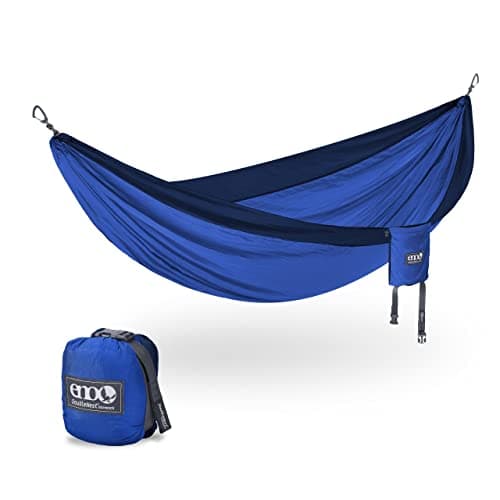
Hammocks flip when your center of gravity sits above the hanging line instead of below it. Let the hammock sag to roughly a 30-degree hang, sit in the middle rather than the edge, get in by sitting first and then lying back, and if it still tips, you have a spreader-bar hammock — the one design that is genuinely unstable by shape.
Part of our guides hub. This is the complaint that puts people off hammocks entirely, usually after one dramatic exit in front of family. It is worth understanding properly because the fix depends on which of two completely different causes you have: a hang problem, which is free to fix, or a bed-shape problem, which is a purchase decision.
Why a hammock flips at all
A hammock is a pendulum and you are the weight on it. A deep, sagging bed puts your hips well below the two suspension points, so your center of gravity sits low and the whole system self-rights — lean and it pushes you back. A flat, shallow, tightly hung bed raises you toward the suspension line. Once your center of gravity gets near or above that line, leaning does not push you back, it keeps going. That is the flip, and it is geometry rather than skill.
This is why the single most effective fix is counter-intuitive: let the hammock sag more. People tighten a hammock to make it feel secure and make it dramatically less stable in the process. The same tight hang also multiplies the force at each anchor well above body weight, which the Omni Calculator hang model sets out, so it is bad on two counts at once.
What to look for in a hammock that will not tip
- A gathered-end bed. No spreader bars means the fabric wraps around you and the bed is deep by design. The ENO DoubleNest publishes 114 x 76 in with no bars — that width is what gives you a flat place to lie without a flat bed.
- Width you can lie across. A diagonal lay flattens your body without flattening the hammock. Width is the spec that makes it possible.
- Enough length for the span. A short hammock on a wide span is forced into a shallow angle whether you want it or not.
- A structural ridgeline, if you want it repeatable. It fixes the sag depth so the bed is the same every time rather than depending on how hard you pulled the straps — see hammock ridgelines.
Quick picks
Tap any row to jump to the full write-up. Prices come straight from Amazon and are refreshed daily; where a figure is missing the link takes you to the live one.
| # | Product | Best for | Headline spec | Price |
|---|---|---|---|---|
| 1 | ENO DoubleNest HammockThe most widely sold camping hammock there is, and OutdoorGearLab's best all-around pick. | Best all-around camping hammock | 400 lb capacity | |
| 2 | 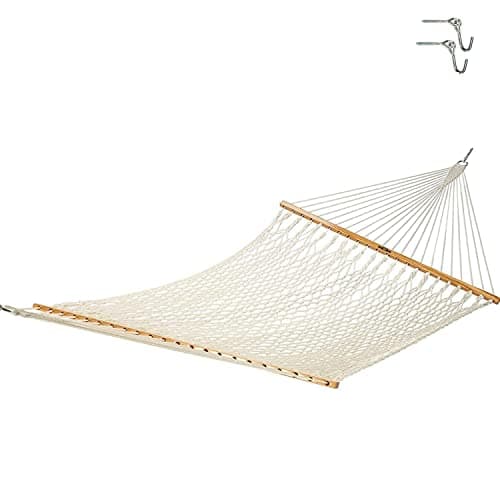 Pawleys Island Original Deluxe Cotton Rope HammockThe reference cotton rope hammock: soft, wide, American-made, and the one every other rope hammock gets measured against. | Classic rope comfort | 450 lb capacity | |
| 3 | No image Warbonnet Ridgerunner Bridge HammockA bridge hammock with aluminum spreader bars at both ends, holding the bed flat instead of curved, which is the design side and stomach sleepers are actually looking for. | Best for side sleepers | Bridge design with aluminum spreader bars at the head and foot ends |
#ad — the buy links above are affiliate links. See our affiliate disclosure.
1. Best all-around camping hammock
ENO DoubleNest Hammock
The most widely sold camping hammock there is, and OutdoorGearLab's best all-around pick.
Specifications
- 400 lb capacity
- 114 in x 76 in (9 ft 6 in long)
- 19 oz
- 70D high-tenacity nylon taffeta
- Ranked best all-around hammock by OutdoorGearLab and best two-person by Treeline Review
Source: Treeline Review 2026 spec table, OutdoorGearLab 2026 and REI. We publish specs we can attribute and leave the rest blank rather than assuming a typical value.
What it does well
- The safest first camping hammock — everything is built to fit it
- Double width gives a diagonal lay for one person
- ENO publishes underquilt compatibility for it, which few hammocks have
Where it falls short
- Straps are sold separately
- Plain nylon with none of the comfort upgrades of the cottage brands
2. Classic rope comfort
Pawleys Island Original Deluxe Cotton Rope Hammock
The reference cotton rope hammock: soft, wide, American-made, and the one every other rope hammock gets measured against.
Specifications
- 450 lb capacity
- 13 ft long, 55 in wide bed
- Seats two
- Handcrafted in the USA
- Ships with extension chains and tree hooks
Source: Pawleys Island product listing (pawleysislandhammocks.com), 2026. We publish specs we can attribute and leave the rest blank rather than assuming a typical value.
What it does well
- Cotton rope is the softest surface in the category and breathes in heat
- Extension chains included, so a tree hang needs no extra hardware
- 450 lb rating covers two adults comfortably
Where it falls short
- Cotton absorbs water, stretches when wet and can mildew if left out
- Needs a 15 ft stand or a wide tree span once the chains are on
Product photograph supplied by Amazon.
#ad we may earn a commission · price as of October 17, 2026
3. Best for side sleepers
Warbonnet Ridgerunner Bridge Hammock
A bridge hammock with aluminum spreader bars at both ends, holding the bed flat instead of curved, which is the design side and stomach sleepers are actually looking for.
Specifications
- Bridge design with aluminum spreader bars at the head and foot ends
- 44 in wide at head and foot, 32 in in the middle
- CleverHiker lists 10.1 ft x 3.7 ft and 2 lb 9.3 oz for hammock, guylines and spreader bars, plus 8.5 oz of suspension
- 250 lb capacity in the double-layer version; the single layer is rated lower
- The double layer acts as a sleeve for a sleeping pad
- Integrated zippered bug net that stows in its own pocket
- Saddlebag storage pockets along both long sides
Source: Warbonnet Outdoors published specifications and CleverHiker's Ridgerunner review, 2026. We publish specs we can attribute and leave the rest blank rather than assuming a typical value.
What it does well
- Spreader bars hold a flat bed, so you are not fighting a curve to sleep on your side
- The double layer takes a pad, which solves under-insulation without a quilt
- The bug net is built in and stows away rather than coming off
Where it falls short
- 250 lb is a low capacity for a hammock this size
- Spreader bars are bulky in a pack, which is the price of the flat lay
- Made to order from a cottage brand rather than held in stock
No licensed photograph of this product is available to us yet.
The five things that actually stop it
- Hang it at about 30 degrees. Measured from horizontal, at each suspension point. This is the number our hanging distance and angle guide is built around, and it buys you both comfort and stability.
- Sit down in the middle, then lie back. Entering from the edge loads one side of the bed with your full weight at the worst possible moment. Sit centrally, feet on the ground, then swing your legs up and lie back along the diagonal.
- Keep the lowest point about 18 in off the ground. Low enough that a failure is a step rather than a fall, high enough that the bed does not touch down under load.
- Lie along the diagonal, not across the beam. On a gathered-end hammock the diagonal is both the flattest and the most stable position, because your shoulders and hips stay inside the deep part of the bed.
- Get out the way you got in. Sit up in the middle, put both feet down, then stand. Rolling sideways out of a hammock is how most exits go wrong.
Spreader-bar hammocks are different, and honestly so
A spreader bar holds the bed flat and open, which is exactly what makes a rope hammock look inviting and exactly what makes it tippy. The bed cannot wrap around you, and the flat surface sits higher relative to the suspension, so your center of gravity is close to the tipping line from the moment you sit down. Our own notes on the Hatteras Deluxe DuraCord and the Pawleys Island Original Deluxe say the same thing: flat, shallow, tippier than a gathered-end hammock. That is not a defect, it is the format.
You cannot make a spreader-bar hammock behave like a gathered-end one, but you can stop fighting it. Sit in the center line, keep your weight symmetrical, and avoid treating the edge as a seat. If you want the look of a spreader-bar hammock and the stability of a gathered-end one, the honest answer is that you have to choose — spreader bar vs gathered end lays out the whole trade.
The bridge hammock exception
Bridge hammocks have spreader bars and are not tippy, which looks like a contradiction. The difference is where the bars sit relative to the bed: a bridge hangs its fabric below the bars from the ends, so the bed is a shallow trough suspended underneath rather than a flat plane held up at the edges. Warbonnet publishes 44 in of width at the head and foot and 32 in in the middle for the Ridgerunner — that narrowing in the center is what keeps you seated low. It is the one design that gives you a flat lay without raising your center of gravity, which is why it also heads our best camping hammocks for stomach sleepers picks.
What not to do
- Do not tighten it. The most common instinct and the one that makes it worse.
- Do not sit on the edge. Every hammock is at its least stable at the edge of the bed.
- Do not add a pillow under your head and nothing under your knees. Raising your head raises your center of gravity. Put the roll under your shins instead.
- Do not hang it high to look impressive. Height does not change the tipping behavior, only the consequences.
- Do not assume a stand solves it. If the stand itself is moving, that is a different problem — see how to keep a hammock stand from tipping.
Common questions
Why does my hammock keep flipping?
Because your center of gravity is sitting at or above the line between the two suspension points. That happens when the hammock is hung too tight and too flat, or when you enter and sit at the edge of the bed rather than the middle. Letting it sag to roughly 30 degrees and sitting centrally fixes most cases.
How do you keep a hammock from tipping over?
Let it sag, sit in the middle, get in by sitting first and then lying back along the diagonal, keep the lowest point of the loaded bed around 18 in off the ground, and get out the same way you got in. If it still tips, the bed shape is the cause rather than the hang.
Are spreader-bar hammocks more likely to flip?
Yes. A spreader bar holds the bed flat and open so the fabric cannot wrap around you, and the flat surface sits higher relative to the suspension. Rope and quilted hammocks are nearly all this type, and they are genuinely tippier than gathered-end hammocks by design.
Does hanging a hammock tighter stop it flipping?
No, it does the opposite. A tight hang raises you toward the suspension line, which is exactly the condition that makes a hammock unstable, and it also multiplies the force at each anchor far beyond body weight. Sag is the fix, not tension.
Why do bridge hammocks not flip even though they have spreader bars?
Because the fabric hangs below the bars rather than being held up at the edges, and the bed narrows in the middle. Warbonnet publishes 44 in at the head and foot and 32 in in the center for the Ridgerunner. You sit low in a shallow trough, so the flat lay does not come with a raised center of gravity.
Sources
Every specification on this page traces to one of these — manufacturer data, owner's manuals, published standards and named independent publications, all linked so you can check them yourself.
Read next
Spotted something we got wrong? Tell us — corrections are part of our editorial policy.